
In high-stakes industrial environments, the margin for error is razor-thin. Leaks—no matter how small—can compromise safety, diminish product quality, and lead to costly recalls. For manufacturers across aerospace, automotive, medical, and energy sectors, achieving airtight integrity is non-negotiable. Enter the Helium Leak Tester, a precision-engineered solution designed to detect even the tiniest leaks and ensure consistent, defect-free output.
Understanding the Need for Ultra-Precise Leak Detection
In industries where products are subjected to pressure differentials, vacuums, or contain volatile substances, leak testing isn’t just a quality check—it’s a compliance and safety necessity. Traditional leak detection methods, such as bubble testing or pressure decay, fall short when it comes to detecting micro-leaks in sensitive applications.
That’s where a Helium Leak Tester proves indispensable. By utilizing helium—a noble gas that is inert, non-toxic, and small in molecular size—this testing method provides unmatched sensitivity, capable of identifying leaks as small as 1x10⁻⁹ mbar∙l/s.
How a Helium Leak Tester Works
The basic principle behind a helium-based leak tester is straightforward but powerful. The test object is either pressurized with helium or placed in a helium-filled chamber. A high-precision mass spectrometer then scans for any escaping helium molecules. Because helium is not naturally abundant in ambient air, its presence outside the test chamber is a clear indicator of leakage.
There are generally two main configurations:
- Vacuum Mode: Used when the component is placed in a vacuum chamber and helium is sprayed externally.
- Sniffer Mode: Applied when helium is introduced inside the component, and a sensor “sniffs” around joints or seals.
Both modes offer excellent accuracy and can be tailored for a range of use cases, from large industrial components to delicate medical devices.
Integration with Industrial Vacuum Solutions
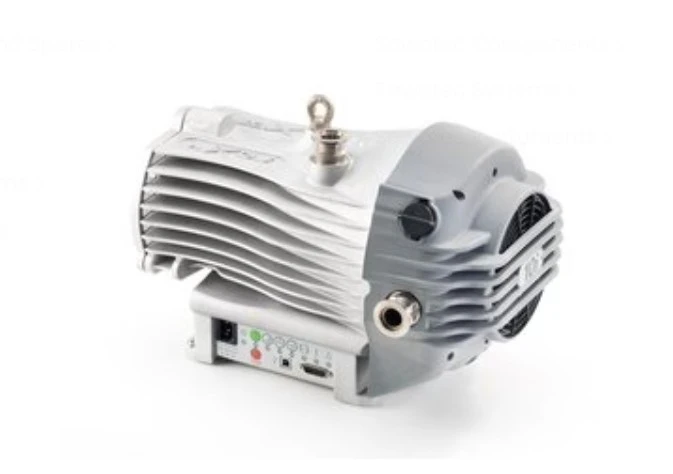
Modern industrial vacuum solutions have evolved to work seamlessly with helium-based leak detection systems. These integrated solutions enable faster evacuation times, improved helium recovery, and enhanced system throughput. By combining vacuum technology with leak detection, manufacturers benefit from higher efficiency and better environmental control.
Vacuum-backed helium systems are especially critical in cleanroom environments or where contamination control is a priority. In such setups, a leak doesn’t just indicate product failure—it also poses a risk to the entire production line.
Advantages of a Helium Leak Tester in Industrial Use
- Unparalleled Sensitivity
- The ability to detect microscopic leaks ensures the integrity of even the most intricate components.
- Speed and Efficiency
- Compared to older methods, helium testing is significantly faster, reducing cycle times and enabling higher production volumes.
- Environmental Safety
- Unlike some chemical detection methods, helium is non-hazardous and environmentally benign.
- Adaptability
- Systems can be configured for batch testing, continuous production lines, or custom testing setups.
- Cost-Effectiveness in the Long Term
- Though initial investments can be substantial, the long-term gains in defect reduction and compliance make it a cost-effective choice.
Industries Benefiting from Helium Leak Detection
While almost any precision manufacturing environment can benefit from leak testing, certain sectors find it indispensable:
- Aerospace: Fuel systems, hydraulic lines, and avionics require zero-leak assurance.
- Medical Devices: Implants, catheters, and sealed instruments must be 100% safe and sterile.
- Automotive: Batteries, air conditioning units, and fuel tanks are routinely tested using helium.
- Pharmaceutical Packaging: Ensuring drug containers are leak-proof extends shelf life and ensures regulatory compliance.
Frequently Asked Questions (FAQ)
What makes helium ideal for leak testing?
Helium’s small atomic size allows it to pass through even the smallest leaks. It’s also inert, non-flammable, and not present in large amounts in the atmosphere, making it easy to detect with precision.
Are there any risks associated with using helium?
While helium is safe and non-toxic, excessive use can deplete natural reserves. Many systems now incorporate helium recovery units to mitigate environmental impact and reduce costs.
How accurate is a helium leak tester compared to other methods?
It is among the most accurate methods available, capable of detecting leaks as small as 1x10⁻⁹ mbar∙l/s. In contrast, water immersion or pressure decay methods detect much larger leaks, often missing micro-defects.
Can helium leak testing be automated?
Yes, modern testing systems are fully automatable and can be integrated into high-speed production lines with minimal human intervention.
What role do industrial vacuum solutions play in helium leak testing?
They provide the necessary pressure differential to enhance detection sensitivity and ensure efficient evacuation of helium after testing. This integration leads to better accuracy and faster processing.
Conclusion
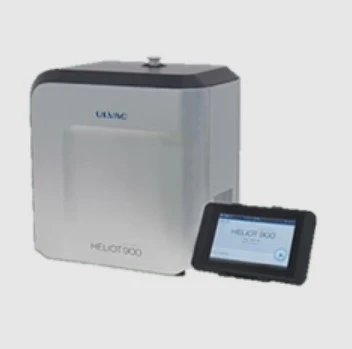
In the world of precision manufacturing, where even a hairline flaw can lead to catastrophic consequences, ensuring airtight integrity is paramount. The Helium Leak Tester stands as the gold standard in leak detection, offering unmatched accuracy, reliability, and speed. When combined with advanced industrial vacuum solutions, manufacturers gain a powerful tool to achieve zero-defect goals without compromising efficiency.


















Sign in to leave a comment.