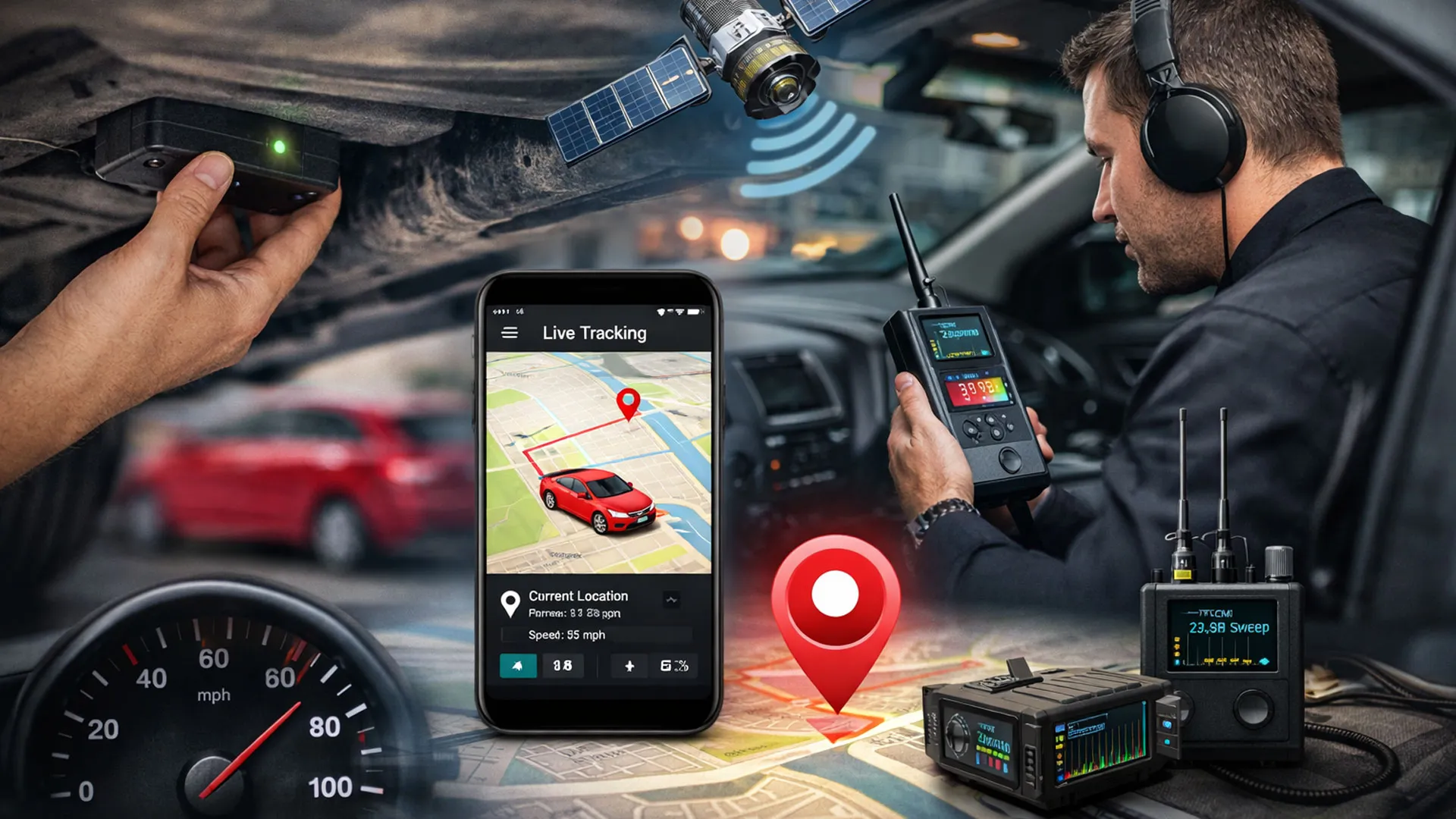

Introduction – This Got Real, Fast
Not that long ago, the idea of someone secretly tracking your car felt a bit… extreme. Like something reserved for crime shows or spy movies.
Now? It’s a lot more normal than people realize.
Cars today are packed with tech—GPS, sensors, apps talking to other apps. It’s all meant to make life easier. And to be fair, it does. Navigation is smoother. Safety features are better. Everything feels connected.
But here’s the part most people don’t think about: anything that can track your car for convenience can also track it for other reasons.
That’s where the Hidden GPS Tracker comes in—and why this conversation matters more than ever.
What Is a Hidden GPS Tracker ?
At its simplest, a Hidden GPS Tracker is just a small device that reports where your vehicle is. Quietly. Continuously.
Some are wired in. Others run on batteries. Some plug directly into your car in seconds.
And the scary part? A lot of them are designed specifically not to be noticed.
They can:
- Show live location
- Log everywhere the vehicle has been
- Send alerts when the car moves
- Build a pretty detailed picture of someone’s daily routine
Now, not all of this is bad. There are completely legitimate uses—fleet tracking, theft recovery, even parental monitoring.
But when it’s done without your knowledge, it stops being useful and starts being invasive.
Why Cars Have Become So Easy to Track
This didn’t happen overnight. It’s more like… a slow shift that most people didn’t pay attention to.
Cars Don’t Really “Switch Off” Anymore
Even when parked, many systems stay active. That opens the door for continuous tracking—sometimes around the clock.
They’re Basically Smartphones on Wheels
Think about how connected your car is. Apps, cloud sync, Bluetooth, remote access. It’s not just a vehicle anymore—it’s a device.
And like any device, it can be monitored.
Location Data Is Valuable (Maybe Too Valuable)
Where you go says a lot about you. Habits, routines, patterns—it’s all there. That’s useful data. Which also makes it sensitive.
The Real Risks (And Why This Isn’t Just “Paranoia”)
Let’s be honest—most people don’t worry about this until something feels off.
But the risks are very real.
Someone Can Track Your Routine Without You Knowing
Not just where you are—but where you go regularly. Home. Work. Places you visit often.
That kind of pattern is powerful.
It’s Been Used in Stalking Cases
This isn’t hypothetical. Hidden trackers have been used in real situations involving harassment and stalking. They’re cheap, easy to install, and hard to notice.
Businesses Aren’t Immune Either
If you manage vehicles or operations, unauthorized tracking can expose routes, clients, or internal movement patterns.
And Then There’s the Digital Side
Some trackers connect to networks. Which means—like anything connected—they can potentially be accessed or exploited.
Where Would Someone Even Hide a Tracker?
This is usually the point where people start checking their car.
Truth is, there are quite a few spots:
- Under the dashboard
- Plugged into the OBD-II port (this one’s very common)
- Under seats or inside compartments
- Inside wheel wells or bumpers
- Attached underneath with magnets
- Even tucked into the engine area
Most of these places aren’t visible unless you go looking.
Subtle Signs That Something Might Be Off
There’s no flashing warning light for this. But sometimes, small things add up.
- Your battery drains faster than usual
- You notice something unfamiliar during a clean or check
- There’s a device plugged in that you didn’t install
- Someone seems to know your movements a little too well
Individually, these don’t prove anything. Together? Worth paying attention.
How to Check for a Hidden GPS Tracker
Start Simple
Take a few minutes and actually look. Use your phone light. Check the obvious—and not-so-obvious—places.
You don’t need to be an expert. Just be thorough.
Use Detection Tools (If You Have Access)
RF detectors can sometimes pick up signals from active trackers. They help—but they’re not perfect, especially with newer devices that don’t transmit constantly.
If It Feels Serious, Go Professional
This is where a TSCM Bug Sweep comes into play.
TSCM Bug Sweep – When You Want Certainty
A TSCM Bug Sweep (Technical Surveillance Countermeasures) is basically a deep scan for hidden surveillance devices.
And it’s a different level compared to DIY checks.
Professionals use:
- Signal analysis tools
- Equipment that detects electronics—even if they’re not actively transmitting
- Methods that go beyond what consumer tools can do
It’s not something everyone needs. But in certain situations, it makes sense:
- You genuinely suspect tracking
- You’re dealing with sensitive work or legal matters
- Privacy isn’t optional—it’s critical
In those cases, a TSCM Bug Sweep gives you clarity.
Is This Legal? It Depends
There’s no one-size answer here.
Generally:
- Tracking your own vehicle? Usually fine
- Tracking someone else without consent? Often not
But there are gray areas—especially with shared vehicles or company ownership.
If you’re unsure, it’s better to check than assume.
How to Reduce Your Risk (Without Overthinking It)
You don’t need to go full detective mode. Just stay aware.
Get Familiar With Your Own Car
The more you know what “normal” looks like, the easier it is to spot something that isn’t.
Be Mindful Where You Park
Unsecured or isolated areas make it easier for someone to access your vehicle unnoticed.
Keep an Eye on the OBD Port
It’s one of the easiest access points. If something’s plugged in and you didn’t put it there—take a closer look.
Consider Occasional TSCM Bug Sweep Checks
Not regularly, not obsessively—but when it makes sense.
So… Are Cars Becoming Surveillance Tools?
Short answer? In some ways, they already are.
Not always intentionally. Not always maliciously. But the capability is there—and growing.
As cars become more connected, the line between helpful tech and unwanted tracking gets thinner.
And once you add a Hidden GPS Tracker into the mix, that line can disappear completely.
Conclusion – Awareness Is the Advantage
This isn’t about fear—it’s about awareness.
Hidden GPS trackers exist. They’re easy to use. And in the wrong hands, they can reveal more about your life than you’d ever be comfortable sharing.
The good news? You’re not powerless.
A quick check. A bit of awareness. And when needed, a TSCM Bug Sweep.
Sometimes, that’s all it takes to stay one step ahead.
FAQs
How do I check if my car has a hidden GPS tracker?
Start with a visual inspection of common hiding spots. If you’re still unsure, electronic detectors or a professional sweep can help.
Can a GPS tracker work when the car is off?
Yes. Many battery-powered trackers continue working even when the vehicle isn’t running.
What is a TSCM Bug Sweep in simple terms?
It’s a professional inspection that uses advanced tools to find hidden surveillance devices like GPS trackers.
Are hidden GPS trackers always illegal?
No—but using them without consent in many situations can be illegal. It depends on local laws and ownership.
Should I hire a professional to check my vehicle?
If you have a strong reason to suspect tracking, it’s the most reliable way to know for sure.


























Sign in to leave a comment.