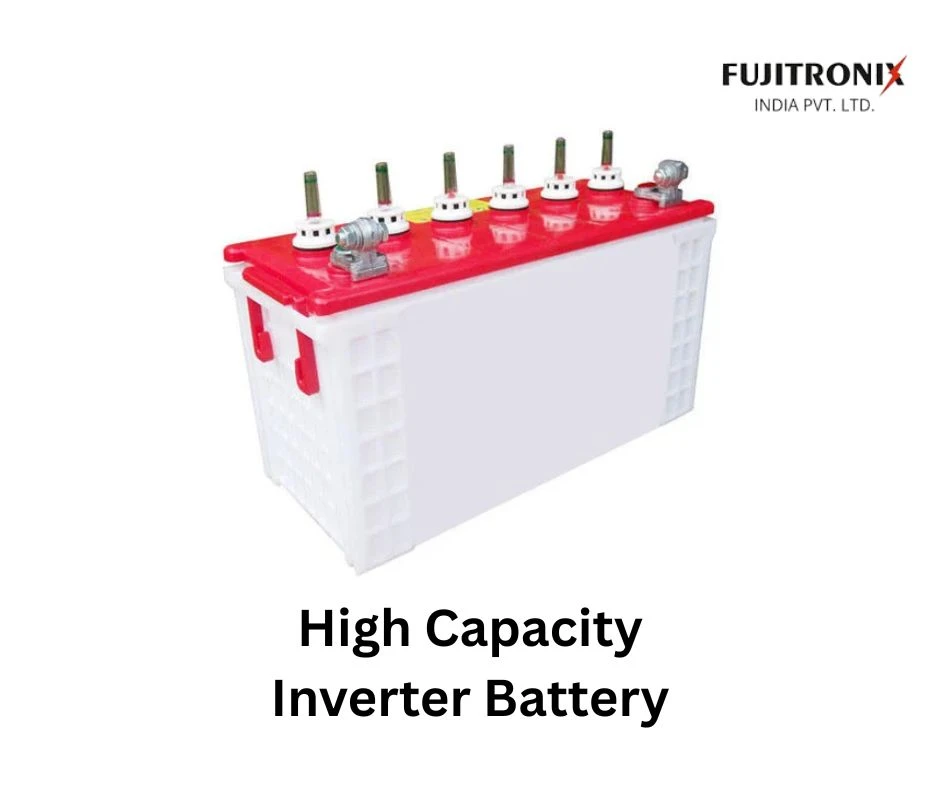

Power cuts don’t announce themselves before happening. They just happen and disrupt everything. When the electricity goes off, then your inverter’s battery is the one that saves you in times of trouble. But one question has always remained — “Is it right to invest in a high capacity inverter battery or can the work be managed with a normal standard battery as well?”
Understanding What Sets Them Apart
Regular batteries handle basic power needs quite well. During short outages, your fans will keep running and the lights will stay on. But what if the power disappears for hours? Is there any battery that can handle such a situation properly? In this matter, battery capacity plays an important role.
A highest capacity inverter battery stores a significant and much larger amount of energy. Think of it like a big fuel tank. Where a 150Ah battery provides 3–4 hours of power backup, those High capacity battery models that start from around 200Ah can easily give 6–8 hours of backup. The math is very simple — more storage means more runtime.
When Does Capacity Actually Matter?
More than “How much is the back-up time?” what matters is “What are you running on the battery?” Most people ignore this thing.
Want to keep your refrigerator cold during summer power outages? Or want to keep your home-office fully functional during the day? Then you will definitely need the support of a high power inverter battery. A standard battery struggles with such load requirements. It drains quickly, and because of that, it also wears out in the long term.
Consider these scenarios:
- Frequent extended outages lasting beyond 4–5 hours
- Running multiple appliances simultaneously during power cuts
- Critical medical equipment or business operations at home
- Climate control needs like fans or coolers in extreme weather
- Lift backup battery requirements for residential complexes
The Practical Trade-Offs
Higher capacity does not come without consideration. These batteries are bigger in size, heavier in weight, and their price is also higher. Professional help is needed for installation. And for storing high capacity batteries, you should also have sufficient space — probably a utility area or maybe a balcony.
But there is a flip side as well. High capacity batteries have a life of around 5–7 years, whereas a normal standard battery only lasts 3–4 years. They handle frequent charging cycles well and perform reliably even in demanding conditions. When looked at over the long term, because of fewer replacements, this becomes a better value solution despite the initial cost.
Finding Your Right Fit
Before choosing any option, understand your actual power needs properly. Make a list of which appliances you need the most during power outages. Multiply their wattage by your desired run time and factor in approximately an 80% efficiency rate. This will give you an idea of your capacity requirement.
Brands like Fujitronix India provide such batteries that are designed keeping Indian household needs in mind. Their battery range can satisfy all kinds of household needs without compromising on quality.
Source Link - https://fujitronix-india.hashnode.dev/high-capacity-inverter-battery-vs-normal-battery-which-one-is-better?showSharer=true


























Sign in to leave a comment.