

Enterprises across Riyadh, Jeddah, and the wider Kingdom are upgrading to a high-performance Access Control System as physical security expectations rise alongside Vision 2030's rapid pace of commercial and industrial expansion. From corporate towers to critical infrastructure sites, Saudi organisations can no longer rely on basic lock-and-key security when regulators such as the National Cybersecurity Authority (NCA) and the Saudi Data and Artificial Intelligence Authority (SDAIA) hold facility operators to an increasingly structured standard for physical and digital security convergence.
This guide explains how modern access control technology is reshaping enterprise security across the Kingdom, what capabilities facility and security managers should prioritise, and how to deploy a compliant, scalable solution with minimal disruption to daily business operations.
Why Saudi Enterprises Are Upgrading Their Access Control Infrastructure
Mechanical locks and shared physical keys create three recurring problems for enterprise security teams: no record of who entered a space or when, no ability to revoke access instantly when an employee departs, and no way to restrict entry by time, role, or zone. A modern Security Access Control System replaces this uncertainty with a digital, credential-based framework that logs every entry and exit, enforces role-based permissions, and produces an auditable record that satisfies both internal security policy and the compliance expectations of regulators overseeing critical and commercial facilities across Saudi Arabia.
The upgrade also delivers operational efficiency. Lost keys no longer require a full lock replacement, new employees can be provisioned in minutes rather than days, and facility managers gain a single point of control across a multi-building or multi-city footprint instead of managing physical keys site by site.
Biometric Access Control System: Eliminating Credential Sharing
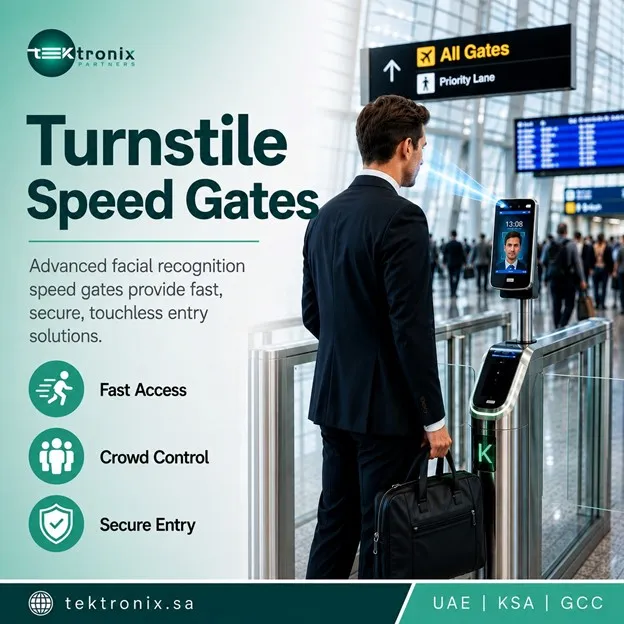
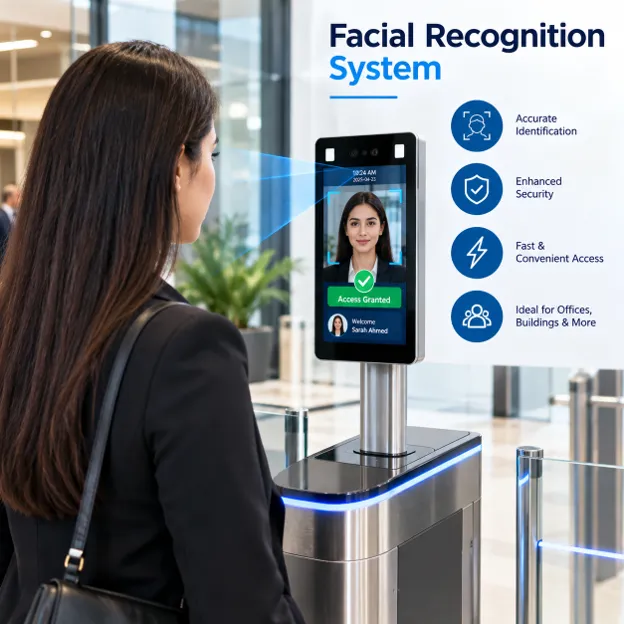
Card-based credentials can be lost, duplicated, or shared between employees, quietly undermining the integrity of any access log. A Biometric Access Control System removes this weakness entirely by verifying identity through fingerprint, facial recognition, or iris scanning — ensuring the person granted access is always the person actually present at the door. For Saudi enterprises managing sensitive data rooms, server facilities, or restricted operational zones, biometric verification provides a level of assurance that card or PIN-based systems cannot match, while still integrating with existing credential infrastructure for lower-risk areas.
Door Access Control: The Physical Layer of Enterprise Security
At the most granular level, every secured entry point in a building represents a decision point that must be enforced consistently. Door Access Control hardware — electronic strikes, magnetic locks, and smart readers — converts each doorway into a managed checkpoint governed by centrally defined rules rather than a shared physical key. This allows facility managers to restrict specific doors to specific roles, shifts, or departments, and to instantly lock down any door remotely in the event of a security incident, something a mechanical lock simply cannot support.
Mobile Access Control: Credentials Employees Already Carry
Physical access cards are easy to forget, lose, or leave behind, creating daily friction for reception and security staff issuing temporary passes. Mobile Access Control solves this by turning an employee's smartphone into their credential, using secure Bluetooth or NFC communication to unlock doors with a tap or automatic proximity detection. Beyond convenience, mobile credentials are easier to issue, revoke, and audit remotely, making them particularly well suited to Saudi enterprises with distributed teams, frequent contractor turnover, or multi-site operations across different cities.
Access Control Device Options for Every Facility Type
Deployment flexibility matters across different building types and security tiers. An Access Control Device can range from a simple standalone card reader for a single door to a fully networked biometric terminal integrated with the enterprise's central security platform. Selecting the right device profile depends on the sensitivity of the area being protected, expected traffic volume, and whether the organisation requires real-time monitoring or simpler, offline-capable entry control for lower-risk zones.
Access Control Solutions: The Platform Behind the Hardware
Regardless of which readers or locks are installed at the door, the intelligence sits in the management platform itself. Comprehensive Access Control Solutions centralise credential management across one or multiple facilities, enforce role-based and time-based access rules, generate compliance-ready audit reports, and integrate with CCTV, visitor management, and HR systems. For organisations with offices or industrial sites across multiple Saudi cities, a unified platform ensures every location follows the same security standard rather than relying on inconsistent, site-specific hardware configurations.
Regulatory Alignment for Access Control in the Kingdom
Physical security in Saudi Arabia increasingly operates within a structured regulatory framework. The National Cybersecurity Authority (NCA) sets the Essential Cybersecurity Controls (ECC) and Critical Systems Cybersecurity Controls (CSCC) that govern the security of connected systems, including networked access control infrastructure, for regulated entities. The Saudi Data and Artificial Intelligence Authority (SDAIA) oversees data governance expectations relevant to biometric and credential data handling, while government and critical-infrastructure-adjacent organisations often also align with ICTD and iGA guidance where applicable. An Access Control System KSA deployment supports alignment with these frameworks by producing exportable, tamper-resistant access logs and enforcing consistent identity verification across every facility, reducing audit preparation time and strengthening the organisation's overall security posture.
Why Choose Tektronix for Access Control Deployments
Tektronix is an ISO 9001:2015 and ISO/IEC 27001:2022 certified systems integrator with an established track record of security technology deployments across Saudi Arabia and the wider GCC. As an authorised partner across leading access control and biometric hardware platforms, the company designs Access Control System deployments engineered specifically for Saudi regulatory requirements and enterprise-scale facility environments, backed by responsive local support and ongoing maintenance coverage.
Facility and security managers evaluating vendors can review Tektronix's full access control solution for Saudi enterprises to see complete deployment specifications, supported hardware, and integration options for single-site and multi-branch facility environments.
The Hidden Cost of Legacy Lock-and-Key Security
Organisations that continue relying on mechanical locks and shared keys often underestimate the operational exposure this creates. A single lost master key can force a costly, disruptive rekeying of an entire facility. Departing employees who fail to return keys leave a lingering security gap that is rarely tracked or resolved consistently. During an audit, incident investigation, or insurance claim following unauthorised entry, the absence of a verifiable, time-stamped access record can turn a routine procedure into a prolonged, high-stress exercise — and in regulated sectors, may itself constitute a compliance failure.
The exposure compounds further when a security incident involves an individual who should never have had access to a restricted area in the first place. A modern access control deployment removes this risk almost entirely, at a cost that is typically recovered within the first avoided incident or failed-audit remediation cycle.
What to Look for When Choosing an Access Control Vendor
Not every access control platform is built for Saudi enterprise requirements. Facility and security managers should evaluate biometric accuracy and false-rejection rates under real-world conditions, integration depth with existing CCTV and HR infrastructure, data residency and hosting compliance with SDAIA expectations, and the vendor's ability to support multi-site deployments from a single management console.
Questions Worth Asking Any Vendor
- Does the platform support biometric verification with proven accuracy in high-traffic environments?
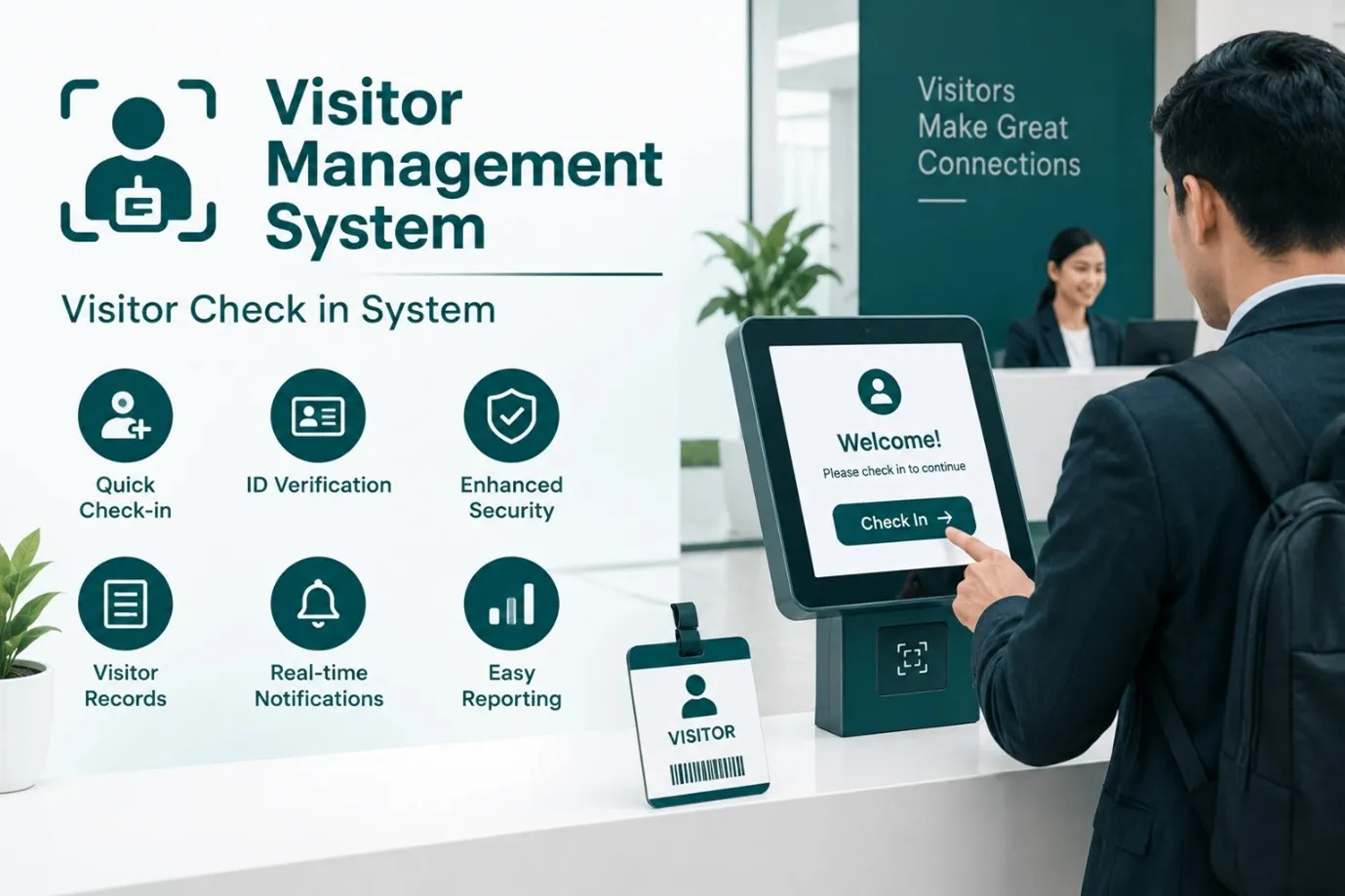
- Can the system integrate directly with our existing CCTV, HR, and visitor management infrastructure?
- Where is credential and biometric data hosted, and does it meet SDAIA and NCA data protection expectations?
- What local support and response time can we expect if a reader or the platform fails?
- Can the system scale across multiple sites in Riyadh, Jeddah, or other Saudi cities under one dashboard?
Implementation Process: From Site Survey to Live Deployment
1. Site and Risk Assessment
A qualified engineer surveys the facility to map entry points, classify zones by sensitivity, and determine the appropriate mix of readers, locks, and biometric hardware for each area.
2. Hardware Installation and Integration
Readers, electronic locks, and biometric terminals are installed and integrated with the organisation's central security management platform and existing CCTV infrastructure.
3. Access Policy and Compliance Configuration
Role-based and time-based access rules, escalation procedures, and audit reporting formats are configured to match the organisation's specific security and compliance policy.
4. Staff Training and Ongoing Support
Security and facilities staff receive hands-on training on credential management and exception handling, backed by ongoing local support for any hardware or software issue.
Who Benefits: Industries and Locations We Serve
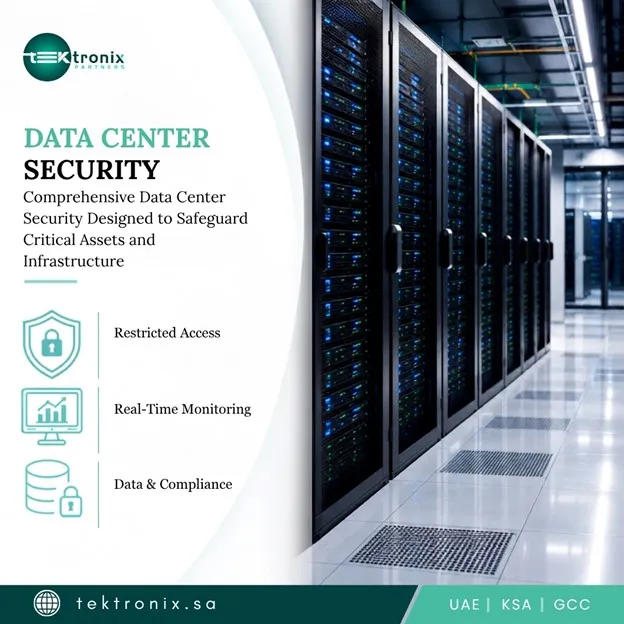
High-performance access control is deployed across a wide range of Saudi facility environments, including corporate headquarters, financial services offices, government-adjacent facilities, industrial and energy sector sites, data centres, and multi-tenant commercial towers where consistent, verifiable entry control across many zones is essential.
Geographic Coverage Across Saudi Arabia
- Access Control System Riyadh deployments — corporate headquarters, financial district towers, and government-adjacent facilities
- Jeddah — commercial offices, logistics hubs, and trading company headquarters
- Dammam and the Eastern Province — energy, industrial, and critical infrastructure sites
- Wider Kingdom support extending to secondary cities and regional business hubs
Integrating Access Control Into Broader Enterprise Security Operations
For larger Saudi organisations, access control rarely operates as a standalone system. Most deployments integrate credential data with existing CCTV video management systems, visitor management platforms, and HR or directory services, so a single security dashboard reflects both employee and visitor movement across the facility in real time. This integration allows security teams to correlate a door-access event with corresponding CCTV footage automatically, significantly speeding up any post-incident investigation.
Central facility and security management teams overseeing multiple sites across the Kingdom also benefit from consolidated reporting, allowing head-office security staff to benchmark access patterns, identify recurring compliance gaps, and standardise entry-control procedures across an entire portfolio rather than managing each site independently.
Conclusion
A well-implemented Access Control System KSA enterprises can rely on is now essential for modern Saudi facility security and regulatory alignment. A reliable Biometric Access Control System paired with a robust Security Access Control System removes the weaknesses of shared physical keys, while Door Access Control hardware and flexible Mobile Access Control give facility teams precise, real-time entry management across every site. The right Access Control Device and purpose-built Access Control Solutions tie it all together into one auditable, compliant framework. Speak with Tektronix's access control specialists in Riyadh to design a deployment tailored to your facility footprint and security policy.
FAQs
1. Why are Saudi enterprises replacing mechanical locks with electronic access control?
An Access Control System replaces unreliable shared keys with a digital, credential-based framework that logs every entry and allows instant revocation when an employee departs.
2. How does biometric verification improve security over card credentials?
A Biometric Access Control System verifies the actual person present at the door through fingerprint or facial recognition, eliminating the risk of shared or duplicated card credentials.
3. Can employees unlock doors using their smartphones?
Yes. Mobile Access Control turns an employee's phone into a secure credential using Bluetooth or NFC, removing the need to carry and manage physical cards.
4. What hardware is needed to secure a single sensitive door?
Requirements vary by risk level. An Access Control Device can range from a simple standalone reader to a networked biometric terminal for high-security zones.
5. Can one platform manage access across multiple Saudi facility locations?
Yes. Centralised Access Control Solutions let organisations enforce the same entry rules and audit reporting across every site, from Riyadh to Jeddah, through a single dashboard.
Security Access Control System



























Sign in to leave a comment.