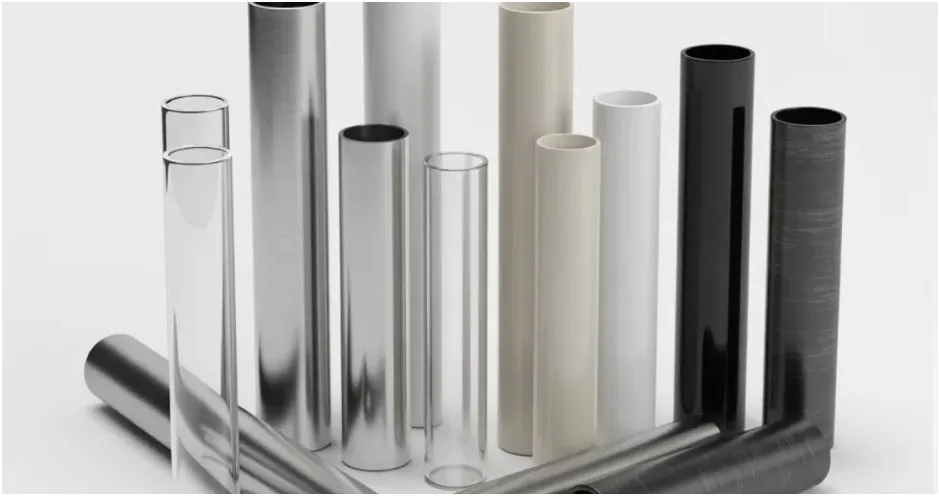

Cylinder tubes are critical precision parts found in many hydraulic systems, pneumatic machines, and industrial engineering applications. Cylinder tubes are high-strength metal tubes used for pressure resistance, smooth movement, and structural stability under high pressure in harsh environments. Cylinder tubes are considered crucial components in systems that require controlled linear motion in modern manufacturing.
Cylinder tubes and industrial cylinder tubes are designed with precision to meet safety, efficiency and durability standards. These tubes are typically produced through sophisticated manufacturing techniques and materials, ensuring robust performance in industrial applications.
What Are Cylinder Tubes?
Cylinder tubes are metal tubes with a hollow cylindrical form and are the main body of hydraulic and pneumatic cylinders. These tubes form a chamber that is resistant to pressure and a piston is used to create mechanical force.
From an engineering point of view, cylinder tubes are not the same as ordinary pipes since they are not intended to carry fluids. They are well controlled internally for surface finish, dimensional stability and strength to ensure the best performance.
Importance of Cylinder Tubes in Engineering
Cylinder tubes are important components of mechanical systems in the modern world. They are employed at locations where controlled movement, force transfer and pressure resistance are needed. Hydraulic machinery and automated systems would not work efficiently without cylinder tubes.
The following are some of the main reasons why cylinder tubes are important:
- Ensuring smooth piston movement
- Withstanding high internal pressure
- Providing structural stability in machinery
- Reducing friction and wear in hydraulic systems
- Supporting long-term industrial operations
Types of Cylinder Tubes
Cylinder tubes can be classified as follows according to the manufacturing process: Cylinder tubes can also be classified according to application: Cylinder tubes can also be classified as follows according to the material composition:
Seamless Cylinder Tubes
The seamless cylinder is the seamless tube with no weld seams, which has high strength, a uniform structure and no welding seam.
Welded Cylinder Tubes
They are created by rolling and welding a metal sheet. These are inexpensive and are utilised in applications that need moderate pressure.
Honed Cylinder Tubes
Honed cylinder tubes have a very smooth inside surface, which helps to minimise friction and seal.
Chrome-Plated Cylinder Tubes
The tubes are chrome-plated for corrosion protection and increased wear resistance.
Materials Used in Cylinder Tubes
There are a number of different types of metal that can be used to make cylinder tubes, depending on the application:
- Carbon steel
- Stainless steel
- Alloy steel
- Aluminium alloys
- Special industrial-grade metals
The choice of the metal is important as its strength, corrosion resistance, and durability depend on the quality of the material.
Manufacturing Process of Cylinder Tubes
Advanced engineering techniques are used to ensure precision and reliability in the production of cylinder tubes.
Typical manufacturing techniques involve:
- Metal extrusion or rolling
- Heat treatment for strength improvement
- Cold drawing for dimensional accuracy
- Internal surface honing for a smooth finish
- Quality inspection and pressure testing
In high-pressure applications, seamless production methods are often preferred for their uniform structure and absence of weld seams.
Key Features of Cylinder Tubes
Cylinder tubes are manufactured to strict technical requirements to ensure performance under extreme conditions.
Important features include:
- High-dimensional accuracy
- Excellent surface smoothness
- Strong pressure resistance
- Uniform wall thickness
- High corrosion resistance
- Long operational lifespan
These characteristics make cylinder tubes ideal for critical industrial uses.
Applications of Cylinder Tubes
Cylinder tubes are employed in a number of different industries that demand mechanical power and hydraulic motion.
Construction Machinery
Applicable to excavators, loaders, cranes and lifting machines.
Industrial Manufacturing
Essential on presses, automation equipment and production machines.
Agricultural Equipment
Tractors, harvesters and hydraulic farming equipment.
Automotive Industry
Used in lifting devices, brakes and suspension systems.
Marine & Offshore Systems
Used in areas where moisture and corrosion occur.
In industries around the world, cylinder tubes are well-known and vital parts of hydraulic and pneumatic systems.
Advantages of Cylinder Tubes
There are several engineering and operational advantages to cylinder tubes:
- High strength-to-weight ratio
- Capable of handling pressure effectively
- Reduced maintenance requirements
- Improved operational efficiency
The benefits make cylinder tubes essential in modern industrial design.
Quality Standards for Cylinder Tubes
Cylinder tubes need to be built to industrial standards for safety and performance. These standards regulate:
- Material composition
- Wall thickness tolerance
- Surface finish quality
- Pressure resistance levels
- Structural uniformity
Cylinder tubes are thoroughly tested before being used in industry.
Maintenance of Cylinder Tubes
With proper maintenance, a long service life and consistent performance can be guaranteed:
- Regular checks for wear and corrosion
- Appropriate lubrication of internal surfaces
- Ensuring that the hydraulic fluids don't get contaminated.
- Timely replacement of seals and components
Efficient and long-lasting operations depend greatly on good maintenance practices.
Future of Cylinder Tubes in Industry
Due to advances in automation and sophisticated machinery, demand for cylinder tubes continues to rise. In modern engineering, the emphasis is placed on:
- Higher pressure resistance
- Lightweight materials
- Enhanced corrosion protection
- Improved energy efficiency
In next-generation hydraulic and mechanical systems, cylinder tubes will remain vital.
Conclusion
Cylinder tubes are essential components of hydraulic and industrial systems, engineered for strength, accuracy, and reliability. They are integral to numerous machines, construction projects, and manufacturing processes, forming the backbone of modern engineering. As the industry evolves, cylinder tubes undergo continuous innovations in both design and material composition, ensuring they remain both functional and efficient.































Sign in to leave a comment.