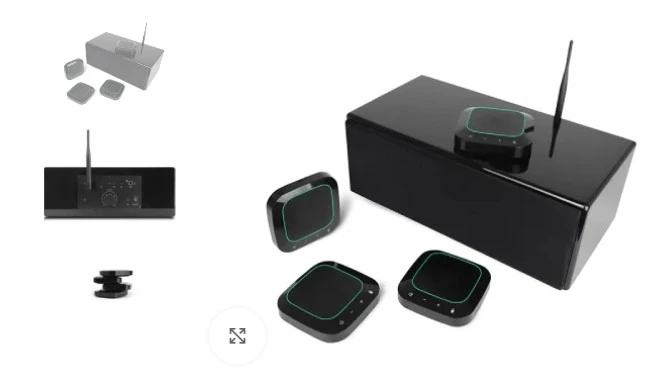

In today's hybrid work environment, crystal-clear audio isn't a luxury—it's a necessity. Whether you're hosting a board meeting, conducting a remote training session, or collaborating across continents, your audio setup can make or break the experience. Enter daisy chain controlled speakerphone technology: a game-changing solution that combines enterprise-grade audio quality with surprisingly simple setup and management.
What Is Daisy Chain Speakerphone Technology?
Daisy chain controlled speakerphone systems allow you to connect multiple speakerphone units in series, creating expansive audio coverage without the complexity of traditional multi-device setups. Instead of managing four separate devices with individual connections, you connect them sequentially—like links in a chain—with one primary unit controlling the entire system.
Think of it as the difference between conducting four separate orchestras versus having one conductor lead a larger, unified ensemble. The result? Seamless audio coverage across large conference rooms, boardrooms, or training spaces.
How Does Daisy Chain Connection Work?
The beauty of daisy chain technology lies in its elegant simplicity:
- Primary Unit: One speakerphone connects directly to your computer, video conferencing system, or phone via USB, Bluetooth, or traditional audio cables.
- Secondary Units: Additional speakerphones connect to each other in sequence using dedicated daisy chain ports—typically via simple cable connections.
- Unified Control: The primary unit acts as the brain, synchronizing audio pickup, processing, and output across all connected devices.
- Single Interface: Your conferencing software recognizes the entire system as one device, eliminating the need to manage multiple audio sources.
Key Benefits of 4 Units Speakerphone Systems
Scalable Audio Coverage
A single speakerphone typically covers 10-15 feet effectively. By daisy chaining four units, you can provide consistent, high-quality audio coverage for rooms up to 40-60 feet, accommodating 12-20 participants comfortably.
Simplified Setup and Management
Unlike traditional multi-device systems that require:
- Individual USB connections for each unit
- Complex audio mixing software
- Manual volume balancing across devices
- Multiple device configurations in your conferencing platform
Daisy chain systems require just one connection to your host device. The system automatically handles audio synchronization, echo cancellation across units, and balanced pickup from all microphones.
Cost-Effective Expansion
Expanding your conference room capacity doesn't mean buying an entirely new system. Daisy chain technology allows you to start with one or two units and add more as your needs grow—protecting your initial investment while maintaining audio consistency.
Professional Audio Quality
High tech audio features built into daisy chain systems include:
- 360-degree pickup: Omnidirectional microphones in each unit capture voices from all angles
- Automatic gain control: Adjusts for speakers at varying distances
- Echo cancellation: Eliminates feedback across all connected units
- Noise suppression: Filters out HVAC, keyboard typing, and ambient sounds
- Full-duplex audio: Allows natural, simultaneous two-way conversation
Ideal Use Cases for Daisy Chain Speakerphone Systems
Large Conference Rooms
Board meetings and executive sessions in spacious rooms benefit from the even audio distribution that four strategically placed units provide. No more asking remote participants "Can you hear me?" or having people crowd around a single device.
Training and Education Spaces
Classrooms and training facilities with flexible seating arrangements can position units throughout the space, ensuring every participant—whether instructor or student—is heard clearly.
Multi-Purpose Meeting Spaces
Rooms that host various meeting sizes can activate only the units needed for smaller gatherings while having full coverage available for larger sessions.
Collaborative Work Areas
Open-plan collaboration zones where teams gather informally benefit from distributed audio pickup that doesn't require people to stay within a tight radius.
Technical Considerations for Implementation
Room Layout and Placement
For optimal performance with a 4 units speakerphone system:
- Position units at equal distances around your meeting space
- Place units 6-10 feet apart for best overlap
- Avoid positioning directly against walls to prevent audio reflection
Keep units away from noise sources like projectors or air vents
Cable Management
While daisy chain systems dramatically reduce cabling compared to individual USB connections, proper cable management ensures:
- Professional appearance
- Trip hazard prevention
- Signal integrity maintenance
- Easy troubleshooting access
Consider in-floor cable channels, under-table routing, or cable management trays designed for conference rooms.
Compatibility Check
Before investing, verify compatibility with:
- Your primary video conferencing platform (Zoom, Teams, Google Meet, Webex)
- Existing conference room technology
- Operating systems used in your organization
- Future-proofing for emerging communication tools
Comparing Daisy Chain to Alternative Solutions
Daisy Chain vs. Individual USB Devices
- Individual USB approach: Requires multiple USB ports, individual device management, potential audio sync issues, and complex software configuration.
- Daisy chain advantage: One USB connection, automatic synchronization, unified control, and simpler troubleshooting.
Daisy Chain vs. Installed Ceiling/Wall Systems
- Installed systems: Permanent installation, higher upfront cost, professional installation required, limited flexibility.
- Daisy chain advantage: Portable setup, lower total cost, DIY installation, easy reconfiguration for different room layouts.
Daisy Chain vs. All-in-One Conference Systems
- All-in-one units: May struggle with audio pickup in large rooms, limited expansion options, replace entire unit if one component fails.
Daisy chain advantage: Distributed pickup, scalable design, component-level redundancy.
Making the Most of Your Investment
Optimization Tips
- Test before critical meetings: Run audio checks with remote participants to ensure optimal volume and clarity
- Update firmware regularly: Manufacturers release updates that improve audio processing and compatibility
- Create pickup zones: Arrange seating to ensure participants sit within effective range of at least one unit
- Use indicator lights: Most units have LED indicators showing active pickup—educate users to monitor these
- Document your setup: Record unit positions and settings for consistent experience across meetings
Troubleshooting Common Issues
- Choppy audio: Check cable connections between daisy chained units; ensure USB connection to host is secure.
- Echo or feedback: Verify echo cancellation is enabled; reduce speaker volume slightly.
Uneven pickup: Reposition units to balance coverage; check that all units are powered and connected properly. - Connection drops: Update USB drivers; try different USB ports; check for firmware updates.
The Future of Conference Audio
As remote and hybrid work models solidify, expect continued innovation in daisy chain technology:
- AI-powered speaker tracking and audio focusing
- Wireless daisy chain connections eliminating cables entirely
- Integration with room sensors for automatic configuration
- Enhanced noise cancellation using machine learning
- Spatial audio creating more natural remote presence
Is Daisy Chain Right for Your Organization?
Consider a 4 units speakerphone system with daisy chain control if you:
- Host meetings with 8+ participants regularly
- Have conference rooms larger than 300 square feet
- Need flexible audio solutions for multipurpose spaces
- Want to avoid permanent installation requirements
- Require professional audio quality without IT complexity
- Plan to scale meeting capacity over time
Conclusion
Daisy chain controlled speakerphone technology represents the sweet spot between professional performance and practical usability. By connecting four units in a simple series configuration, organizations gain enterprise-level audio coverage without enterprise-level complexity or cost.
The technology democratizes high-quality conferencing, making it accessible to businesses of all sizes while maintaining the audio clarity that keeps remote and hybrid teams connected and productive. As we continue navigating the evolving landscape of workplace communication, solutions that combine high tech audio capabilities with intuitive simplicity will remain essential tools for effective collaboration.
Ready to upgrade your conference room audio? A daisy chain speakerphone system might be the simple solution you've been searching for.
























Sign in to leave a comment.