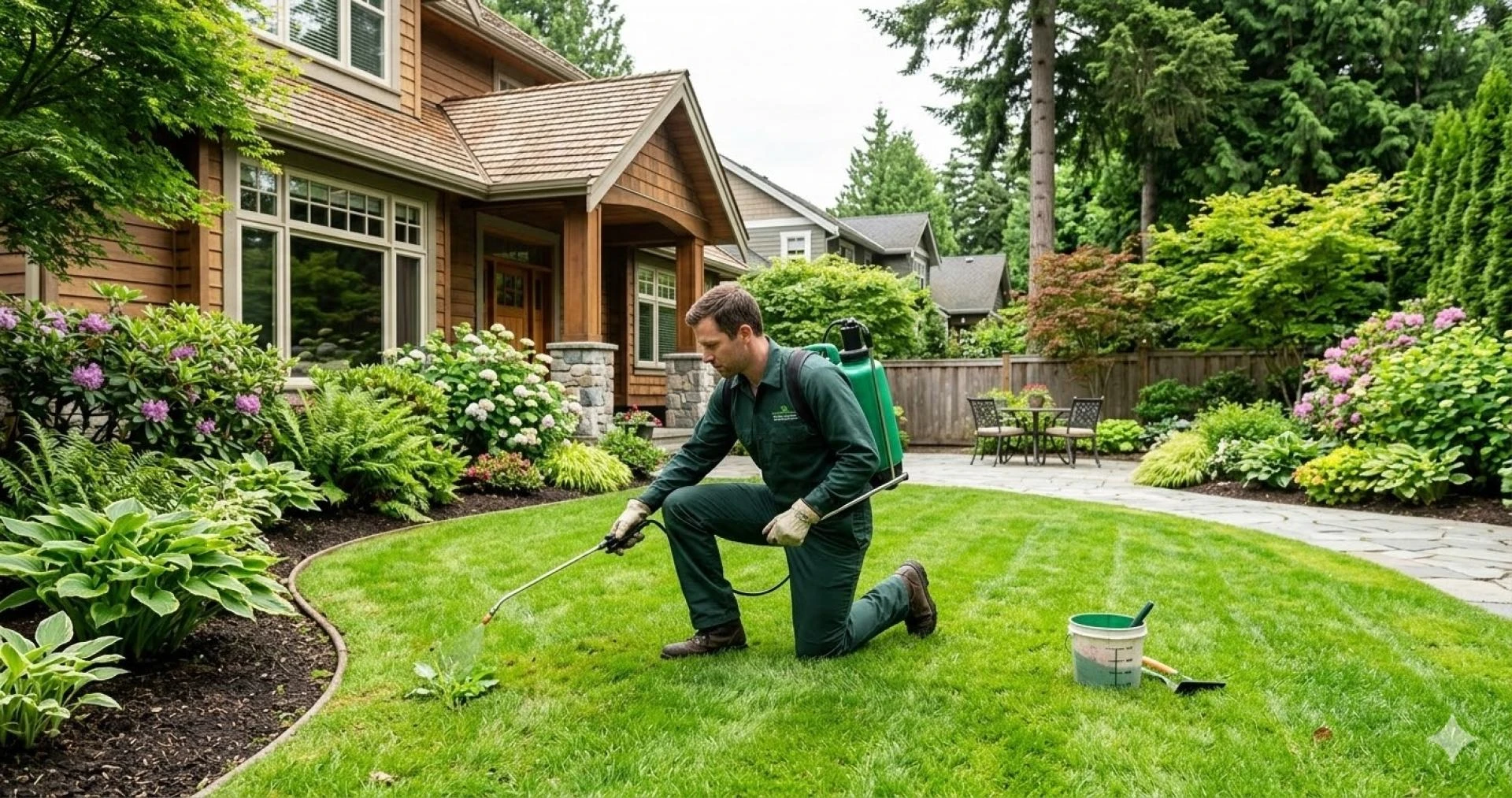

Maintaining a pristine landscape in British Columbia requires more than just a functional mower and a free Saturday. Between the persistent rainfall of the Lower Mainland and the rapid growth cycles of perennial ryegrass, achieving a golf-course finish is a science. For homeowners and enterprise property managers in Surrey, the transition from a soggy spring to a dry summer creates unique physiological stresses on local turf. This guide explores how professional lawn mowing services protect your real estate investment while navigating the specific horticultural challenges of the Canadian West Coast.

Why Professional Precision Matters for Surrey Landscapes
In Surrey, "mowing" is often a misnomer. Real turf management is about biomass control and plant health. Unlike the arid regions of the Prairies, the Fraser Valley’s humidity encourages rapid fungal spread and moss encroachment. If you cut your grass too short during a rainy spell, you risk scalp wounds that invite opportunistic weeds.
Professional teams don't just "cut grass"; they manage an ecosystem. High-end residential and luxury estates require a specific aesthetic that only commercial-grade equipment and horticultural expertise can provide. When you hire experts, you are paying for sharp blades, correct deck heights, and a deep understanding of soil compaction issues common in British Columbia’s clay-heavy soils.
The Impact of Soil Composition on Mowing Frequency
Surrey properties often sit on heavy soil that retains moisture long after a rainstorm. Using heavy consumer mowers on saturated ground leads to rutting and soil compaction. Professional crews utilize light-footprint commercial zero-turns or walk-behind units that distribute weight evenly, ensuring the "striping" looks professional without damaging the root zone.
Understanding the One-Third Rule
One of the most frequent mistakes made by DIY enthusiasts is removing too much of the leaf blade at once. To maintain a healthy lawn, you should never remove more than one-third of the grass height in a single session. Following this rule ensures the plant maintains enough surface area for photosynthesis, preventing the "yellowing" effect often seen after a hack-job mow.
Seasonal Scheduling: Adapting to the BC Climate
The growth rate of grass in British Columbia is not linear. It follows a bell curve that peaks in late May and tapers off during the summer dormancy period. A static bi-weekly schedule rarely works for luxury properties that demand perfection.
Spring: The Rapid Growth Phase
Once the soil temperature hits $10^\circ C$ ($50^\circ F$), your lawn enters a hyper-growth state. During this window, mowing may be required every 5 to 6 days. This is also the critical time to address snow mold and debris left over from the winter months. Professional lawn care companies prioritize timing during this window to ensure the first few cuts of the season set the stage for deep root development.
Summer: Managing Heat Stress and Dormancy
July and August in Surrey can bring unexpected drought conditions. During these months, the focus shifts from growth control to stress management. Increasing the cutting height allows the grass blades to shade the soil, reducing evaporation and keeping the root system cool. If your service provider doesn't adjust their mower decks as the temperature rises, they are effectively killing your lawn.
Fall: Preparing for the Big Freeze
As the rain returns in September, growth spikes again. The final cuts of the season are the most important for preventing winter diseases. Gradually lowering the height helps prevent "matted" grass, which is a breeding ground for fusarium patch (pink snow mold) under the winter snow or heavy rain cover.
Technical Equipment and Specialized Techniques
The difference between a "guy with a mower" and an enterprise-level service is the machinery. For luxury properties, the finish must be surgical. This requires equipment that is maintained daily, not monthly.
High-Lift Blades vs. Mulching Kits
Commercial-grade mowers use high-lift blades that create a vacuum effect, pulling the grass upright before the cutting edge passes through. This results in a perfectly level surface. On the other hand, mulching kits are essential for returning nutrients to the soil. A skilled technician knows when to bag clippings (to prevent thatch buildup) and when to mulch (to provide natural nitrogen).
The Art of Edging and Trimming
A lawn isn't finished until the perimeters are addressed. Vertical edging along sidewalks, driveways, and garden beds creates the "frame" for your landscape. Using a string trimmer at a 90-degree angle ensures a crisp line that prevents grass from creeping into your mulch beds or cracking your pavement.
Precision Around Water Features and Hardscapes
Luxury estates often feature intricate stonework and water features. These areas require hand-mowing or specialized small-deck equipment to avoid mechanical damage. Protecting these assets is a hallmark of high-quality lawn care and maintenance services that cater to discerning owners.
Comparing DIY vs. Professional Management
Many homeowners wonder if the investment in professional service is justifiable. While DIY mowing seems like a way to save money, the hidden costs often tell a different story.
| Feature | DIY Mowing | Professional Service |
| Time Investment | 2-4 hours per week | 0 hours |
| Equipment Cost | $500 - $5,000 + Maintenance | Included in service |
| Blade Sharpness | Usually once a year | Every 8-10 hours of use |
| Expertise | Trial and error | Agronomic training |
| Curb Appeal | Standard | High-end / Striped |
Beyond the time saved, the health of the turf is the primary differentiator. Most residential mowers lack the power to cut cleanly through wet BC grass, resulting in "tearing" rather than "cutting." Torn grass blades turn brown at the tips and are more susceptible to disease.
Sustainable Practices for the Modern Estate
Sustainability is no longer a buzzword; it is a requirement for responsible property ownership in Surrey. Managing a large lawn involves more than just fossil fuels and noise.
Noise Reduction and Electric Innovation
For enterprise properties and luxury stratas, noise pollution is a significant concern. The industry is shifting toward high-capacity electric commercial mowers that offer the same torque as gas engines without the decibel levels. This allows for early morning service without disturbing residents or neighbors.
Integrated Pest Management (IPM)
Mowing is your first line of defense against pests. By maintaining a dense, healthy stand of turf through proper cutting heights, you naturally crowd out weeds like dandelion and clover. This reduces the need for chemical interventions, aligning your property with local BC environmental bylaws and promoting a safer space for pets and children.
Choosing the Right Partner for Your Property
Not all services are created equal. When vetting a provider, look for those who understand the specific micro-climates of Surrey and the surrounding municipalities. You need a team that can choose the right lawn service based on your specific turf variety and soil conditions.
Essential Questions to Ask
- Do you sharpen your blades daily? (Dull blades shred grass).
- Are you insured for commercial/luxury properties? (Protects your hardscape assets).
- Do you vary the mowing pattern? (Prevents soil ruts and "grain" development).
- What is your policy on wet-weather mowing? (Crucial for the BC climate).
Frequently Asked Questions
How often should my lawn be mowed in Surrey?
During the peak growing season (April to June), once a week is the standard. However, during the "May spurt," some high-end properties require service every 5 days to maintain a specific height of cut and prevent clippings from clumping.
What is the best height for grass in British Columbia?
For the typical mix of Kentucky Bluegrass and Fine Fescue found in the Lower Mainland, a height of 2.5 to 3 inches is ideal. This length supports a deep root system and helps the lawn stay green during the drier summer months.
Can you mow the lawn when it is raining?
While it is possible with commercial equipment, it isn't always ideal. If the soil is "squishy," mowing can cause compaction. However, given our climate, we often use specialized walk-behind mowers with high-discharge chutes to handle wet grass without leaving clumps or ruts.
Why does my lawn have brown tips after mowing?
Brown tips are usually a sign of dull mower blades. Instead of a clean slice, the blade is "shattering" the grass tip. Professional services sharpen their blades frequently—often daily—to ensure a clean, surgical cut that heals quickly.
Does professional mowing help with moss control?
Yes. Moss thrives in damp, shaded areas where grass is weak. Regular, professional mowing at the correct height encourages grass density. A thick lawn leaves no room for moss to take hold. Combining proper mowing with aeration and overseeding is the most effective way to eliminate moss permanently.
Elevate Your Property’s Curb Appeal
Your lawn is the "welcome mat" of your property. Whether you are managing a sprawling luxury estate or a high-traffic enterprise facility in Surrey, the quality of your turf reflects your attention to detail. Consistent, science-based mowing prevents the costly cycle of lawn renovation and ensures your outdoor space remains a source of pride rather than a weekend chore.
Harry’s Lawn Care understands the unique horticultural demands of British Columbia. Our team provides the precision, equipment, and reliability required to keep your landscape in peak condition year-round. Ready to experience a higher standard of turf management?






























Sign in to leave a comment.