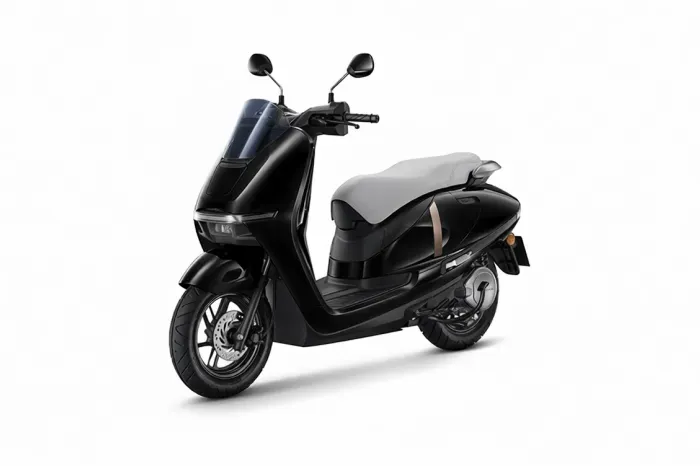

Honda is accelerating its efforts in electric motorcycles for 2026, marking a pivotal shift toward urban mobility and carbon neutrality. The Japanese manufacturer, known globally for reliable and innovative motorbikes, is unveiling models set to redefine commuting. With new patents, production launches, and robust infrastructure plans, Honda’s electric motorcycle portfolio for 2026 caters to both entry-level commuters and experienced enthusiasts, promising affordable options, practical range, and smart features. As environmental regulations tighten worldwide, Honda’s vision offers a glimpse into the future of two-wheeled transport.
Honda’s Electrification Strategy: Urban Focus, Global Impact
Honda recognizes that to make electric motorcycles accessible, simplicity and affordability are essential. The company’s newly patented design focuses on ultra-simple, low-cost motorcycles, targeting mass-market segments. These are especially vital in Asia and Africa, where millions use motorcycles as their primary transport. The bikes favor proven parts—steel frames, classic suspension, minimal electronics—ensuring reliability while reducing costs. Instead of aluminum or advanced electronics, Honda opts for time-tested components. The move away from high-performance, expensive EV bikes reflects the manufacturer’s understanding that urban users value practicality over flashy technology.
Removable Batteries: Practicality for Everyday Riders
One standout innovation is Honda’s removable battery system. Unlike fixed batteries, these are easy to access and swap. The patent reveals batteries mounted in hinged cages along the bike’s frame, allowing users to swing them outward and slide them free. Riders can charge batteries indoors, bypassing the need for specialized charging stations. Simple, secure lock mechanisms and plug-in cables replace complex connectors. This modularity gives riders flexibility, especially in regions where home charging is more practical than public infrastructure. Honda’s decision to forgo its own swappable battery standard in favor of slimmer, removable packs indicates attention to usability and cost-effectiveness.
Launch of the UC3: Urban Commuting Revolution
In 2026, Honda introduces the UC3, a fixed-battery electric motorcycle for Thailand and Vietnam. Equivalent to a 110cc ICE model, the UC3 exemplifies the “Intelligent Urban Life Partner” concept and delivers efficiency, safety, and user-friendly features. Powered by Honda’s first fixed-type lithium ion phosphate (LFP) battery, the wheel-side motor achieves a maximum output of 6.0 kW and delivers up to 122 km cruising range per charge. Riders can select from three riding modes—Standard, Sport, or Econ—to tailor performance and energy use. A reverse mode helps maneuvering into parking, while the UC3’s design incorporates modern curves and dedicated EV colors.
Charging is simplified via “CHAdeMO for two-wheelers,” with options for rapid or overnight charge. Honda offers two chargers, enabling a full 0–100% recharge in four or nine hours depending on power output. Charging infrastructure is expanding at Honda dealerships and shopping malls in Bangkok and major cities in Vietnam, ensuring convenient access for urban riders.
Building Infrastructure for Greater Adoption
A major hurdle for electric motorcycles is charging accessibility. Honda addresses this by rolling out CHAdeMO-compatible charging stations and expanding e:Swap BATTERY STATION installations. These initiatives create a user-friendly ecosystem, focusing not only on product sales but on real-world usability. In addition to fixed battery support, Honda enhances the environment for swappable batteries—the Honda Mobile Power Pack e:—by increasing station density in target markets. The goal is to make electric motorcycles viable for everyday commuting, even for riders with limited home charging options.
2026 Honda WN7: Blending Performance and Innovation
For riders seeking more power and advanced technology, the 2026 Honda WN7 stands out. First debuting as the EV Fun concept, the WN7 is Honda’s flagship urban electric motorcycle, boasting specifications that rival traditional models. With 67 horsepower, 73.8 lb-ft of torque, and a claimed 87-mile range, the WN7 signals Honda’s commitment to closing the gap between gasoline and electric performance. The battery capacity of 9.3kWh and rapid DC charging (20–80% in 30 minutes) make the WN7 practical for city travel.
Honda equips the WN7 with four riding modes: Sport, Standard, Rain, and Econ, letting riders choose their optimal balance of power and efficiency. Regenerative braking is managed by a thumb-operated paddle, giving the sensation of engine braking. The motorcycle is designed with silent operation in mind, utilizing belt final drive and helical-cut reduction gears to minimize noise and vibration.
Key tech features include a frameless design where the battery case is part of the chassis, keyless ignition, walking speed mode for parking, and lean-sensitive traction control and ABS. The WN7’s styling echoes the EV Fun concept, with LED lighting and a relaxed riding position suited for urban environments. Charging flexibility ensures that users can quickly top up at commercial charging stations or home sockets, adapting to various lifestyles.
Market Expansion and Production Plans
As Honda ramps up production in Thailand and Vietnam, it emphasizes local manufacturing to meet regional demand and streamline supply chains. The UC3 production started in December 2025, and plans for Vietnamese production will build a timely supply system for a rapidly electrifying market. Honda’s annual introduction of electric motorcycle models demonstrates responsiveness to changing consumer preferences and regulations.
Globally, Honda hopes to achieve carbon neutrality across its product lineup by 2050. In the motorcycle division, advancing ICE technology and electrification go hand in hand. By adapting to market needs and environmental policies, Honda aims to make green mobility widely attainable, whether through affordable commuters or premium urban models.
Battery Management, Repurposing, and Recycling
Sustainable battery life cycles are crucial as electric motorcycles become mainstream. Honda is committed to repurposing and recycling used batteries to reduce environmental impact and establish a circular value chain. Battery chemistry and performance specifics for new models remain undisclosed, but the dedication to long-term viability is evident.
Design Philosophy: Balancing Tradition and Modern EV Needs
Honda’s 2026 electric motorcycle designs maintain the brand’s tradition of reliability and user-centric features while embracing electric vehicle innovations. Classic engineering is balanced with practical EV technologies. Motorcycle frames remain sturdy and easy to service; electronics are purpose-driven rather than excessive. This careful blend ensures familiarity for seasoned riders and accessibility for newcomers.
Conclusion
Honda’s electric motorcycle lineup for 2026 is set to reshape urban mobility. The range includes ultra-simple, low-cost commuters for mass-market adoption, as well as advanced models like the WN7 catering to performance-minded city riders. Practical charging infrastructure, modular battery solutions, local production, and sustainability initiatives give Honda strong advantages in emerging and mature markets alike. As electrification becomes a central pillar in Honda’s strategy, riders can expect innovative, reliable, and environmentally conscious motorcycles for every need.






















Sign in to leave a comment.