
You blink once, and your baby changes.
One week, they’re stretching and sleeping. A few months later, they’re rolling over, trying solids, and suddenly reaching for everything in sight. It happens fast—which is exactly why so many parents later say, “I wish I had tracked more of those early moments.”
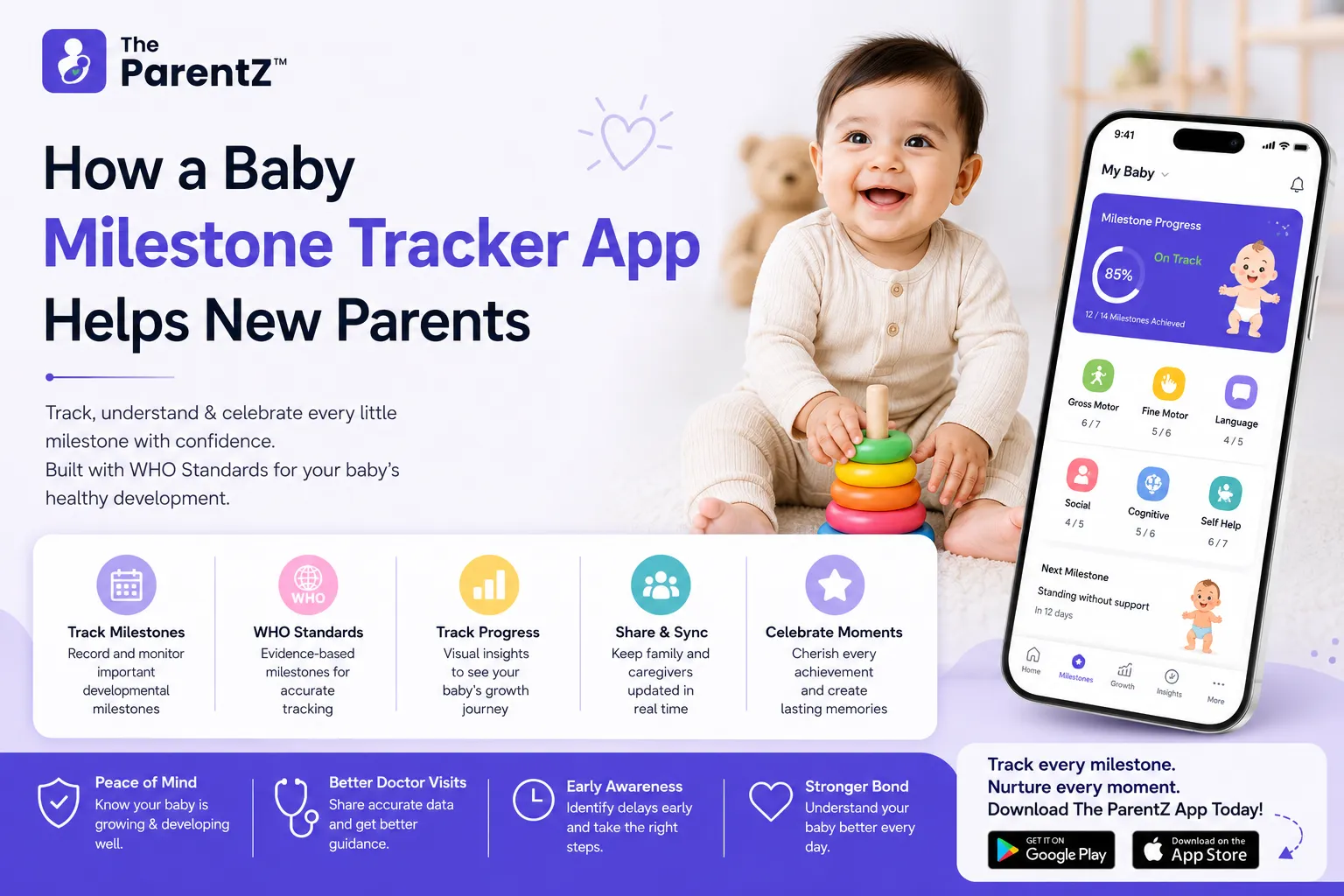
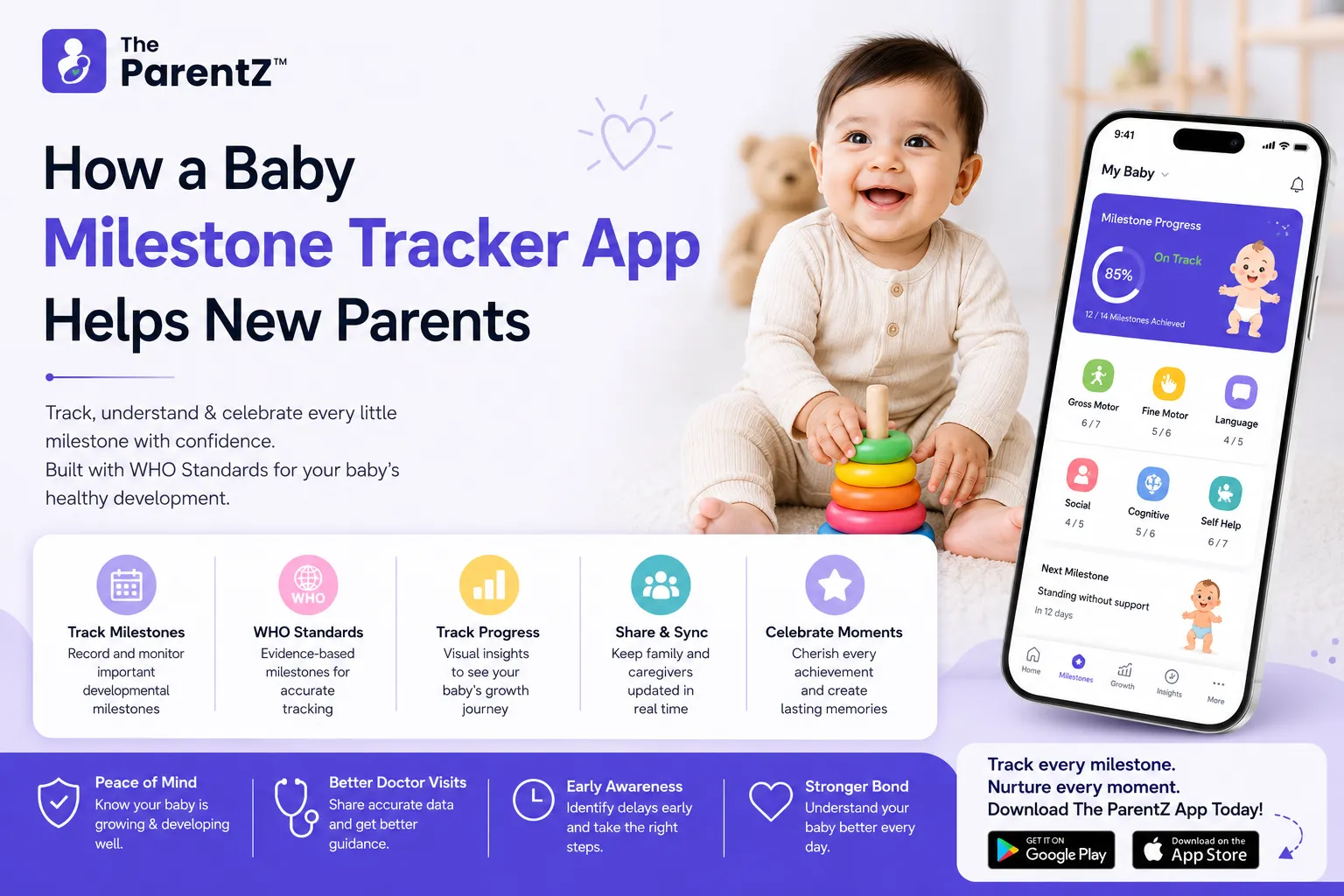
According to the World Health Organization (WHO), early childhood development—including physical movement, communication, and social interaction—is a key indicator of overall child health and long-term outcomes. That’s one reason many families now use a Baby Milestone Tracker with WHO Standards to keep developmental progress organized instead of relying on memory.
What Is a Baby Milestone Tracker App?
A baby milestone tracker app is a digital tool that helps parents record and monitor important stages of their child’s development.
That includes:
- Physical milestones
- Language milestones
- Social development
- Growth patterns
- Everyday achievements
Instead of trying to remember dates or scrolling through thousands of photos later, parents can keep progress in one place.
Simple answer?
It’s like creating a timeline of your baby’s early development—but with guidance that actually helps.
Why New Parents Often Feel Confused About Milestones
This happens almost everywhere.
A baby smiles later than another child.
Someone says:
“Mine started walking at 10 months.”
Another person says:
“Mine talked at one year.”
And suddenly, parents start worrying.
Here’s something worth remembering:
Children develop differently.
Milestones help identify patterns—not create competition.
But when there’s no tracking at all, parents either:
- Overthink normal variation
or - Miss changes worth discussing with doctors.
That middle ground is where tracking becomes useful.
How The Parentz Makes Milestone Tracking Easier
The Baby Milestone Tracker with WHO Standards from The Parentz gives parents a structured way to follow their child’s development.
It helps parents:
- Record milestones
- Track developmental progress
- Organize growth information
- Build healthier parenting routines
The biggest benefit?
Less guessing.
Why Tracking Milestones Is About More Than Memories
Many parents think milestone tracking means saving cute moments.
That’s only part of it.
Good milestone tracking helps parents notice:
- Progress over time
- Developmental patterns
- Questions worth discussing during checkups
Think of it like tracking fitness.
You don’t exercise once and expect results.
You watch progress over time.
Child development works the same way.
1. It Helps Parents Understand Development Better
One of the hardest parts of parenting is not knowing what’s normal.
Tracking milestones creates context.
Instead of wondering:
“Should my baby be doing this?”
You can look at:
- Previous progress
- Development patterns
- Age ranges
That alone reduces a lot of unnecessary stress.
What Milestones Usually Include
Physical milestones
- Rolling over
- Sitting
- Crawling
- Standing
- Walking
Communication milestones
- Smiling
- Babbling
- First words
Social milestones
- Eye contact
- Responding to names
- Interaction with caregivers
2. It Reduces Unnecessary Comparison
This one matters.
Parents compare.
Everybody says they won’t.
Everybody eventually does.
Social media makes it worse.
You see babies doing advanced things and assume yours is behind.
But development isn’t a race.
Tracking your own child creates perspective.
What Usually Works
Compare your baby with:
- Their own progress
- Pediatric guidance
Not random videos online.
3. It Helps Spot Patterns Earlier
Tracking doesn’t diagnose problems.
But it can highlight patterns.
For example:
If multiple developmental areas consistently seem delayed, parents can raise questions earlier during doctor visits.
Earlier conversations often create better outcomes.
Important Reminder
Milestones are indicators—not tests.
A delay in one milestone alone rarely tells the full story.
4. It Creates Better Conversations With Pediatricians
Most doctor appointments move quickly.
Parents often forget:
- Questions
- Dates
- Examples
Tracking gives better information.
Instead of saying:
“I think she started doing that recently…”
You can provide actual timelines.
Doctors appreciate clear observations.
5. It Helps Both Parents Stay Updated
Parenting isn’t always handled by one person.
Many families share responsibilities.
Tracking helps:
- Parents
- Grandparents
- Caregivers
Everyone sees progress clearly.
That reduces repeated questions and confusion.
6. It Builds Confidence for First-Time Parents
New parents often second-guess themselves.
Tracking creates reassurance.
You start seeing:
- Small wins
- Consistent development
- Healthy patterns
Sometimes confidence grows simply because information becomes visible.
7. It Turns Daily Moments Into Meaningful Memories
Here’s something people rarely talk about.
Parents remember fewer details than they expect.
Months later:
- First laugh date disappears
- First words become blurry
Tracking creates a meaningful timeline.
Not just for data.
For memories.
8. It Encourages Better Parenting Habits
Once parents start tracking milestones, they often become more consistent with:
- Sleep routines
- Growth tracking
- Feeding patterns
- Doctor appointments
One organized habit usually improves others.
Comparison Table: Tracking vs Not Tracking
| Situation | Without Tracking | With Milestone Tracking |
|---|---|---|
| Remembering progress | Difficult | Easier |
| Doctor conversations | General memory | Better details |
| Parent confidence | More uncertainty | More clarity |
| Development awareness | Guessing | Better visibility |
| Long-term memories | Scattered | Organized |
Real Example Parents Relate To
Imagine taking monthly family photos.
If you only take one picture per year, changes feel invisible.
But monthly pictures show growth clearly.
Milestone tracking works exactly like that.
Small moments become visible over time.
How Parents Can Start Tracking Milestones
You don’t need complicated systems.
Step 1: Start with today
No need to recreate past months.
Step 2: Track only meaningful moments
Don’t record every tiny thing.
Step 3: Review monthly
Patterns matter more than daily changes.
Step 4: Use milestones as guidance
Not performance scores.
Step 5: Discuss concerns calmly
Questions are normal.
Common Mistakes Parents Make
Tracking too much
This creates pressure.
Comparing too often
Every child develops differently.
Expecting exact milestone dates
Development isn’t perfectly scheduled.
Treating apps like diagnosis tools
Apps organize information—not replace professionals.
Practical Tips for Parents in India
- Follow the WHO developmental guidance
- Track monthly instead of daily
- Keep photos alongside milestone notes
- Share updates with family caregivers
- Focus on trends, not isolated milestones
Frequently Asked Questions
Is a baby milestone tracker necessary?
Not mandatory, but extremely helpful for organization and awareness.
Are milestone timelines exact?
No. Children develop within ranges.
Can milestone tracking detect developmental issues?
Tracking can support observation, but cannot diagnose.
At what age should parents start tracking milestones?
From birth is ideal, but starting later is completely fine too.
Does WHO provide milestone standards?
WHO provides growth and developmental guidance used globally to monitor healthy child progress.
Key Takeaways
- Milestone tracking builds awareness—not pressure
- Tracking reduces unnecessary comparison
- Organized records improve doctor conversations
- WHO-based tracking supports healthy monitoring
- Small moments become valuable memories later
Final Thoughts
Here’s my personal view.
Parents today are overloaded with information.
Too many opinions.
Too many comparisons.
Too many “shoulds.”
A milestone tracker doesn’t make parenting perfect.
It simply gives you a clearer picture.
The Baby Milestone Tracker with WHO Standards from The Parentz helps parents focus less on comparison and more on understanding their own child.
And honestly, that shift alone makes parenting feel lighter.




























Sign in to leave a comment.