

For many MSMEs in India, payroll still means one thing: Excel spreadsheets. On the surface, it feels affordable, familiar, and “good enough.” But when salaries are delayed, compliance slips, or a wrong formula wipes out hours of work, Excel quickly shows its limits.
That is where modern tools like a Business Management Suite come in. Instead of patching together spreadsheets, these platforms integrate payroll, attendance, compliance, and reporting into a single system.
Why Excel Fails for Payroll?
While Excel is flexible, it was never designed for payroll. Some common issues MSMEs face include:
- Errors from manual entry: A single formula mistake can miscalculate salaries or deductions.
- Time-consuming updates: Each leave, overtime, or compliance change must be added manually.
- No compliance support: Excel won’t alert you about PF, ESIC, or TDS rules.
- No automation: Generating payslips or linking attendance requires extra steps.
- Risk of data loss: A corrupted file or device crash could erase years of records.
These issues don’t just waste hours—they can also create compliance risks and reduce employee trust.
How a Business Management Suite Handles Payroll?
A Business Management Suite is designed to address these gaps. Here’s how:
- Automated salary calculations → Reduces time spent on manual formulas.
- Integrated attendance → Employee check-ins automatically update payroll.
- Built-in compliance → PF, ESIC, and TDS are calculated without extra effort.
- Payslip generation → Instant, accurate, and professional payslips.
- Secure cloud storage → Prevents data loss and allows easy access.
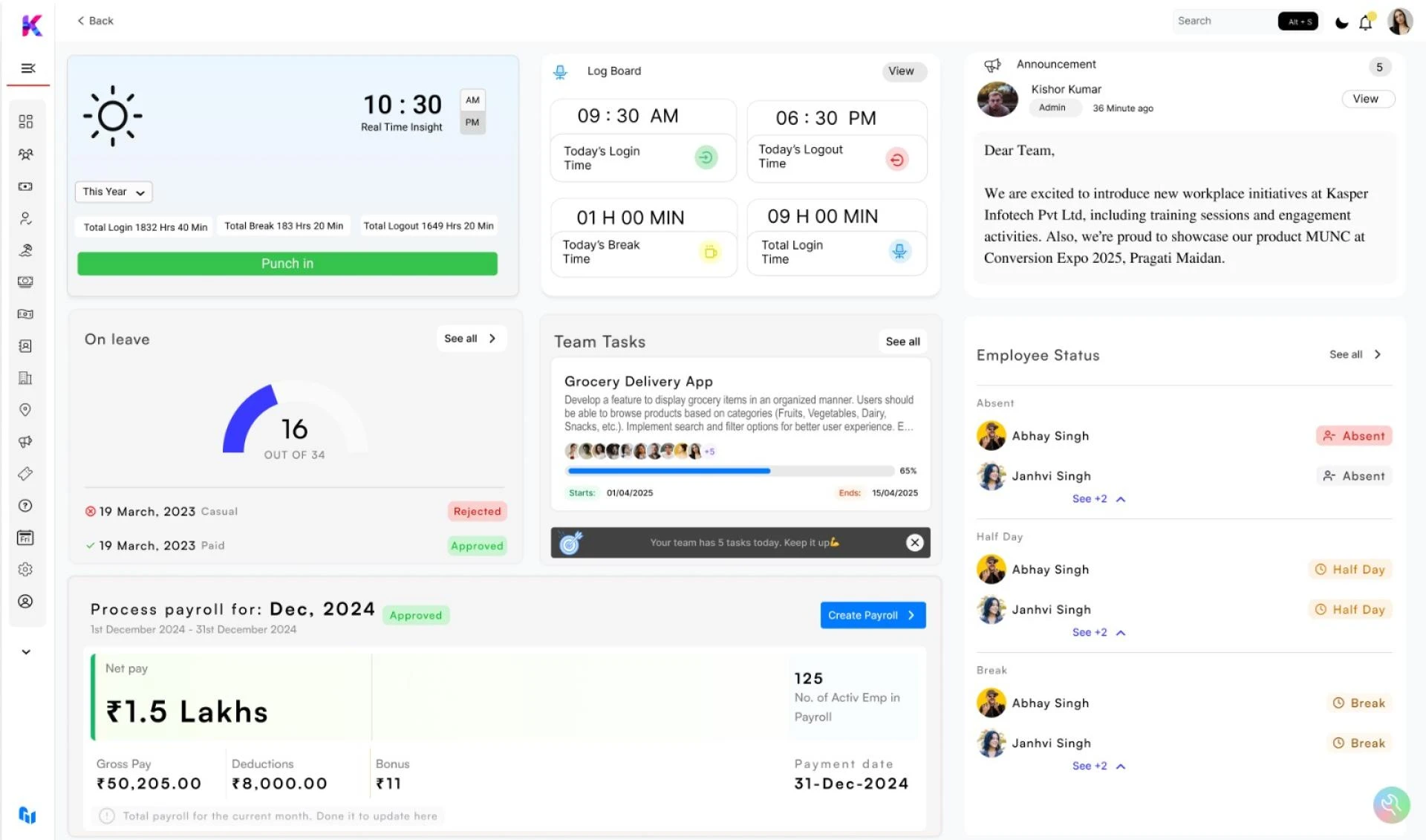
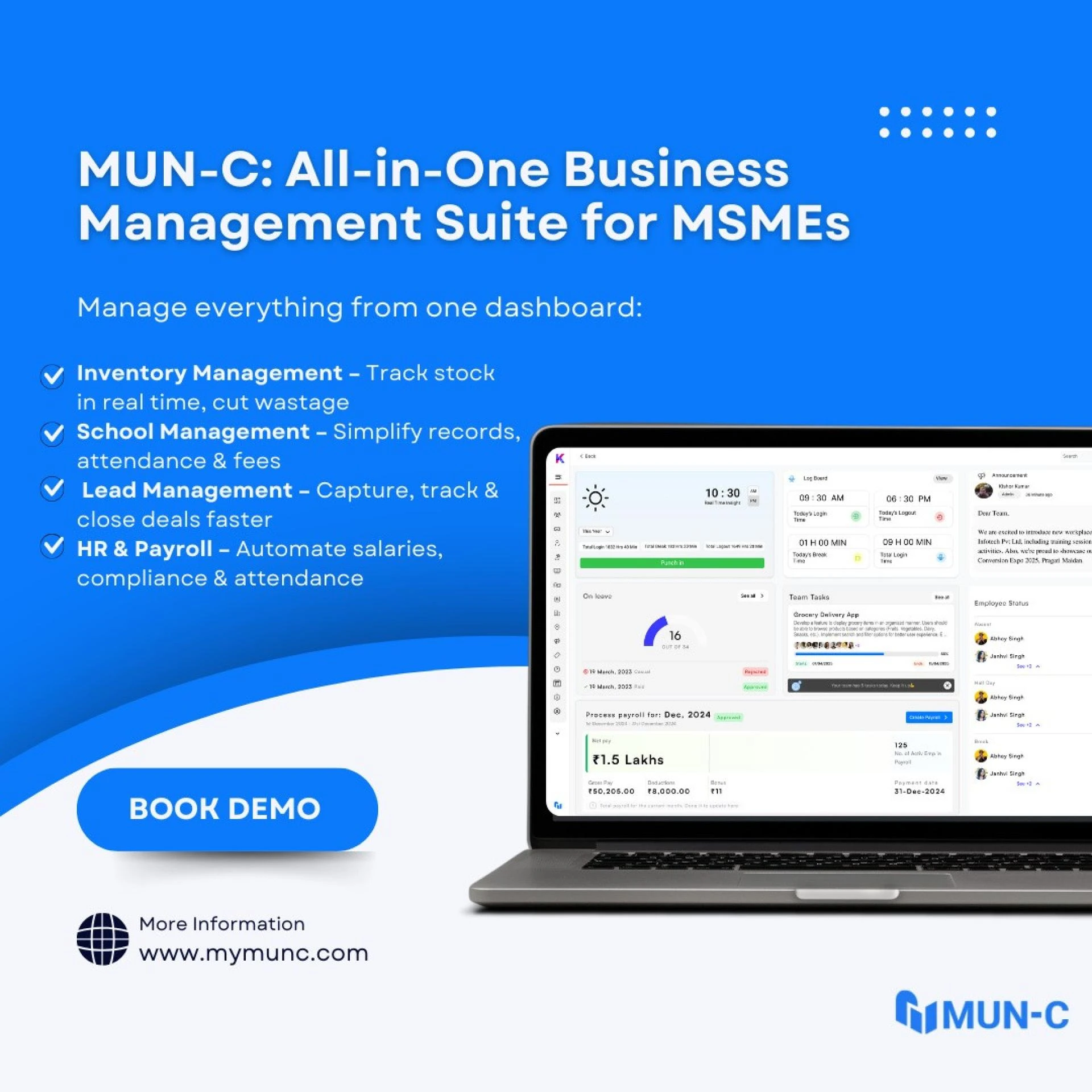
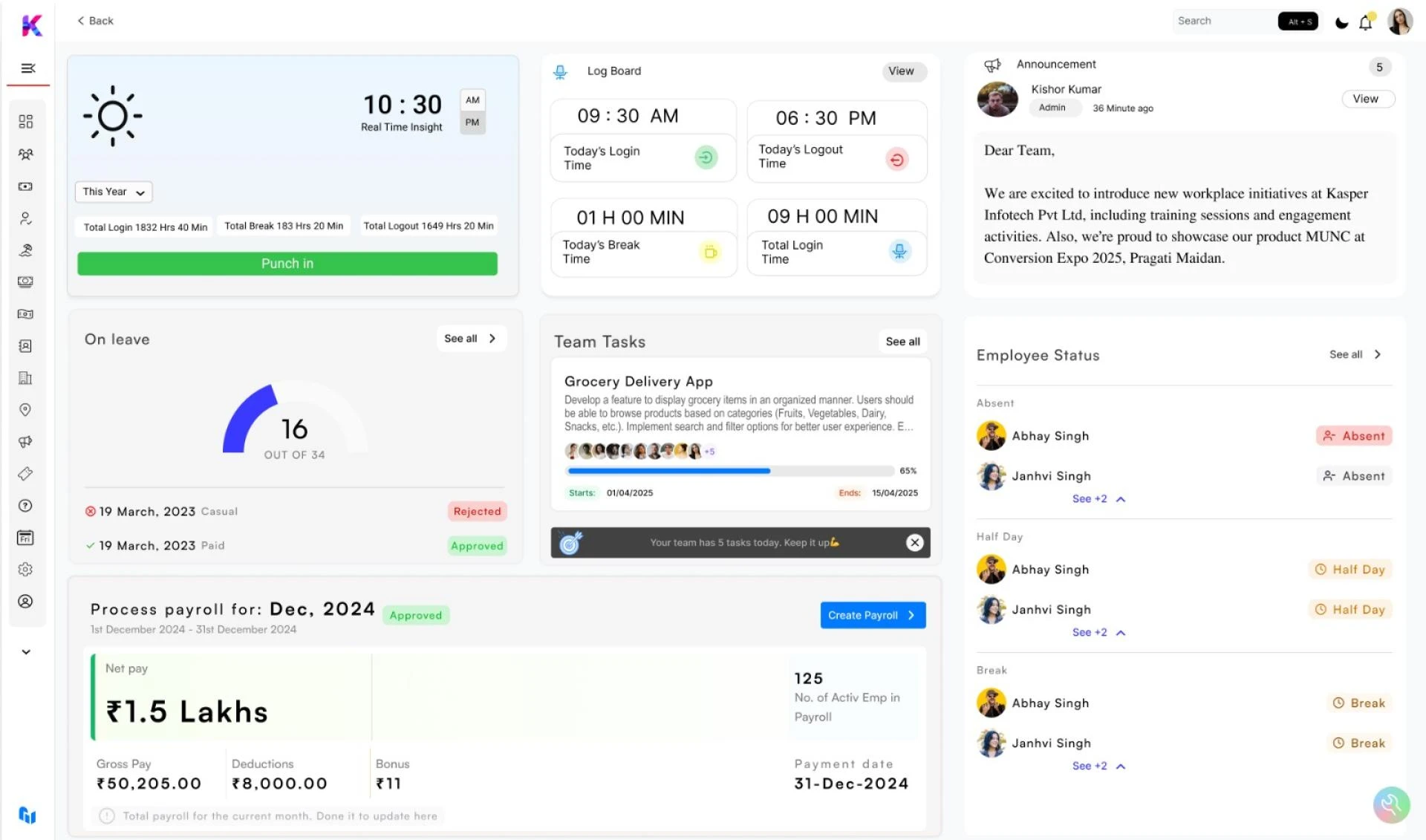
For example, the MUN-C Business Management Suite is one such platform used by MSMEs in India to consolidate HR, payroll, finance, and project tasks in one dashboard.
The Bigger Picture
Switching from Excel to a Business Management Suite isn’t just about payroll—it’s about overall efficiency. For MSMEs, the benefits include:
- Time savings → 10+ hours reclaimed weekly across tasks.
- Fewer errors → Reduced penalties and disputes.
- Better focus → Owners and HR teams can focus on growth, not paperwork.
- Scalability → Systems adapt as the business expands.
Final Thoughts
Excel may still be a quick fix for payroll, but its limitations grow as businesses scale. A Business Management Suite offers automation, compliance support, and secure data handling that spreadsheets simply can’t provide.
For MSMEs, this shift isn’t just about convenience—it’s about building a stronger foundation for growth. Platforms like MUN-C demonstrate how integrated solutions can transform routine tasks into a streamlined process.
For a deeper dive into time-saving strategies, check out my blog here:



























Sign in to leave a comment.