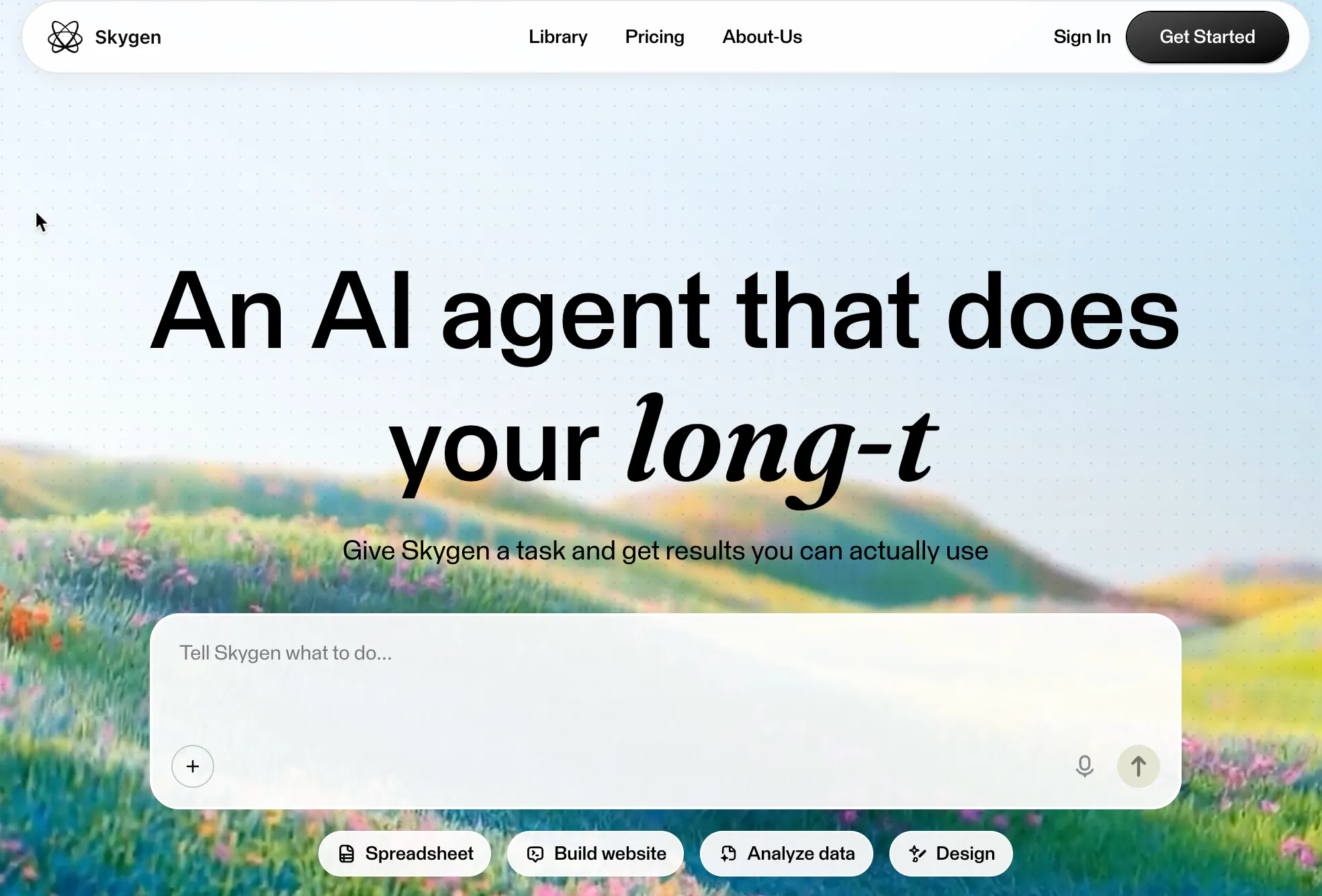

You have probably heard the term "AI agent" thrown around a lot lately. But what exactly is an AI agent, and how is it different from the AI tools most of us are already familiar with? The answer lies not just in what these systems know — but in what they can do.
From Conversation to Action
Traditional AI tools, like chatbots and language models, are reactive. You ask a question, they generate a response, and then the interaction ends. You are still responsible for taking that response and doing something with it.
AI agents work differently. Instead of stopping at the response, they keep going. An agent understands a goal, breaks it down into steps, uses tools to execute those steps, and adapts along the way — all without needing a human to manage each move.
Think of the difference like this: a chatbot is a consultant who gives you advice. An AI agent is the employee who carries it out.
The Four Core Capabilities
Every capable AI agent is built on four foundational components:
1. Goal Understanding The agent interprets a high-level instruction — "research our top 10 competitors and compile a report" — and translates it into a concrete action plan. It does not need the task broken down step by step; it figures that out itself.
2. Task Decomposition Complex goals are split into smaller, logical sub-tasks. The agent sequences these intelligently, deciding what needs to happen first, what can run in parallel, and what depends on earlier results.
3. Tool Use This is where agents become truly powerful. Rather than just generating text, agents connect to external systems — browsers, databases, CRMs, email clients, spreadsheets — and take real actions inside them. They can fill forms, send messages, pull reports, and update records.
4. Memory and Learning The best agents do not start from scratch every time. They store context from previous interactions — preferred formats, key contacts, past decisions — and use that knowledge to improve with every task.
How It Looks in Practice
When you give a modern AI agent a task, here is roughly what happens under the hood:
The agent receives your instruction and identifies the goal. It creates a plan, selecting which tools and steps are needed. It then begins executing — navigating software, retrieving data, making decisions at each step based on what it finds. If something unexpected occurs, it adjusts rather than failing. When the task is complete, it reports back.
Platforms like Skygen AI take this a step further with Computer Use technology — meaning the agent literally sees the screen and interacts with software the way a human would, making it compatible with virtually any application, even legacy systems without API access.
Why It Matters
AI agents represent a genuine shift in how work gets done. For the first time, software does not just assist human effort — it replaces the repetitive, time-consuming parts of it entirely.
As these systems become more reliable, faster, and more secure, the question for businesses is no longer whether to use AI agents — it is which ones to trust with the work.


















Sign in to leave a comment.