

Revenue cycles don’t fall apart overnight. They erode quietly, claim by claim, status check by status check, until a clinic realizes that a chunk of expected revenue has slipped into the dangerous category of aged claims. What makes this even more frustrating is that the warning signs are almost always visible long before the claim becomes a problem. Clinics simply don’t have the time, labor, or visibility to chase every anomaly in real time.
This is exactly where a Claims Status AI Agent changes the game. Unlike traditional claim-status tools that wait for issues to surface after a human requests an update, this new generation of AI acts like a proactive analyst, continuously checking for potential errors, flagging them early, and helping clinics intervene before the payer backlog becomes a financial headache.
Why Clinics Still Struggle with Status Errors
Most billing teams aren’t short on skill; they’re short on hours. Verifying claim statuses manually is not only tedious, it’s a moving target. Payers update systems at unpredictable intervals, responses differ between portals and clearinghouses, and subtle discrepancies can be easy to miss.
Status errors often arise from:
- Missing or outdated insurance information
- Incorrect patient demographics
- Modifier or coding conflicts
- Eligibility mismatches
- Unsuccessful electronic transmissions
- Payer documentation requests buried under portal notices
These issues don’t usually appear with flashing red lights. Instead, they hide behind vague payer messages or delayed acknowledgments until the claim ages past the acceptable window and the clinic ends up chasing preventable denials.
Turning Proactive Instead of Reactive
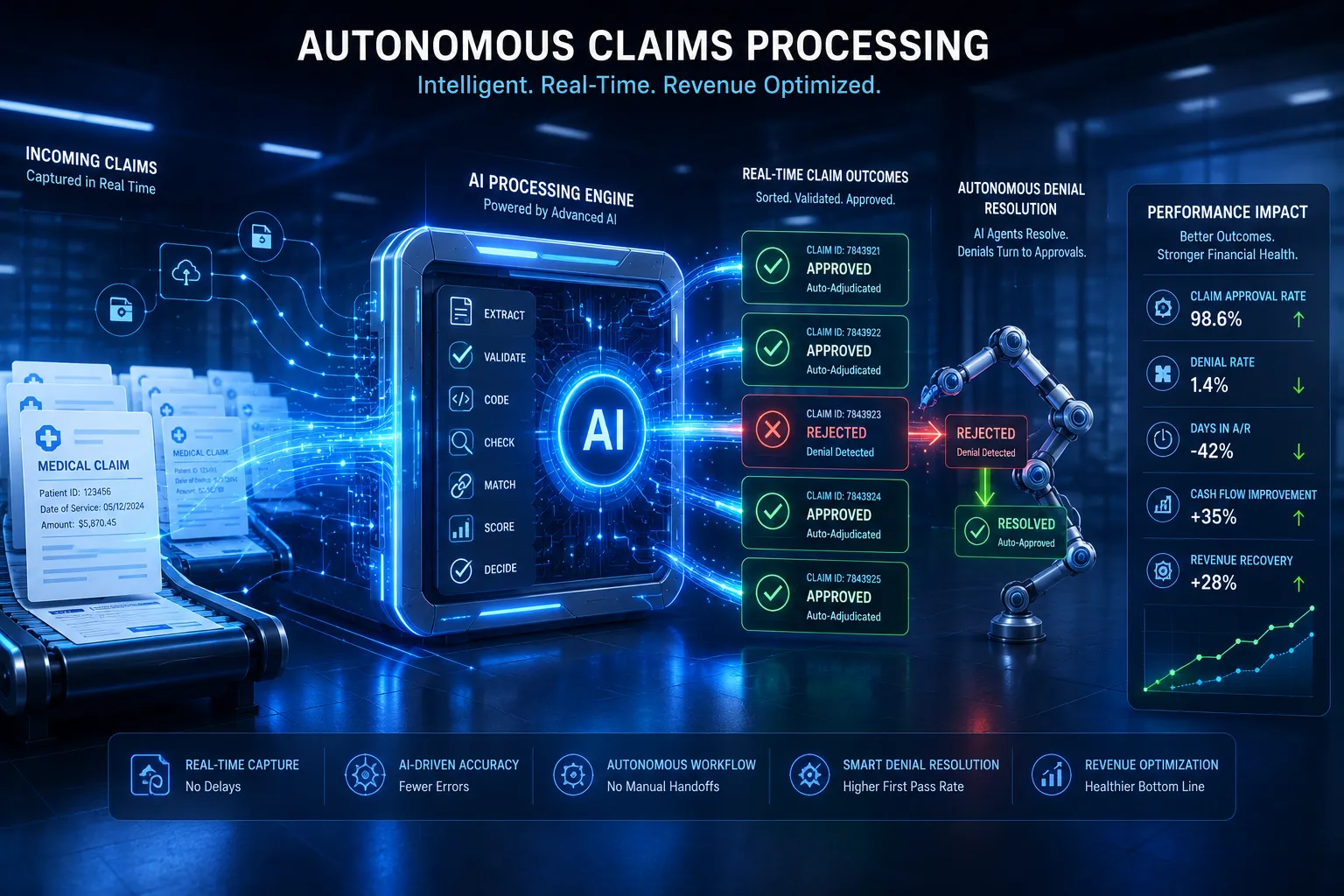
A Claims Status AI Agent is designed to eliminate guesswork. Instead of relying on periodic manual checks, it monitors claim activity in the background 24/7, spotting the slightest irregularities the moment they surface.
Here’s what that looks like in practice:
1. Real-Time Status Monitoring
The AI constantly reads payer responses, EDI transactions, and clearinghouse updates. If a claim doesn’t progress normally or if a payer returns a suspicious note, the AI Agent alerts staff instantly, not days later.
2. Contextual Understanding of Status Codes
Status messages vary wildly from payer to payer. The AI translates them into human-friendly explanations and recommended next steps.
For example, instead of:
“Payer Response 277: Action Required. Entity Code 41.”
You get:
“Insurance ID mismatch: request updated ID from patient before resubmitting.”
That shift alone accelerates correction and prevents avoidable aging.
3. Pattern Recognition Across Claims
If multiple claims show the same anomaly like a recurring modifier issue or a payer-specific formatting problem, the AI Agent doesn’t treat them as isolated incidents. It recognizes the pattern and notifies the team before dozens of claims fall into limbo.
4. Automated Worklists with Prioritized Actions
A Claims Status AI Agent automatically builds daily action queues based on urgency, potential dollar impact, and payer timelines. Billers know exactly what to handle first, without digging through portals.
5. Immediate Alerts for High-Risk Claims
Instead of discovering a payer rejection two weeks later, the AI Agent surfaces it the moment it happens. High-value or time-sensitive claims receive elevated alerts, reducing the chance of them drifting into aged status.
The Financial Impact: Stopping Revenue Loss Early
Clinics that shift to an AI-assisted claims workflow see measurable improvements within weeks:
- Fewer aged claims due to late discovery
- Reduced rework time because status corrections are made early, not after the denial
- Higher first-pass acceptance rates
- More predictable cash flow
- Better staff morale and productivity
When status errors are caught early, the downstream effects, denials, appeals, rebilling, and payer phone calls, shrink dramatically.
Removing Administrative Weight from the Team
Administrative complexity is one of the biggest contributors to burnout in clinic RCM teams. A Claims Status AI Agent doesn't replace staff; it removes the low-value, time-consuming burden of constant status chasing.
Teams get to focus on the exceptions that genuinely require human expertise, not the monotonous routine of checking whether payers have posted an update since yesterday.
Instead of drowning in digital paperwork, billers gain the time to:
- Strengthen payer relationships
- Improve coding accuracy
- Monitor trends and compliance
- Assist clinicians with documentation clarity
This elevates the overall revenue cycle instead of forcing staff into repetitive, reactive work
Wrapping Up: A More Strategic Future for Claims Management
The healthcare system’s administrative ecosystem grows more complex each year, not less. Relying on manual tracking or once-a-week status pulls is no longer enough for clinics that want a stable financial foundation.
A Claims Status AI Agent serves as a constant watchtower, identifying the small errors before they snowball, translating cryptic payer updates into meaningful actions, and giving clinics the visibility they’ve never truly had.
It turns what used to be a reactive scramble into a disciplined, proactive, revenue-protecting process.
Clinics that embrace this shift are not just improving claim outcomes. They’re building a more resilient, scalable operation: one where aged claims become the rare exception rather than an expensive routine.






























Sign in to leave a comment.