

Most practices assume they lose patients to competition, but that's rarely the case. Patients call, nobody picks up, and they move on. The team doesn't realize it happened until the schedule shows gaps. Enrollment drop-off doesn't make noise, it just quietly bleeds revenue until the billing cycle tells a different story.
Why Healthcare Practices Are Losing Patients Before the First Visit
The decision window is short and patients don't wait around. MGMA reports that call volume peaks around 10 AM daily. Nearly 30 to 40% of those calls go unanswered during that window. Most callers won't try again after the first missed attempt. Around 60% who hit voicemail simply hang up and book with the next available practice.
The front-desk team isn't at fault here. They're managing prior auth follow-ups, open claim edits, and insurance verification queues. All of it lands at the same time new calls come in. Something gets pushed back, and it's almost always the new patient call. That pattern repeats every day without anyone flagging it as a problem.
What Causes Patient Enrollment Drop-Off in Medical and Specialty Practices
The drop-off doesn't happen at one point. It builds across the enrollment journey and compounds at each stage. Here's where it clusters most:
- Unanswered calls during peak hours — Staff are deep in active workflows and can't break away for new inquiries in time
- Slow callback turnaround — Patients waiting past two hours have usually already decided to go elsewhere
- After-hours inquiry gaps — Evening submissions sit untouched overnight, which is often too late to recover
- Paper-heavy intake processes — Fax-dependent forms push away patients who expected a simple digital experience
- Insurance verification holds — Asking patients to self-verify coverage breaks enrollment momentum fast
- Limited scheduling options — When slots don't fit the patient's availability, the booking stalls and rarely recovers
None of this needs a staffing overhaul to fix. It needs a smarter response layer at the front of the workflow.
How AI Agents Help Medical Practices Recover Missed Enrollments
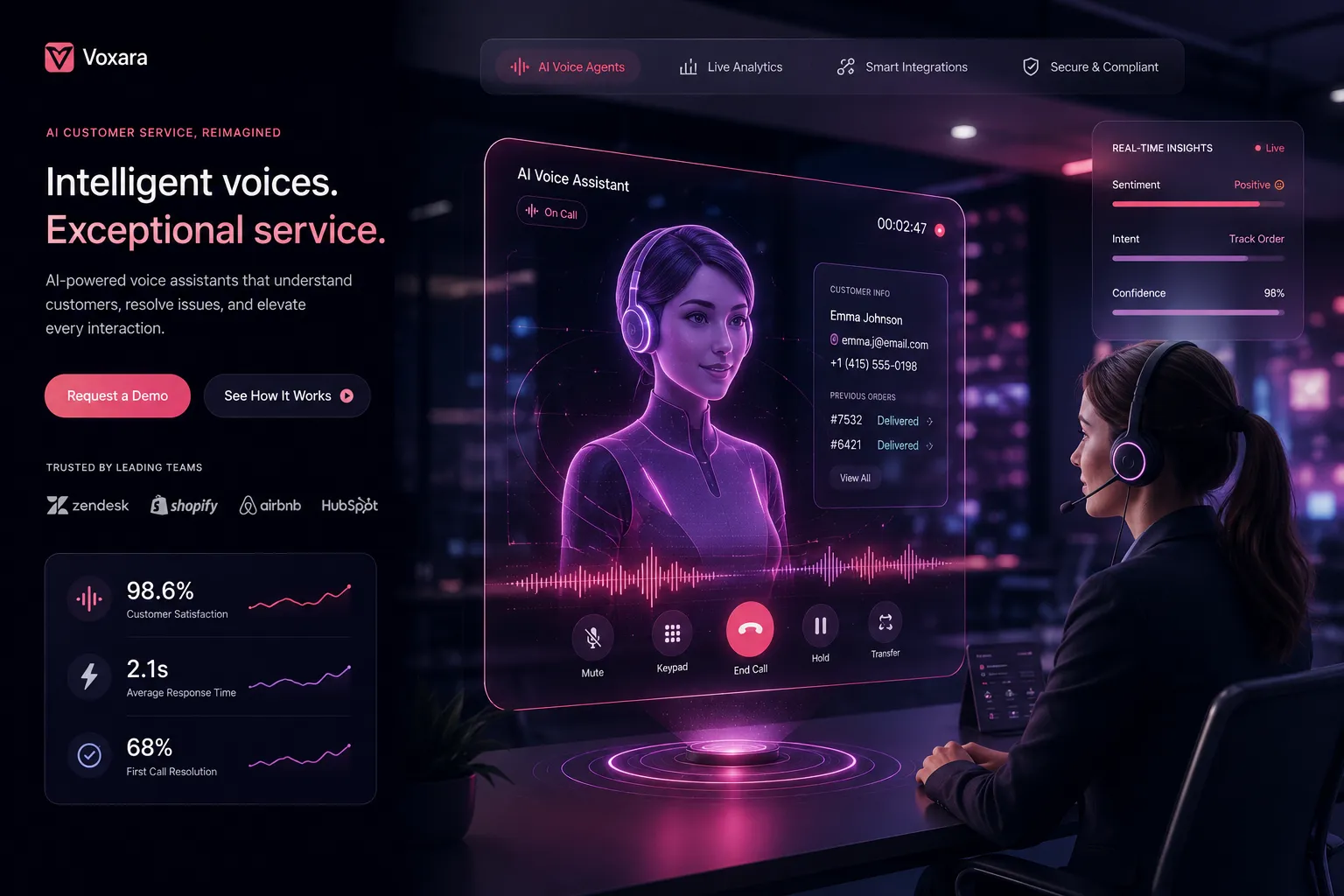
Enrollment breaks at the first touchpoint, and that's where an AI agent steps in. When a patient calls after hours or submits an inquiry mid-rush, the agent responds right away. It captures intake details and pre-screens basic eligibility questions without pulling anyone away from active work. The coordinator gets a clean, structured handoff instead of a cold voicemail pile.
That first response matters more than most teams realize. Patients who hear back within minutes convert at much higher rates. The practice feels responsive before anyone has even spoken directly. That early impression shapes whether the patient follows through at all.
One piece that often gets missed is what happens right after the first response. Even a quick acknowledgment doesn't guarantee a confirmed appointment. The scheduling back-and-forth that follows eats up staff time. It also introduces another drop-off risk most practices don't track. Voice AI for appointment scheduling handles that gap directly. It manages the scheduling conversation in real time, offers available slots, and confirms the appointment. Reminders go out without anyone following up manually. The patient leaves with a confirmed slot, and the staff avoids one more task building in the queue.
Practices using Droidal's enrollment AI agent report measurable gains within the first few billing cycles. Conversion rates go up and inbound capture improves noticeably. Staff spend less time chasing voicemails and more time on work that actually needs their attention.
What Happens to Revenue When Enrollment Friction Goes Unaddressed
Most RCM discussions stay focused on denials and collections. Those problems are visible and easy to measure. Enrollment drop-off is harder to track because that revenue never enters the pipeline at all. There's no denial code for a patient who quietly booked somewhere else.
Converting even 10% more inbound inquiries creates real downstream impact:
- Stronger scheduling utilization with fewer last-minute gaps that are hard to backfill
- Better payer mix visibility that directly improves revenue forecasting accuracy
- Less strain on billing teams already working with a thinner patient base
- Lower cost per acquisition over time as fewer warm leads slip away at the access stage
The revenue cycle starts at enrollment. When that stage leaks, everything downstream carries more weight than it should.
When Should Practices Prioritize Fixing Patient Enrollment Access
If more than 20% of inbound calls are hitting voicemail, that's worth addressing now. If average callback time regularly stretches past two hours, enrollment drop-off has already crossed into a revenue problem. Adding another front-desk hire might ease the pressure temporarily. But it doesn't fix the structural gap underneath, it just adds payroll to a workflow that hasn't changed.
The better move is mapping exactly where patients exit the funnel. In most practices, fixing three points covers the bulk of the drop-off. Those three are first response time, after-hours capture, and intake form access.
What Practices Report After Closing the Enrollment Gap with AI Agents
These outcomes aren't projections. They show up in billing data within a few cycles after closing the response gap. Teams that have made this shift consistently report:
- Higher conversion rates on new patient inquiries, especially after-hours submissions that previously went unacknowledged
- Better scheduling fill rates as fewer interested patients drop out before the booking step
- Faster intake completion since pre-screening happens before the coordinator picks up the phone
- Front-desk staff doing more meaningful work instead of managing repetitive intake calls throughout the day
The practice doesn't just feel more organized. The numbers reflect a front end that's actually working the way it should.
How RCM Teams Can Stop Losing Patients at the Access Layer
Working with RCM teams, one thing becomes clear. The problem isn't effort. It's the gaps in the response layer that manual follow-up can't fully cover. Purpose-built AI agents designed for healthcare workflows make a measurable difference here. They're built around intake sequencing, eligibility pre-screening, and scheduling logic.
The enrollment AI agent from Droidal manages patient intake, eligibility pre-screening, and coordinator handoffs. It does this without adding to the front-desk workload. The voice AI appointment scheduling layer confirms slots, handles reschedules, and sends reminders. No manual follow-up needed at any step.
Both work together to cover the full front-end workflow. From the first missed call to a confirmed appointment, the access layer runs without friction. For practices losing patients who were already ready to book, this is a practical starting point that fits into existing RCM operations without disruption.





























Sign in to leave a comment.