
In today’s evolving education system, the Central Board of Secondary Education is actively promoting skill-based learning aligned with the National Education Policy 2020. Schools are now expected to move beyond textbook-based teaching and create environments where students learn by doing. This is where CBSE Skill Lab play a crucial role.
What is a CBSE Skill Lab?
A CBSE Skill Lab is a dedicated space in a school designed for hands-on learning in emerging technologies and vocational subjects. These labs support practical education in fields such as Artificial Intelligence, Robotics, Electronics, IoT, and 3D Printing.
The goal is simple: help students build real-world skills, not just theoretical knowledge.
Why Skill Labs Are Essential for Schools
CBSE has introduced skill subjects from middle school onwards, making lab infrastructure a necessity rather than a luxury. Skill Labs:
- Promote experiential learning
- Improve problem-solving and critical thinking
- Encourage innovation and entrepreneurship
- Align with NEP 2020 goals
- Enhance school reputation and admissions
Schools that invest in these labs position themselves as future-ready institutions.
- Infrastructure Requirements
To meet CBSE standards, schools must ensure:
- Space: 600–1000 sq. ft. for smooth student movement
- Environment: Proper lighting, ventilation, and ergonomic seating
- Electrical Setup: Safe wiring, sufficient power outlets, and backup
- Connectivity: High-speed internet and Wi-Fi access
A well-designed space directly impacts how effectively students learn.
- Equipment & Tools Required
The tools depend on the lab type, but commonly include:
- Robotics & STEM Lab
- Robotics kits (beginner to advanced)
- Microcontrollers like Arduino
- Sensors, motors, and mechanical parts
- AI & Coding Lab
- Computers/laptops (1:2 ratio recommended)
- Programming tools (Scratch, Python, ML platforms)
- AI learning software
- Electronics, IoT & 3D Printing Labs
- For advanced skill development:
- Electronics & IoT Lab: Breadboards, resistors, IoT modules, circuit tools
- 3D Printing Lab: 3D printers, CAD software, prototyping materials
These STEM Lab expose students to real industry applications and innovation workflows.
- Safety & Compliance Guidelines
CBSE emphasizes a safe learning environment. Schools must include:
- Fire extinguishers and first aid kits
- Safe storage for tools and equipment
- Clear safety instructions for students
- Supervision by trained staff
Compliance is not optional—it ensures student well-being.
- Faculty & Training Requirements
Even the best lab fails without skilled educators. Schools should invest in:
- Certified trainers for each skill subject
- Regular teacher training programs
- Industry exposure and workshops
- Continuous upskilling initiatives
Strong faculty ensures maximum return on lab investment.
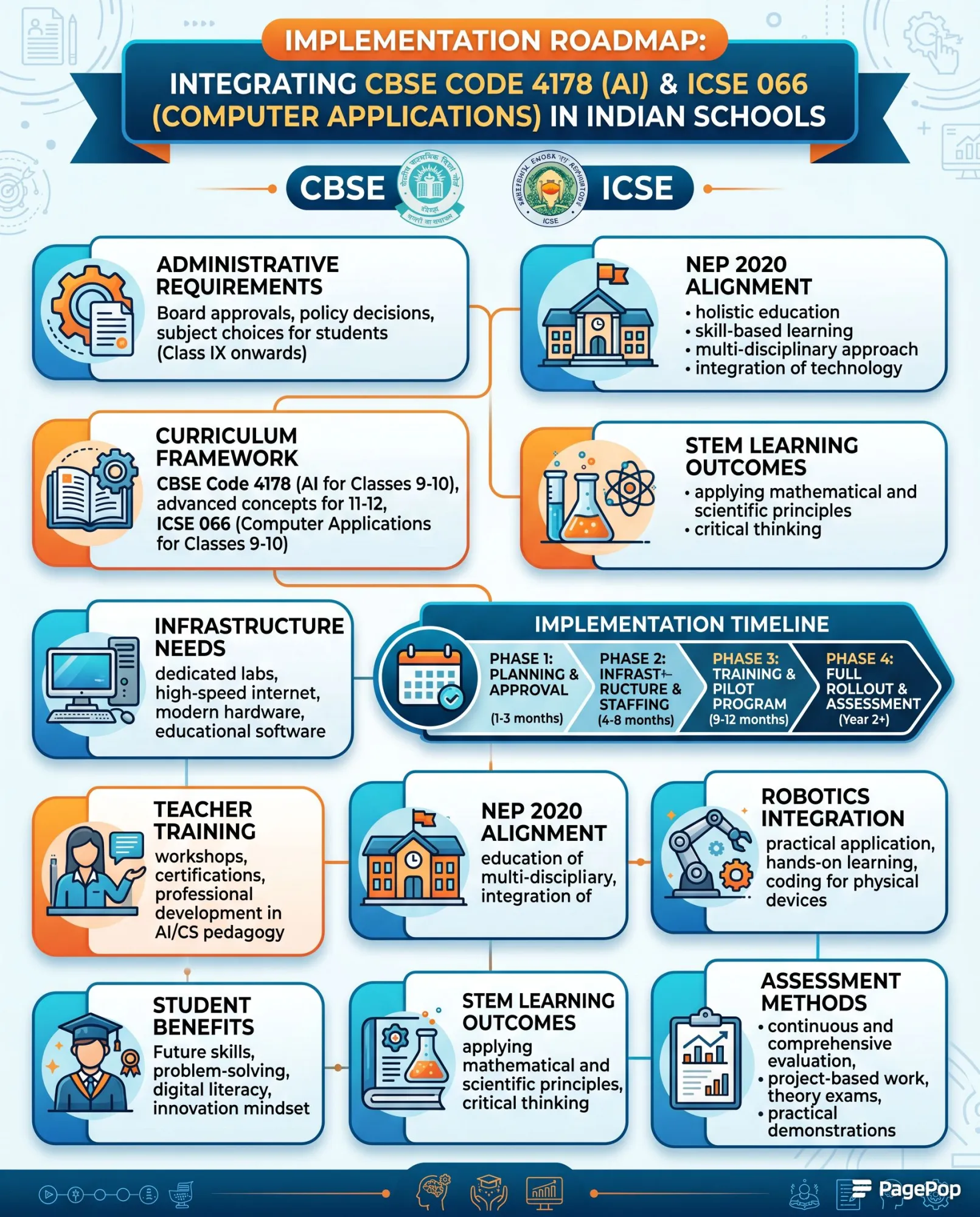
- Curriculum & Implementation
CBSE provides a structured roadmap:
- Classes 6–8: Introduction to skill subjects
- Classes 9–10: Skill subjects as electives
- Classes 11–12: Advanced vocational learning
Schools must maintain lab records, conduct practical assessments, and build student portfolios.
Cost of Setting Up a Skill Lab
The investment varies based on scale:
Basic Lab: ₹3–5 Lakhs
Advanced AI/STEM Lab: ₹5–15 Lakhs
Partnering with experienced providers helps optimize cost while ensuring compliance and quality.
Conclusion
Setting up a CBSE Skill Lab is no longer optional—it’s essential for schools aiming to stay competitive in modern education. With the right infrastructure, tools, and trained faculty, schools can transform classrooms into innovation hubs.
For schools looking for a complete, end-to-end solution—from lab setup to curriculum and training—TechyGuide offers tailored Skill Lab programs aligned with CBSE and NEP 2020.
Explore TechyGuide Skill Lab Solutions and build a future-ready learning environment in your school.
























Sign in to leave a comment.