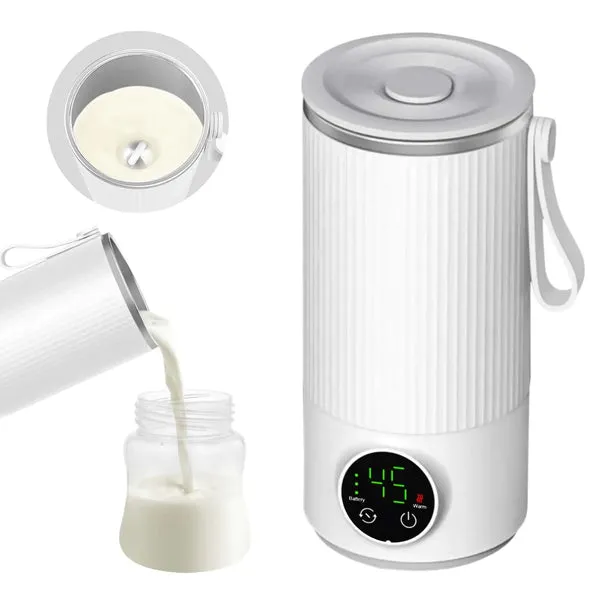

Feeding a baby on a schedule is hard enough at home. Add a car ride, a flight, or a busy day of errands, and warming milk to the right temperature becomes one more thing on a long list of worries. This is exactly why so many parents are switching to a portable bottle warmer that goes wherever they go. Instead of asking a restaurant to heat a bottle or waiting for a hotel kettle to boil water, a compact warmer in the diaper bag gets the job done in minutes, at the right temperature, every single time.
This guide walks through what a portable bottle warmer actually does, which features matter most, and how to pick one that fits real family life instead of just looking good in a product photo.
What Is a Portable Bottle Warmer and Why Parents Need One
A portable bottle warmer is a compact, rechargeable device built to heat baby milk, formula, or water without needing a wall outlet or a microwave. Unlike a countertop warmer that stays plugged in at home, a travel version runs on a rechargeable battery, fits in a bag, and can warm a bottle in the car, at the park, on a plane, or during a long day out.
Parents often assume warming milk away from home means carrying a thermos of hot water or asking strangers for help. A portable baby bottle warmer removes that guesswork. It holds its own heat source, reaches a set temperature on its own, and lets a caregiver focus on the baby instead of hunting for hot water. For families who travel often, commute long distances, or simply spend a lot of time outside the house, this small tool solves a daily problem that used to require planning around.
Key Features to Look for in a Portable Baby Bottle Warmer
Not every warmer on the market performs the same way. When comparing options, a few features separate a genuinely useful portable bottle warmer from one that ends up sitting in a drawer.
- Food-grade stainless steel construction – A warmer built with 304-grade stainless steel is safer for repeated contact with milk and easier to keep clean over time.
- Battery capacity – A larger battery, such as a 6000mAh cell, supports longer heating sessions and multiple uses before a recharge is needed.
- Multiple charging methods – The ability to charge from a car outlet, a power bank, or a standard phone charger means the warmer is never stuck without power.
- Adjustable temperature settings – Options ranging from around 37°C to 55°C allow parents to match the warmth to formula, breast milk, or even coffee for themselves.
- Compact size and light weight – A device around six inches tall and under a pound fits easily into a diaper bag side pocket without adding bulk.
These details matter because a warmer that looks small in photos but takes forty minutes to heat a bottle, or one that cannot be recharged easily on the road, defeats the purpose of buying it in the first place.
How a Portable Bottle Warmer with Temperature Display Works
One feature stands out above the rest for parents who want precision: a Portable bottle warmer with temperature display. Instead of guessing whether milk is too hot or too cold, a digital screen shows the exact setting in real time, so there is no need to shake drops onto a wrist to check.
Here is the basic process most travel warmers follow:
- Fill the cup with milk, formula, or water up to the marked line.
- Select a temperature setting on the digital display, typically between 37°C and 55°C.
- A built-in heating element and motor work together to warm the liquid evenly, avoiding hot spots that can occur with uneven heating methods.
- The display confirms when the target temperature is reached, so the bottle is ready without repeated checking.
This kind of intelligent temperature control also helps preserve nutrients in breast milk, since overheating can break down certain proteins. A warmer with a visible display takes the uncertainty out of the process, which matters most during a tired 2 a.m. feeding or a rushed moment before leaving the house.
Top Benefits of Using a Portable Bottle Warmer While Traveling
Travel changes the rules for feeding. Airports do not always have microwaves. Rental cars do not come with kettles. A reliable portable bottle warmer solves several problems at once:
Consistent warmth anywhere. Whether in a car, on a train, or at a relative's house, the warmer performs the same way each time, since it does not depend on outside equipment.
Faster warming than waiting for hot water. Many travel warmers heat a bottle in well under the time it takes to boil water and cool it back down to a safe drinking temperature.
Multi-use function. Beyond milk, the same device can warm water for formula mixing or even heat a hot drink for a parent, which adds value beyond the baby feeding stage.
Peace of mind during long trips. A warmer with several hours of heat retention means a bottle prepared in advance stays at a safe temperature for a car ride or a flight delay, instead of going cold within twenty minutes.
Less reliance on public facilities. Not every rest stop, airport, or store has a way to warm a bottle safely, and a personal warmer removes that dependency entirely.
Why a Battery Powered Bottle Warmer Is a Must for Outings
A cord-dependent warmer only works near an outlet, which is rarely convenient during outings. A battery powered bottle warmer changes that by carrying its own power supply. With a high-capacity battery, a single charge can typically support well over an hour of continuous heating, plus additional hours of heat retention once the target temperature is reached.
This matters most in situations parents face regularly:
- A flight delay where the plane sits on the tarmac with no outlet access.
- A hike, beach day, or picnic where power is simply not available.
- A car trip where charging happens through the vehicle's power port while driving, keeping the warmer topped off for the next stop.
Because these devices typically recharge in about two hours through a standard cable, keeping one charged overnight is a simple habit that pays off the next time a feeding happens far from home.
Where to Buy a Reliable Portable Bottle Warmer for Travel
Finding the right warmer means looking past marketing photos and checking real specifications: battery size, heating time, material, and included accessories. A dedicated travel accessories store that focuses on gear built for life on the move is often a better source than a general retailer, since the products are chosen specifically for portability, durability, and travel-friendly charging options.
Shopping through a travel accessories store also tends to bundle useful extras, such as a charging cable and instruction manual, and gives buyers a clearer picture of real-world battery life, heat retention time, and capacity before purchase. Reading the full specification sheet, including charging time, continuous heating duration, and capacity in milliliters, helps avoid the disappointment of a warmer that cannot keep pace with a baby's feeding schedule.
Tips for Using and Cleaning Your Travel Bottle Warmer
A portable bottle warmer lasts longer and performs better with a bit of routine care:
- Avoid warming while charging. Running the heating function at the same time as charging can shorten battery life and is not recommended by most manufacturers.
- Clean the stirring core separately. If the warmer includes a mixing or stirring function, that piece should be washed apart from the main body and dried fully before storage.
- Keep the inner liner dry. Moisture left inside the cup between uses can affect the stainless steel lining over time, so a quick dry-out after cleaning helps maintain performance.
- Charge before every trip. Since a full charge takes around two hours, plugging the warmer in the night before travel avoids a low-battery surprise.
- Check the capacity line. Overfilling can affect how evenly the liquid heats, so filling to the marked line keeps warming consistent.
Simple habits like these keep the warmer working reliably trip after trip, rather than needing a replacement after a few months of heavy use.
Best Practices for Safe Milk Warming On the Go
Temperature control matters for more than convenience; it affects safety. Breast milk and formula should be warmed gently and evenly, not overheated, to protect nutrients and avoid hot spots that could burn a baby's mouth. A few practices help:
- Always test the milk temperature before feeding, even when a digital display confirms the setting.
- Use the lowest effective setting needed for the baby's preference, typically in the 37°C to 40°C range for body-temperature milk.
- Avoid refreezing or rewarming milk multiple times, since repeated heating cycles can affect quality.
- Store the warmer in a padded section of the diaper bag to protect the digital display and heating components during transit.
Following these steps turns a portable baby bottle warmer into a dependable part of a daily routine instead of a device that only gets used occasionally.
Final Thoughts
Feeding a baby away from home does not have to mean cold bottles, rushed searches for hot water, or asking strangers for a favor. A well-built portable bottle warmer, especially one with a Portable bottle warmer with temperature display, gives parents control over feeding temperature no matter where the day takes them. Paired with a battery that supports real travel use, and backed by a travel accessories store that understands what families actually need, this small device solves a problem that has frustrated traveling parents for years.

























Sign in to leave a comment.