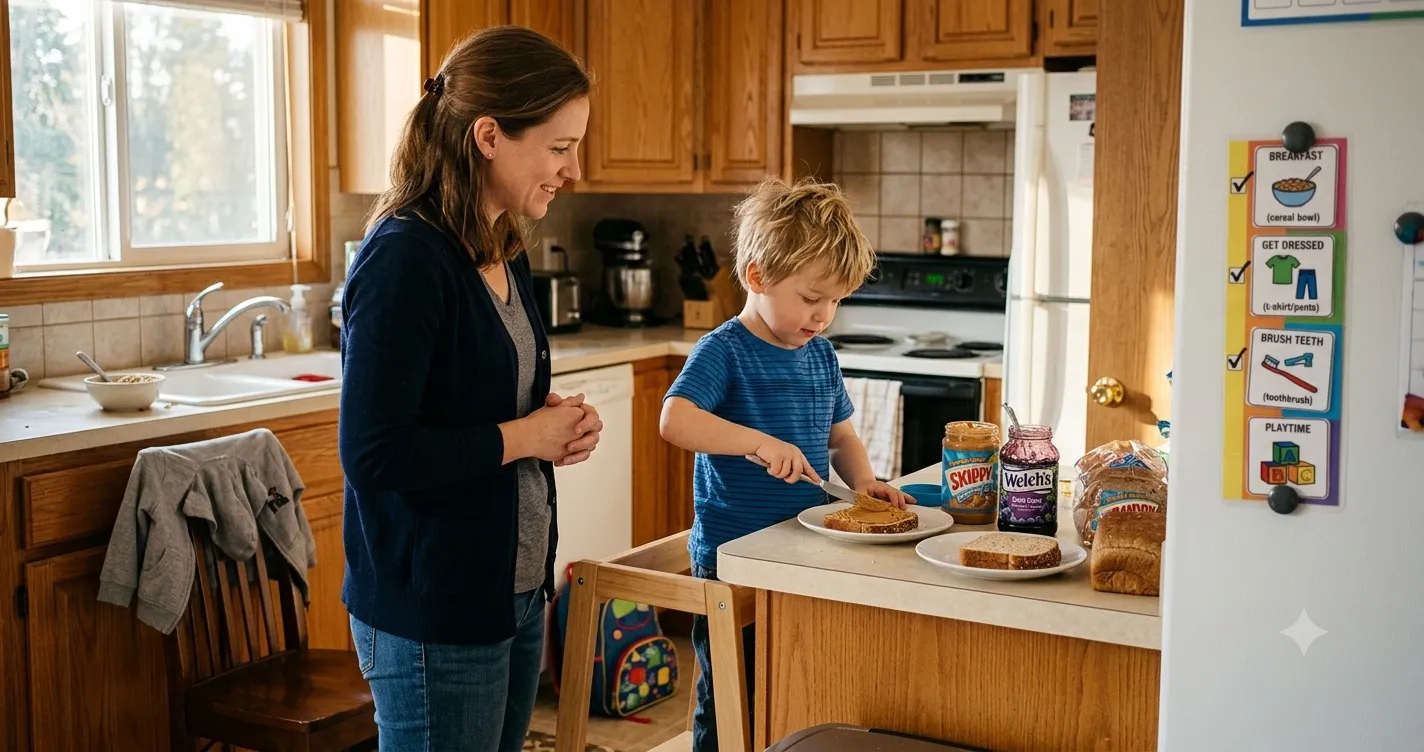

Most families enter ABA therapy expecting it to happen at a clinic, in a controlled setting, separate from the rhythms of everyday life. That assumption fades quickly once therapy begins. Skilled BCBA supervisors and registered behavior technicians (RBTs) work closely with families to identify the routines already in place, things like morning prep, meals, transitions between activities, and bedtime, and turn those moments into consistent opportunities for skill practice and generalization.
Generalization is actually one of the core challenges in behavioral intervention. A child might master requesting a preferred item during session, but struggle to use that same skill at dinner when the noise level is different and Dad is doing the asking instead of the therapist. Home-based programming addresses this directly. When an RBT works inside the actual environment, using the actual toys, the actual snacks, and the real family dynamics, what the child learns sticks in a way that clinic-based practice alone rarely achieves.
Families play an active role in making this work. Most programs include parent training components built into the supervision structure. A BCBA may observe a parent running a brief DTT trial during breakfast or coach a caregiver through prompting hierarchy during a sibling conflict. These are not performative exercises. They are the mechanism through which the therapy actually scales beyond the hours a therapist is in the home.
Translating Clinical Goals Into Everyday Moments
A well-written behavior intervention plan (BIP) does not just describe what a therapist does during session time. It maps target behaviors to the natural contexts where those behaviors are needed. If the goal is increasing independent toileting, the data collection should happen during real bathroom transitions, not manufactured practice runs. If the goal is reducing mealtime tantrums, the intervention should involve the actual family table, the actual foods, and the sensory conditions the child encounters every day.
Families starting this process often benefit from reviewing what other providers in Maryland have built around this approach, including how the maryland aba intake process is structured to capture daily routine information from the very beginning. Intake assessments that ask detailed questions about schedule, household composition, caregiver availability, and existing behavioral triggers produce far better initial programming than generic protocols built from a standard checklist.
Insurance coverage in Maryland, including Medicaid through the Maryland Children's Health Program (MCHP) and commercial plans subject to the state's autism insurance mandate under HB 1103, generally supports home-based services when medically necessary documentation is in place. Families should ask their BCBA about how home programming is written into the treatment plan and whether caregiver training hours are billed separately or included in the supervision rate.
Setting Realistic Expectations for Home Integration
The first few weeks of home-based ABA are often an adjustment for everyone. Children may test limits more actively when they realize their home space is now part of a structured program. Caregivers sometimes feel self-conscious being observed or coached in their own kitchen. Both of these responses are completely normal and typically resolve as the relationship with the clinical team develops.
What matters most is consistency over perfection. A parent who uses a visual schedule imperfectly but uses it every day will see better outcomes than one who implements it flawlessly twice a week. BCBAs understand this and should be calibrating their expectations and their coaching to what is actually sustainable for each family, not what looks ideal on paper.






























Sign in to leave a comment.