A growing business rarely follows a perfectly predictable path.
One month, a company may have six employees working from a compact office. A few new clients arrive, recruitment begins and the same team suddenly needs more desks, a meeting room, and a professional space for presentations. Signing a long lease may feel risky, while managing the business from homes and cafés can limit focus, privacy, and collaboration.
This is becoming a familiar situation across Ahmedabad.
The city’s business environment is expanding beyond its traditional strengths. Startups, technology firms, financial companies, consultants, creative agencies, and professional service providers are adding new energy to the local economy. At the same time, businesses are becoming more careful about where they invest their money.
They want professional offices, but they also want choice.
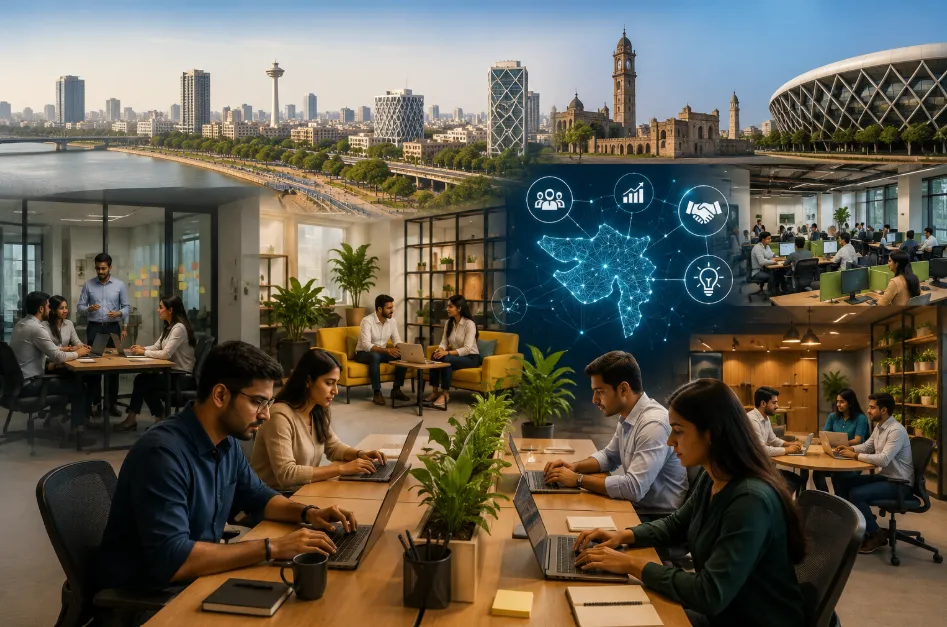
This shift is driving the demand for Flexible Workspaces in Ahmedabad. The rise of coworking centres, shared offices, private cabins, and managed workplace solutions reflects a much larger change taking place across the city. Ahmedabad’s entrepreneurial culture, commercial infrastructure, skilled workforce, and growing business diversity are creating an environment where flexible offices make practical sense.
Ahmedabad’s Business Identity Is Becoming More Diverse
Ahmedabad has always had a strong business culture. Textiles, manufacturing, pharmaceuticals, chemicals, trade, and family run enterprises have shaped the city’s commercial identity for decades.
That foundation remains important, but the business mix is becoming much broader.
Today, Ahmedabad supports technology companies, marketing agencies, financial consultants, direct to consumer brands, IT service firms, architects, designers, exporters, legal professionals and independent consultants. The Ahmedabad and Gandhinagar corridor is also attracting more interest from financial services, fintech, insurance and global companies.
This diversity changes what businesses expect from an office.
A manufacturing company opening a small administrative branch does not need the same setup as a software startup. A consulting firm may want a quiet private cabin and access to meeting rooms. A creative agency may value collaborative areas while an established company entering Gujarat may need an entirely managed floor.
There is no single office format that suits every organisation.
This is where the wider Workspace Ahmedabad market becomes relevant. Businesses can now choose a workplace based on their team size, budget, working style, and growth plans rather than forcing their operations into a fixed property model.
Gujarat’s wider economic position also supports this demand. According to the Gujarat Global Capability Centre Policy 2025 to 2030, the state contributed 8.3 % to India’s economy, 18 % of the country’s industrial output, and 31 % of its exports in the financial year 2023 to 2024.
These figures show the scale of commercial activity surrounding Ahmedabad. A strong economy creates demand not only from large corporations, but also from vendors, consultants, regional teams, service providers and new businesses that support those corporations.
Consider a company based in Mumbai that wants to explore opportunities in Gujarat. It may begin with a small sales team in Ahmedabad rather than investing immediately in a conventional office. A flexible workspace gives the team a professional address, meeting facilities, internet and daily operational support without requiring a large initial commitment.
This ability to enter the market quickly is one reason flexible offices are becoming closely connected with Ahmedabad’s business growth.
A Strong Startup Culture Rewards Flexible Thinking
Ahmedabad’s entrepreneurial spirit did not begin with the startup era. The city has long supported traders, manufacturers, independent professionals, and family businesses that built companies through patience and practical decision making.
The new generation of founders carries that same business instinct, but their priorities have changed.
Modern startups often operate with smaller teams, faster timelines and less certainty about future space requirements. They may hire ten people in six months or remain compact while outsourcing major functions. They may serve clients across India without needing a large central office.
Under these conditions, a traditional lease can create unnecessary pressure.
A company may need to pay a large security deposit, purchase furniture, arrange internet services, coordinate interior work, install security systems and manage repairs before the team can even begin working. That money could otherwise support recruitment, marketing, product development, or customer service.
This is why Coworking Spaces in Ahmedabad appeal to founders who want to remain financially careful without compromising their professional image.
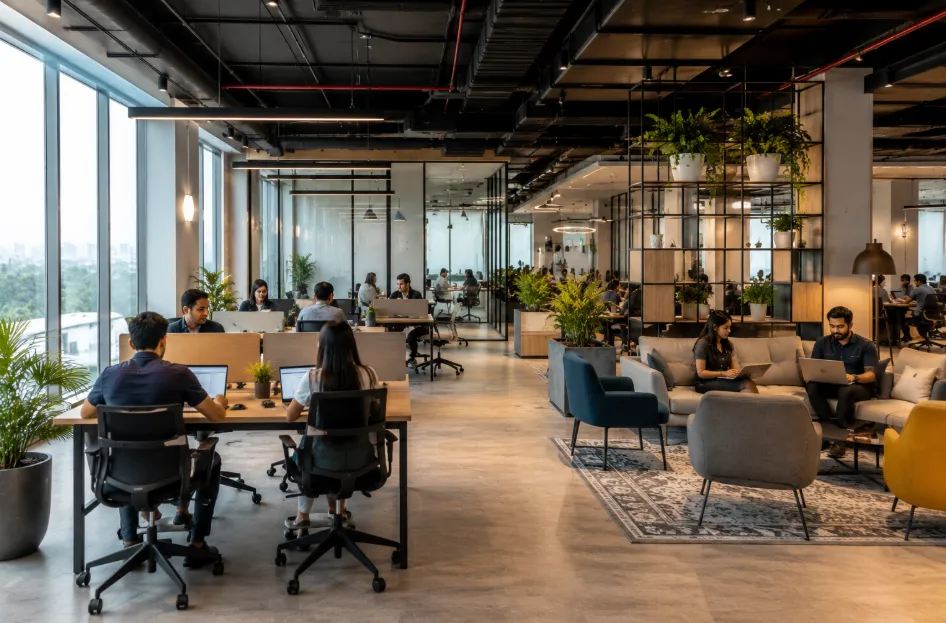
Coworking does not simply mean sitting at a shared table. Many modern centres offer dedicated desks, private cabins, conference rooms, reception support, business addresses, internet connectivity, maintenance, and community areas under one arrangement.
The value lies in removing distractions.
A founder should spend time building the business, meeting clients, and guiding the team. Handling air conditioning repairs, furniture purchases, utility bills, and office upkeep rarely contributes directly to growth.
Ahmedabad’s startup ecosystem strengthens this model further. Gujarat has more than 5,000 information and communication technology companies and produces over 32,000 IT graduates each year, according to the state’s Global Capability Centre Policy.
This growing pool of talent supports technology companies, IT service providers, digital agencies, and other knowledge based businesses. Many of these organisations begin with lean teams and require offices that can expand without forcing them to relocate every time their headcount changes.
Imagine a founder who begins with two dedicated desks. After securing larger projects, the company hires four employees and moves into a private cabin. A year later the team needs a larger, customised office. A flexible workspace can support each stage within the same professional environment.
That journey explains the practical appeal of Shared Office Space Ahmedabad. Businesses share infrastructure, but they still maintain their own work routines, team identity, and professional space.
Growth becomes easier when the office does not become an obstacle.
Better Business Corridors Are Changing Office Decisions
Location has always influenced office selection, but businesses now evaluate it more carefully.
Ahmedabad’s commercial activity has expanded across areas such as Bodakdev, Sindhu Bhavan Road, SG Highway, Prahlad Nagar, Satellite, Thaltej, Ambli, and Makarba. The Ahmedabad and Gandhinagar corridor adds another layer through GIFT City and nearby commercial development.
This wider spread gives companies more options, but it also raises an important question. Where will the office work best for the people who use it every day?
A prestigious address may look impressive, but it has limited value if employees struggle with long commutes or clients find the location difficult to access. Businesses now consider road connectivity, residential catchments, public transport, parking, restaurants, hotels, and proximity to major client areas.
Flexible workspace providers can make prime locations more accessible.
A small business may not have the budget or need to lease an entire commercial floor in a leading business district. It can still operate from that area by choosing a private cabin or shared office within a professionally managed centre.
This can support recruitment as well.
Employees are more likely to value office days when the workplace is convenient, comfortable, and well connected. For hybrid teams, location becomes even more important because people may travel to the office mainly for meetings, collaboration, training, or planning sessions.
Ahmedabad also benefits from a strong institutional infrastructure. The city and its surrounding region have access to management institutes, design schools, engineering colleges, universities, finance professionals, and experienced business service providers.
GIFT City further strengthens the regional ecosystem. Gujarat’s Industrial Policy 2026 states that more than 1,034 registered entities operate there across banking, fintech, insurance, capital markets, asset management and leasing.
This growth can create opportunities for businesses throughout the Ahmedabad and Gandhinagar region. Companies serving these sectors may require satellite offices, project spaces, client meeting facilities or regional teams without wanting to build a traditional office immediately.
For such organisations, Managed Office Space Ahmedabad offers a practical entry route. The workspace provider can handle furniture, utilities, internet, maintenance, security, and daily operations while the business focuses on hiring and serving clients.
Infrastructure makes the office accessible. Management makes it usable from the first day.
Hybrid Work Has Changed What an Office Must Deliver
The office is no longer simply a place where every employee sits from morning until evening.
Many businesses now use the workplace for specific activities. Teams come together for planning, client presentations, interviews, reviews, workshops, training and focused project work. Employees may work remotely on some days and visit the office when face to face interaction adds real value.
This has changed the question companies ask.
Instead of asking, “How much office space can we lease?” they are asking, “What type of space will help our team work better?”
That difference matters.
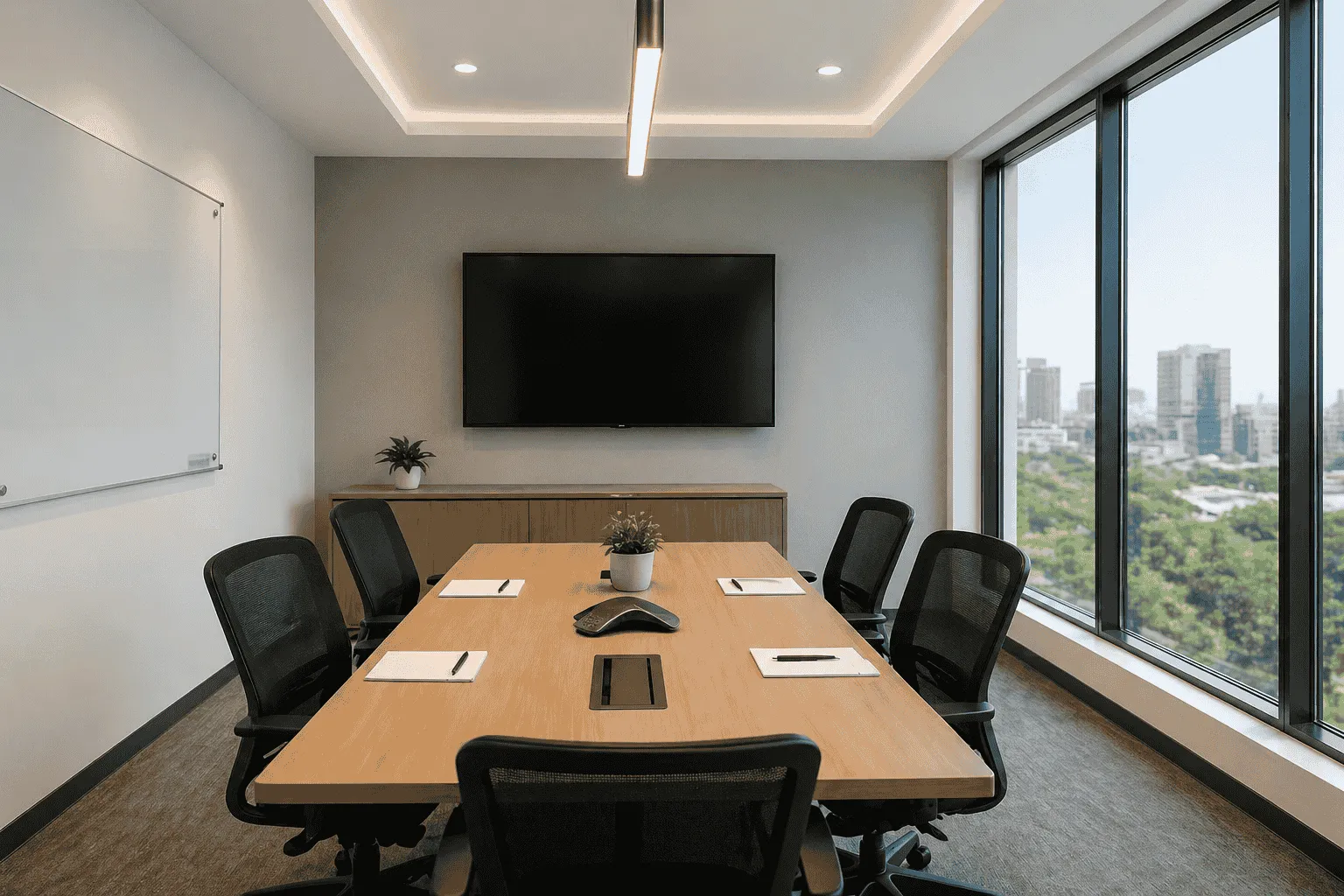
A company may not need fifty permanent desks. It may need thirty workstations, two meeting rooms, a private manager’s cabin, and a flexible area for team discussions. Another business may need a small private office with access to a larger conference room only a few times each month.
Flexible Workspaces in Ahmedabad allow companies to choose these combinations more carefully.
This shift is not limited to freelancers or early stage founders. Larger companies are also using flexible and managed workplaces for regional teams, temporary projects, and faster market entry.
The national market reflects this change. Cushman and Wakefield made a report stating that India had 79.7 million square feet of flexible office stock across its top eight cities in the second quarter of 2025. The firm projected that the total would cross 100 million square feet during 2026.
ICRA also projected that flexible and coworking office supply across India’s top six cities could rise from around 80 million square feet in December 2024 to 125 million square feet by March 2027.
These figures show that flexible offices are becoming part of mainstream commercial real estate rather than remaining a small alternative category.
Managed offices play an important role in this growth.
A managed workspace can provide privacy, branding, custom layouts, meeting areas, and dedicated team zones while the operator handles everyday facility management. This format can suit established companies that want the feel of their own office without taking on the full burden of setting it up and running it.
A growing company can move faster a regional branch can begin operations sooner. A project team can work from a professional space for a fixed period. A larger enterprise can expand without waiting months for interior work.
The goal is not to remove the office. It is to make the office fit the business.
Flexible Offices Lower the Barriers to Business Growth
Opening an office can involve more work than many companies expect.
Property searches, lease negotiations, deposits, interior planning, furniture procurement, internet installation, maintenance contracts, security arrangements and utility setup can consume time before employees occupy a single desk.
Flexible offices simplify that process.
A business can select the required space, complete the agreement, and begin operations in a much shorter period. This speed matters when a company has already hired employees, signed a new client, or committed to entering a new market.
It also helps businesses protect their capital.
Instead of spending heavily on office setup, companies can direct more resources toward activities that generate revenue. They can also reduce the risk of paying for unused space during periods of slower growth.
This does not mean every company should avoid a traditional office. A long term lease may still suit a stable organisation with predictable requirements and the resources to manage its own facility.
The important change is that businesses now have more choices.
A consultant can move out of a home office without leasing a full property with huge upfront cost. A startup can expand desk by desk. A company from another city can test the Ahmedabad market. An established organisation can launch a regional team while planning its permanent location.
The flexibility lies in matching the commitment to the actual need.
This is also how Coworking Spaces in Ahmedabad can support the city’s wider growth. They make it easier for businesses to enter commercial districts, recruit teams, meet clients, and establish a professional presence.
As more companies gain access to ready offices, business activity can spread across multiple parts of the city rather than remaining concentrated in a few traditional areas.
What Should Businesses Look for Before Choosing a Workspace?
A flexible office should solve operational problems, not create new ones. Before making a decision, businesses should examine the details carefully.
Consider the current team size, but also think about how the business may change over the next year. Ask whether the workspace can provide additional desks, a larger cabin, or a managed office if the team expands.
Review the location from an employee’s point of view. Is it easy to reach? Does it have parking? Are food, transport, and essential services available nearby?
Check which costs the agreement includes. Internet, electricity, maintenance, meeting room access, security, printing, and parking may follow different policies at different centres.
Visit the workspace during regular business hours. Observe the noise level, reception support, cleanliness, seating comfort, internet performance and overall environment.
Privacy also matters. A shared desk may suit an independent professional, while a legal, financial, or consulting team may require a private cabin.
Most importantly, choose the format that supports the way the team works. A popular address or attractive interior cannot compensate for poor functionality.
Ahmedabad’s Next Workplaces Will Be Built Around Choice
Ahmedabad’s flexible workspace growth is not happening because businesses no longer value offices. It is happening because they expect more from them.
The city’s expanding economy, startup culture, skilled workforce, commercial corridors, and proximity to GIFT City are creating demand from many types of organisations. Each one approaches space differently.
Some need a desk for one person. Others require private cabins, meeting facilities, or completely managed offices. Some are entering Ahmedabad for the first time, while others are preparing for their next stage of growth.
Shared Office Space Ahmedabad and Managed Office Space Ahmedabad give these businesses the ability to choose without making their office decision permanent too early.
At Karma Workspaces, we see the workplace as part of a company’s growth plan. It should support productivity, strengthen professional presence, and adapt as the team changes.
The most valuable office may not be the one with the largest floor area. It may be the one that gives a business the confidence to grow without carrying space it does not need.
As Ahmedabad continues to welcome founders, professionals, regional teams, and global companies, one question will shape the future of work across the city.
Will businesses continue adjusting themselves to fixed offices, or will they choose offices designed to adjust with them?



























Sign in to leave a comment.