

Visitor Management System technology is replacing the clipboard and paper logbook at front desks across Dubai, Abu Dhabi, and Sharjah, giving UAE businesses a faster, more secure way to handle guests, contractors, and clients. As free zones, business towers, and multi-tenant campuses continue to scale, front desk staff can no longer manually verify every guest, notify hosts, and produce an auditable record without creating long queues during peak arrival hours. This guide explains how modern visitor management works, what it replaces, and what to evaluate before deploying one at your facility.
Why UAE Businesses Need Smart Visitor Management
The UAE's rapid growth in free zones, business towers, and multi-tenant campuses has significantly increased daily visitor volume for reception teams already stretched thin. A manual sign-in sheet cannot verify identity, notify a host automatically, or produce a usable record for a security audit — gaps that become more expensive to ignore as a company's headcount and visitor traffic grow.
Dubai and Abu Dhabi's Growing Business Density
Business towers in DIFC, Dubai Internet City, and Abu Dhabi Global Market host dozens of tenant companies under one roof, each receiving their own stream of guests, couriers, and contractors throughout the day. Reception desks designed for a single-tenant building simply cannot keep pace with this volume without long queues forming during morning arrival hours.
The Limits of Paper Logbooks at Scale
A paper logbook cannot verify that a visitor is who they claim to be, cannot automatically notify a host the moment a guest arrives, and offers no reliable way to confirm who is still on-site during an emergency evacuation. These gaps become considerably more consequential as a facility's visitor volume and security requirements grow beyond what a single receptionist can track from memory.
Visitor Management: What It Actually Covers
This category of technology spans everything from identity capture and host notification to badge issuance and historical reporting, replacing what used to be a collection of disconnected manual steps with a single coordinated workflow. Rather than a receptionist juggling a logbook, a phone to call hosts, and a separate badge printer, a unified platform handles each of these steps automatically as part of one continuous process.
Visitor Management System for UAE Businesses: Built for Scale
Deployments built specifically for the local market need to handle high visitor volumes, multiple simultaneous host companies in a shared building, and reporting requirements suited to UAE free zone and tenant structures. Organizations evaluating a visitor management system for UAE businesses should confirm the platform has genuine experience supporting large corporate campuses rather than only smaller deployments scaled up after the fact.
Visitor Registration Software: Capturing Details Accurately at the Door
This layer typically captures a guest's name, company, host, purpose of visit, and in some cases a photo or ID scan, all directly at the point of entry rather than relying on handwriting that reception staff must later decipher. This structured data capture makes downstream reporting and emergency headcounts far more reliable than paper-based alternatives.
Visitor Check in System: Removing the Front Desk Bottleneck
A self-service or staff-assisted check-in workflow lets guests arrive, register, and receive a badge without waiting for a staff member to be free, while also logging their departure time automatically when they check out. This closes one of the most common gaps in older systems, where a facility could confirm when someone arrived but had no reliable record of when they actually left.
Visitor Tracking System: Knowing Who's on Site at All Times
This ongoing tracking layer gives facility managers a real-time view of exactly who is currently on-site, which host they are visiting, and how long they have been present, rather than a static log that only shows historical entries. This capability becomes essential during an emergency evacuation, when security teams need an accurate, current headcount rather than a log that requires manual cross-referencing.
Visitor Management Device: Choosing the Right Hardware
Kiosk and badge-printing hardware varies significantly in build quality, camera resolution, and printer reliability under continuous daily use. Organizations should evaluate hardware under their actual lobby conditions — a high-traffic corporate reception desk has very different demands than a quiet secondary entrance — rather than relying on vendor specification sheets alone.
Visitor Management Software: What Makes the Platform Reliable
The underlying software is what actually determines whether host notifications arrive instantly, whether reporting dashboards produce genuinely useful data, and whether the system holds up under a busy Monday morning rush. This software layer, not just the physical kiosk, is usually the deciding factor in whether a deployment produces consistent results at scale or generates frustrating delays during daily use.
Touchless Visitor Management System: Contactless Check-In for Modern Lobbies
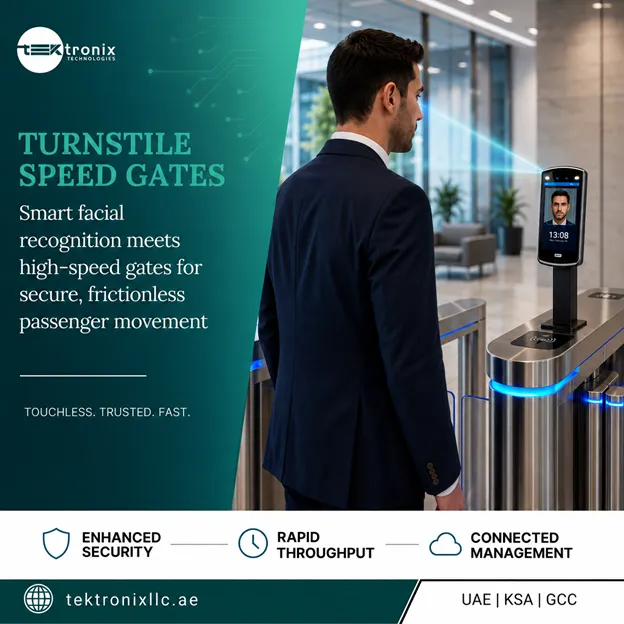
Contactless registration, using QR code pre-registration or facial verification rather than a shared touchscreen, has become an increasingly common expectation in premium UAE lobbies since it reduces shared surface contact and speeds up the check-in process for frequent visitors. Facilities that host a high volume of repeat business visitors — such as consultants, auditors, or partner-company staff — often find this approach reduces daily friction considerably compared to requiring every guest to fill out the same details on a shared screen each visit.
Common Deployment Scenarios: Corporate Towers, Free Zones, and Government Offices
Corporate headquarters typically deploy a single elegant kiosk at the main lobby entrance, prioritizing brand presentation and a fast, polished guest experience for client meetings. UAE free zones such as JAFZA and DMCC host large numbers of small and mid-sized companies that benefit significantly from shared kiosk infrastructure, since building management can offer self-service check-in as an amenity rather than each individual tenant building a system from scratch. Government offices tend to apply the strictest layering of the three, frequently combining digital registration with manual identity verification for the most sensitive buildings and floors.
Integration with Building and Security Systems
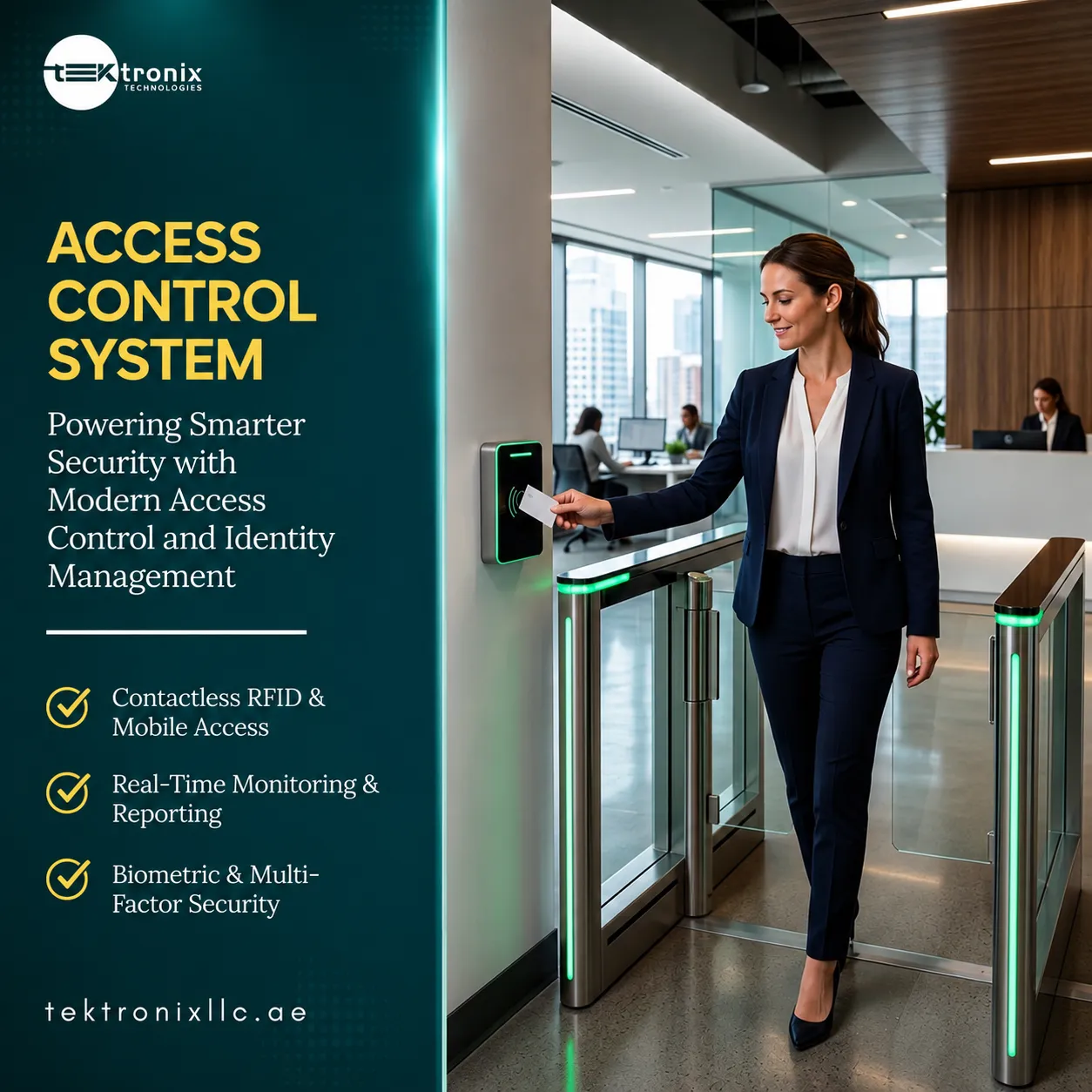
Modern visitor platforms rarely operate in isolation — most integrate with existing access control systems to issue temporary elevator or door credentials, and with host notification tools such as email or SMS so employees know the moment their guest arrives. Organizations should confirm compatibility with their existing building systems before committing to a full rollout, since integration depth is usually what separates a genuinely useful deployment from a standalone screen at the door.
Data Privacy and Governance for Visitor Records in the UAE
Because visitor platforms capture personal information such as names, contact details, and sometimes ID scans or photographs, businesses need clarity on how that data is stored, for how long, and who can access it. UAE organizations handling visitor data should confirm that records are encrypted at rest, access to the visitor database is limited to authorized administrators, and retention periods align with the organization's own data governance policies rather than being kept indefinitely by default.
Measuring Return on Investment for Visitor Management Upgrades
The cost case for modern visitor management usually rests on three measurable savings: reduced reception staffing hours during peak arrival periods, faster average check-in time per guest, and fewer administrative hours spent manually compiling visitor logs for audits or investigations. Businesses that previously employed a dedicated staff member solely to manage a sign-in desk often find that a digital platform absorbs the bulk of that workload, freeing personnel for higher-value front-of-house tasks.
Staff Training and Change Management for New Front Desk Systems
Even the most reliable platform depends on reception staff and hosts actually using it correctly. A short orientation covering how to handle a registration exception, what to do if the kiosk hardware has an issue, and how host notifications work significantly reduces confusion in the weeks following a rollout. Organizations that skip this step often see a spike in support requests during the first month, not because the technology is unreliable, but because staff were never given a clear explanation of how the new process differs from the paper logbook it replaced.
Multi-Site Deployment: Managing Visitors Across Several UAE Locations
Organizations operating more than one office across the UAE benefit significantly from a centralized management platform that oversees visitor records, host directories, and reporting across every site from a single dashboard. This is particularly valuable for companies with offices in both Dubai and Abu Dhabi, since security teams can apply consistent policies everywhere rather than managing each location as an isolated system with its own separate database.
Choosing the Right Vendor: Questions to Ask Before You Commit
Organizations evaluating a provider should ask for specific examples of comparable business deployments at similar visitor volumes, not just generic commercial references from unrelated markets. Useful questions include how quickly the platform can be customized for the organization's own host directory and visit types, what happens to check-in during a network outage, and how the vendor supports multilingual registration for a diverse visitor base.
Physical Design Considerations for High-Traffic Lobbies
Kiosk placement, queue flow, and the number of registration stations relative to expected peak visitor volume all affect real-world throughput just as much as the software itself. A lobby with too few kiosks for its visitor volume will create queues regardless of how fast the underlying software processes each registration, while poor kiosk placement can create pedestrian bottlenecks before guests even reach the check-in point.
Business Continuity: What Happens When the Network Goes Down
A platform that depends entirely on a live network connection to a central server introduces a single point of failure that facility managers need to plan around carefully. Well-designed systems cache recent host directory and policy data locally, allowing check-in to continue in a limited capacity even if connectivity to the central system is temporarily lost. Organizations should ask vendors directly how their platform behaves during an outage, since the answer matters most during exactly the kind of disruption an emergency evacuation might also involve.
Comparing Visitor Management Approaches: Paper, Spreadsheets, and Digital Kiosks
Paper logbooks remain the lowest-cost option but offer no searchability, no host notification, and no reliable emergency headcount capability. Spreadsheet-based sign-in, sometimes used as an intermediate step, improves searchability slightly but still depends entirely on manual data entry and offers no real-time visibility into who is currently on-site. Digital kiosk-based platforms address all of these gaps simultaneously, automating data capture, host notification, and reporting in one coordinated workflow, which is why most growing businesses eventually migrate away from both paper and spreadsheet approaches as visitor volume increases.
Total Cost of Ownership Beyond Initial Hardware
Organizations comparing providers often focus heavily on the upfront cost of kiosk hardware, but the total cost of ownership over a multi-year deployment includes software licensing, badge printer consumables, ongoing technical support, and the labour required for host directory management as staff join and leave. A cheaper initial hardware quote can end up costing more over several years if the vendor's support response times are slow or if badge printer supplies are difficult to source locally.
Aligning Investment with UAE Smart-Building Standards
The UAE's continued push toward smart-city and smart-building standards across Dubai and Abu Dhabi means new commercial developments increasingly specify self-service, technology-forward visitor processes from the earliest design stages rather than retrofitting them after construction. Developers and business tenants alike benefit from aligning their visitor management specification with these broader smart-building expectations, since doing so both future-proofs the investment and signals a level of operational maturity that increasingly matters to prospective tenants and investors.
Incident Response: Emergency Headcounts and Evacuation Readiness
During a fire alarm or other emergency evacuation, security teams need to know immediately who is on-site, not just who checked in at some point earlier in the day. A properly maintained visitor tracking capability allows facility managers to generate a real-time list of everyone currently checked in but not yet checked out, dramatically speeding up an emergency headcount compared to reviewing a paper logbook or asking hosts to manually confirm their guests have left the building.
Comparing In-House Management and Managed Visitor Services
Some UAE businesses prefer to manage their visitor platform entirely with in-house facilities and IT staff, while others opt for a managed service arrangement where the vendor handles ongoing monitoring, software updates, and host directory administration on the organization's behalf. In-house management offers tighter direct control and can be more cost-effective for organizations with existing dedicated facilities IT staff, while a managed arrangement often makes more sense for smaller businesses without a dedicated technology team, since it shifts the burden of round-the-clock system upkeep to a specialist provider.
Building a Long-Term Visitor Management Roadmap
Rather than attempting to overhaul every entrance at once, many organizations find it more practical to phase a visitor management modernization across one or two budget cycles, starting with the main corporate lobby before extending the same platform to secondary entrances and satellite offices. This phased approach also makes it easier to secure internal budget approval, since each stage can be justified on its own merits rather than requiring sign-off for an entire organization-wide overhaul at once.
Scaling Visitor Management as Your Business Grows
A kiosk configuration that works well for a single-lobby office with modest visitor volume may behave very differently once a business expands to additional floors, a second building, or a much larger host directory. Organizations should evaluate how easily a platform can add new kiosks, new host companies, and additional reporting capacity without requiring a complete system redesign each time the organization's footprint changes. Vendors with genuine multi-site experience in the region typically have established processes for this kind of scaling, while those without it often struggle when a client's needs outgrow the original single-lobby deployment.
Visitor Management System UAE: Market Overview
Adoption across the country is accelerating fastest in free zones, multi-tenant business towers, and large industrial or logistics facilities, driven by both rising visitor volumes and increasing tenant expectations for a professional, secure arrival experience. Facility owners across the Emirates are increasingly specifying self-service check-in as a standard requirement in new building fit-outs rather than an optional upgrade.
Why Organizations Choose Tektronix LLC
Tektronix LLC has delivered visitor management and front-desk automation projects for corporate, industrial, and multi-tenant clients across the UAE and wider GCC, with engineering teams experienced in integrating kiosk hardware with existing access control and building management systems. Its regional deployment portfolio spans single-lobby corporate offices to multi-building free zone campuses requiring centralized visitor oversight across several properties. Organizations evaluating a rollout can review the full Tektronix LLC visitor management system for the UAE to see how these capabilities are applied on real regional projects.
Implementation Checklist for Visitor Management Deployment
Before selecting a visitor management provider, facility managers should confirm the following:
- The workflow supports both staff-assisted and fully self-service check-in
- Badge printing includes photo capture and configurable expiration or zone restrictions
- Host notifications are delivered instantly via email or SMS on guest arrival
- Reporting dashboards can produce an instant list of everyone currently checked in
- The platform integrates with existing access control for temporary credential issuance
- Touchless or QR-based registration is available for frequent business visitors
- Vendor references include comparable multi-tenant or high-volume regional deployments
Conclusion
Visitor Management System platforms now bring together every part of Visitor Management that used to be handled separately, and a true Visitor Management System for UAE Businesses combines Visitor Registration Software, a fast Visitor Check in System, and a live Visitor Tracking System into one workflow. The right Visitor Management Device paired with dependable Visitor Management Software and a Touchless Visitor Management System option is what makes this work reliably at scale. As Visitor Management System UAE adoption continues to expand, businesses that modernize their front desk now will avoid the staffing costs and audit gaps that paper-based systems eventually create.
FAQs
1. How long does check-in take for a new visitor?
Most guests can complete registration, including a photo and badge print, within a minute or two, depending on how much information the facility requires at the point of entry.
2. Can the system notify my staff automatically when a guest arrives?
Yes, most modern platforms send an instant email or SMS notification to the designated host the moment a visitor completes check-in.
3. Can one system serve multiple tenant companies in the same building?
Yes, multi-tenant deployments allow each company to configure its own host directory, visit types, and notification settings while sharing the same physical kiosk hardware in a common lobby.
4. Does the system keep a record of who is still inside during an emergency?
Yes, since checkout is logged automatically or manually at departure, facility managers can generate a real-time list of everyone who has checked in but not yet checked out.
5. What does touchless check-in actually involve?
Touchless check-in typically uses QR code pre-registration or facial verification rather than requiring a guest to type details on a shared touchscreen, reducing contact and speeding up entry for frequent visitors.





























Sign in to leave a comment.