
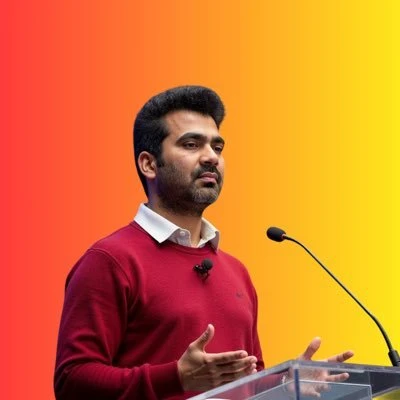
In today’s rapidly evolving digital economy, artificial intelligence (AI) is doing far more than streamlining operations; it’s reshaping the very essence of leadership. Business leaders across industries are reimagining their roles, strategies, and company cultures in response to the transformative power of automation. Among those at the forefront of this revolution is Girish Kotte, a forward-thinking entrepreneur and innovation strategist known for bridging the gap between human creativity and technological intelligence.
The Shift from Traditional Leadership to AI-Empowered Vision
Leadership used to be defined by decision-making experience, intuition, and the ability to manage people. While those traits remain invaluable, the modern landscape demands something more a capacity to understand and leverage data-driven intelligence. AI automation has become the catalyst that transforms reactive management into proactive innovation.
According to Kotte’s philosophy, technology should not replace leadership but redefine its purpose. By using AI to automate repetitive and data-heavy processes, leaders can focus on higher-level creativity, strategy, and human connection. This mindset reflects a shift from being task-oriented to being transformation-oriented leading with empathy, insight, and innovation.
Adapting to the AI Era: The Modern Leader’s Mandate
The rapid rise of automation has redefined what it means to be adaptable. Leaders now face the challenge of integrating AI systems not just as tools but as partners in decision-making. For Kotte, adaptation means developing an openness to continuous learning and cultivating a growth mindset within teams.
AI automation is no longer confined to technical operations it influences hiring, marketing, logistics, and even corporate ethics. Leaders must understand the strategic implications of automation: how it affects workforce morale, customer experience, and long-term sustainability. Kotte’s perspective encourages executives to build organisations where human potential and machine precision work in synergy, resulting in more meaningful, efficient, and innovative outcomes.
Balancing People and Technology: The New Human-Tech Equation
One of the most pressing questions in today’s leadership dialogue is how to balance automation with humanity. Kotte emphasizes that while AI can analyze data, predict trends, and optimize workflows, it cannot replicate the human elements of empathy, judgment, and emotional intelligence.
By fostering collaboration between people and technology, leaders can ensure that automation enhances rather than diminishes the workplace experience. Kotte’s approach highlights that the real power of AI lies not in replacing humans but in amplifying human capabilities allowing professionals to focus on innovation, creativity, and relationship-building.
Building a Culture of Innovation, Efficiency, and Empathy
At the core of Kotte’s leadership vision is the creation of an organizational culture that values innovation and empathy as much as efficiency. Through AI-driven transformation, he advocates for systems that empower teams to think creatively and act decisively, supported by data-driven insights.
Efficiency is achieved through automation, but sustainable success comes from empathy-driven leadership. Kotte believes that technology should be used to remove barriers, not build them, enabling leaders to better understand their people, customers, and communities. His work reflects a deep commitment to designing AI ecosystems that are inclusive, ethical, and human-centred.
The Future of Leadership: Where Vision Meets Intelligence
As AI continues to redefine industries, the role of leadership will evolve from command and control to collaboration and co-creation. Visionary leaders like Girish Kotte exemplify how blending human insight with technological power can build organizations ready for the future.
In a world increasingly defined by automation, it is empathy, adaptability, and innovation that will distinguish great leaders from good ones. Girish Kotte journey serves as an inspiring reminder that leadership in the AI era is not about mastering technology alone; it’s about mastering the art of transformation.





























Sign in to leave a comment.