


For years, the startup playbook for financial planning looked the same: a founder (or an overworked finance hire) building a P&L, cash flow, and balance sheet in a spreadsheet, updating formulas by hand, and hoping nothing broke when a new assumption got dropped in. It worked, more or less — until it didn't. One misplaced cell reference, one outdated growth rate, and an entire fundraising deck could be built on numbers nobody fully trusted anymore.
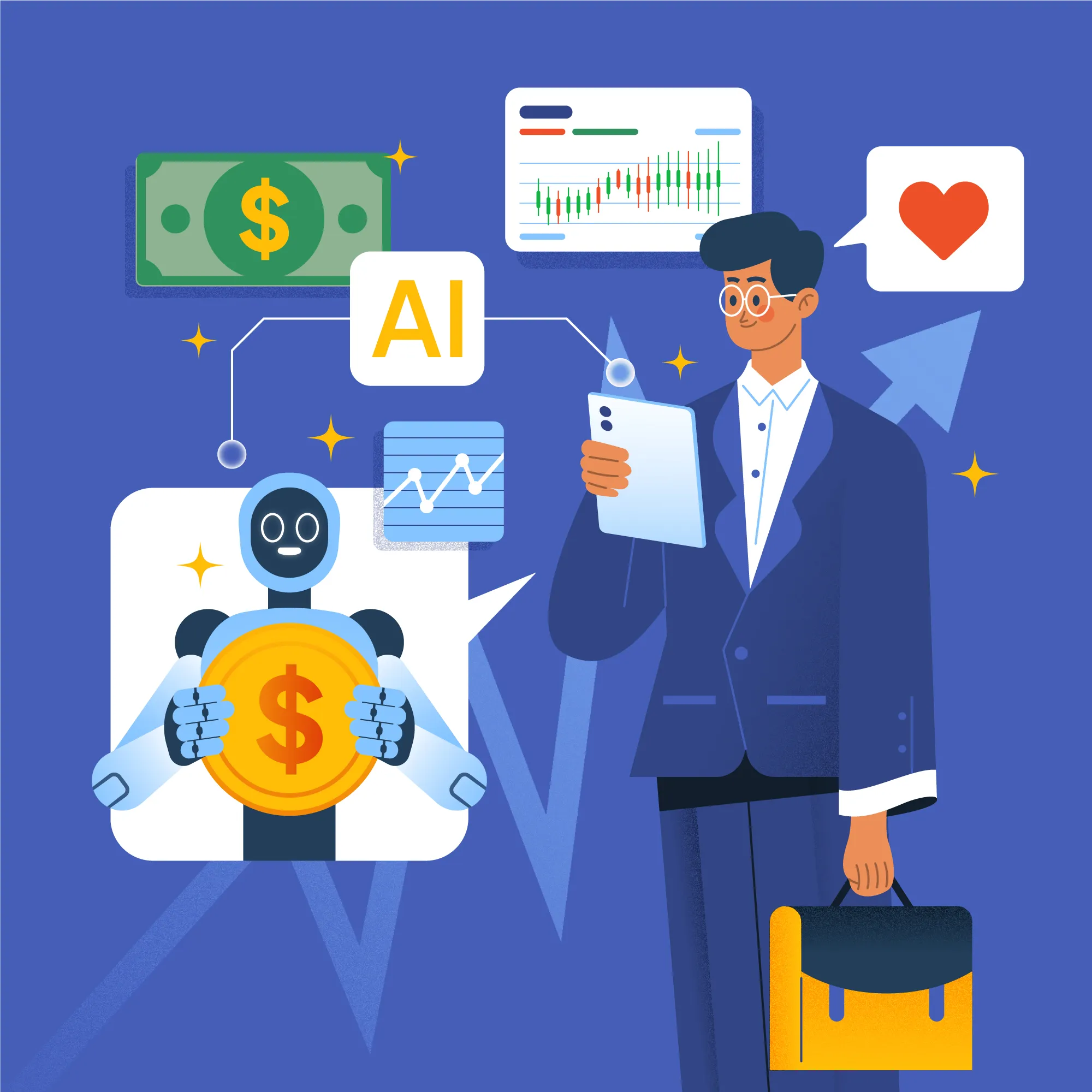
That's the gap AI forecasting is stepping into. Instead of founders manually stitching together assumptions across dozens of linked tabs, AI-driven tools now generate financial statements, run projections, and flag risks in a fraction of the time — with far less room for human error.
The Problem With Spreadsheet-Only Planning
Spreadsheets aren't going away, and they shouldn't. But relying on them as the entire financial planning process creates real friction for early-stage companies:
- Fragile formulas. A single broken link can silently throw off an entire projection, and it's easy not to notice until an investor does.
- No real scenario testing. Building even two or three growth scenarios manually often means duplicating tabs and re-checking every formula.
- Time sink. Founders spend hours rebuilding models instead of running the business.
- Steep learning curve. Not every founder has a finance background, and getting P&L, balance sheet, and cash flow statements to actually tie together correctly takes real expertise.
None of this is a knock on spreadsheets themselves — it's a limitation of doing complex, dynamic modeling in a static tool built for manual input.
What AI Forecasting Actually Changes
AI forecasting software doesn't just automate data entry — it changes how the model itself gets built and maintained. Modern AI forecasting tools can generate a full set of financial statements from a handful of inputs about the business: industry, stage, location, and growth assumptions. From there, the underlying AI forecasting models continuously recalculate projections as inputs change, instead of requiring a founder to manually update every downstream cell.
A few of the concrete shifts this brings:
1. Speed. What used to take days of spreadsheet-building can now take minutes. Founders can generate investor-ready P&L, balance sheet, and cash flow projections without starting from a blank template.
2. Accuracy. Because the statements are generated and linked automatically, there's far less risk of the broken-formula problem that plagues manual models.
3. Scenario testing on demand. Want to see what happens if customer acquisition cost doubles, or if a new hire is delayed a quarter? With AI forecasting, adjusting an assumption updates every connected statement instantly — no rebuilding required.
4. Built-in valuation context. Some AI forecasting tools go a step further, layering in real-time valuation estimates (DCF, market multiples) alongside the projections, so founders aren't relying on a separate process to understand what their numbers mean for fundraising.
5. Plain-language insights. Rather than handing back a wall of numbers, many AI forecasting techniques now include automated commentary — flagging where margins are thinning, where cash runway looks tight, or where growth assumptions seem aggressive relative to the industry.
Why This Matters More for Startups Than Established Companies
Startups face a specific version of this problem: they need investor-grade financial rigor, but rarely have a finance team to produce it. A seed-stage founder pitching investors is expected to show the same discipline in their model as a company ten times their size — without the headcount to match.
This is where AI forecasting is genuinely leveling the playing field. Instead of hiring a fractional CFO or spending weekends learning financial modeling from scratch, founders can use AI forecasting software for business planning that's tailored to their specific business model, industry, and growth stage — and get something close to what a finance professional would build manually, in a fraction of the time.
Consultants and agencies serving multiple startup clients are seeing similar gains. Rather than rebuilding a model from scratch for every client, AI-assisted forecasting lets them generate a baseline quickly and spend their time on the judgment calls — the assumptions, the strategy, the story behind the numbers — rather than the mechanics of getting a spreadsheet to work.
Where Spreadsheets Still Fit In
None of this means spreadsheets disappear from the process entirely. Many founders still export AI-generated statements into a spreadsheet for final formatting, board decks, or ad hoc analysis. The shift isn't "spreadsheets vs. AI" — it's about where in the process each tool does the heavy lifting. Spreadsheets remain useful for presentation and lightweight adjustments; AI forecasting is taking over the harder, more error-prone work of building and maintaining the underlying model.
The Bottom Line
For startups, financial forecasting used to mean choosing between spending scarce time building spreadsheets by hand or spending scarce cash hiring someone to do it. AI forecasting is starting to remove that trade-off. As AI forecasting models keep improving and more founders adopt AI forecasting tools as a standard part of their planning process, the spreadsheet-first approach to startup financial planning looks increasingly like something founders will look back on the way they now look back on paper ledgers — a method that worked, until something better came along.
Ready to see it in action? VedaOne.AI generates investor-ready P&L, balance sheet, and cash flow projections — plus real-time valuation insights — tailored to your business model, industry, and growth stage. No spreadsheets, no finance degree required. Start your free trial and build your first financial model in minutes.
























Sign in to leave a comment.