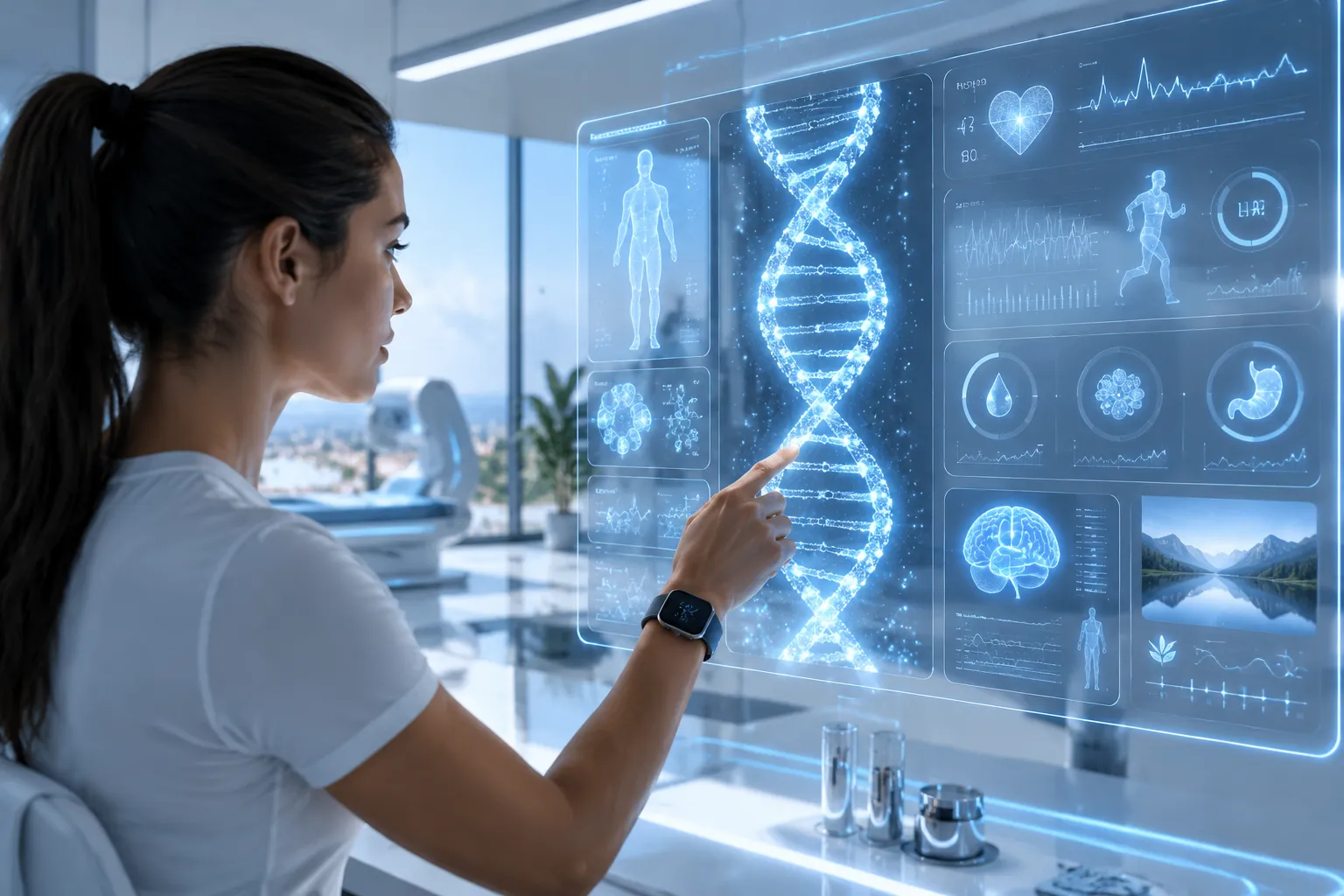

For decades, healthcare and wellness recommendations were built around general guidelines. People were often advised to follow the same exercise routines, nutrition plans, or lifestyle habits based on broad population studies. However, every person’s body is different. Genetics, environment, daily behavior, metabolism, and health history all influence how someone responds to lifestyle choices.
Artificial intelligence is changing this approach by making personalized health optimization more accessible. Instead of asking, “What works for most people?” AI helps answer a more specific question: “What works best for me?”
A longevity AI app uses artificial intelligence to analyze multiple sources of health information, including genetic data, blood markers, wearable devices, sleep patterns, nutrition habits, and fitness data. By combining these insights, AI can help users understand their health risks, optimize daily decisions, and develop strategies that support healthier aging.

What Is Personalized Health Optimization?
Personalized health optimization focuses on improving an individual’s health based on their unique biological and lifestyle information. Unlike traditional wellness approaches that provide general recommendations, personalized optimization considers personal differences.
For example, two people may follow the same diet and exercise routine but experience different results. One person may respond well to higher carbohydrate intake, while another may benefit from a different nutritional approach due to metabolic differences.
AI helps identify these variations by processing large amounts of health data and finding connections that may not be obvious to humans.
Key areas where personalized health optimization is developing include:
- Nutrition recommendations based on metabolism and genetics
- Exercise plans based on fitness levels and recovery patterns
- Sleep improvement strategies
- Early identification of health risks
- Lifestyle adjustments for healthy aging
The Role of AI in Longevity and Healthy Aging
Longevity science focuses on extending not only lifespan but also healthspan — the number of years a person can live with good physical and mental health.
AI is becoming an important tool in longevity research because it can analyze complex biological information faster than traditional methods. Human health involves thousands of interconnected factors, and AI systems can identify patterns across these data points.
A longevity AI app can help users monitor important areas such as:
- Biological aging indicators
- Cardiovascular health trends
- Metabolic health markers
- Inflammation levels
- Sleep quality
- Recovery patterns
Instead of waiting until health problems appear, AI-driven tools encourage preventive action. They help users understand how everyday choices may influence long-term health outcomes.
How AI Uses Different Types of Health Data
One of the biggest advantages of AI-powered health platforms is their ability to combine information from multiple sources.
Wearable Health Data
Smartwatches and fitness trackers collect valuable information about daily activity, heart rate, sleep cycles, and recovery. AI can analyze this information to identify trends and suggest improvements.
For example, an AI system may notice changes in sleep quality, reduced activity levels, or increased resting heart rate and highlight potential areas that need attention.
Blood Biomarkers
Blood tests provide important information about internal health. AI can analyze biomarkers related to metabolism, inflammation, hormones, and cardiovascular health.
When combined with lifestyle information, these insights can provide a more complete picture of overall wellness.
Genetic Information and DNA Analysis
Genetics play an important role in understanding individual health differences. A DNA Analysis App with AI can analyze genetic information and translate complex DNA data into personalized health insights.
AI can help interpret genetic variations linked to areas such as:
- Nutrient metabolism
- Fitness response
- Disease risk factors
- Medication response
- Aging-related pathways
However, genetic information is only one part of health optimization. AI works best when genetic insights are combined with lifestyle, environment, and health data.
AI Makes Health Insights Easier to Understand
One challenge with modern health technology is that people often collect large amounts of data but struggle to understand what it means.
AI helps solve this problem by converting complex information into simple, actionable recommendations.
For example, instead of showing users hundreds of health measurements, an AI platform can highlight important patterns:
- Your sleep consistency may affect recovery
- Your activity level has changed compared with previous months
- Your nutrition choices may influence specific biomarkers
- Certain lifestyle habits may support better long-term health
This makes personalized health management more practical for everyday users.
The Future of Preventive Healthcare With AI
Healthcare is gradually moving from reactive treatment toward prevention. Traditional healthcare often focuses on treating problems after symptoms appear. AI supports a more proactive approach by helping people identify risks earlier.
Future AI health platforms may become more advanced by combining:
- Real-time wearable monitoring
- Advanced genetic analysis
- Personalized nutrition recommendations
- AI health coaching
- Predictive health modeling
As technology improves, AI may help individuals make better decisions before small health concerns become serious problems.
Benefits and Limitations of AI Health Optimization
AI-powered health tools provide several benefits, including:
Personalized Recommendations
AI considers individual data rather than providing generic advice.
Continuous Monitoring
Users can track changes over time and understand how their habits influence health.
Better Understanding of Personal Health
AI helps simplify complex medical and biological information.
Preventive Focus
AI encourages early awareness and proactive lifestyle adjustments.
However, AI health optimization also has limitations. AI tools should support healthcare decisions, not replace qualified medical professionals. Data privacy, accuracy, and responsible interpretation remain important considerations.
Users should choose platforms that prioritize secure data handling and provide scientifically supported insights.
How Vidaya AI Represents the Future of Personalized Health
The future of health optimization is moving toward connected, personalized, and intelligent systems. By combining genetic information, biomarkers, wearable data, and AI-driven analysis, platforms like Vidaya AI help individuals gain a deeper understanding of their health patterns and make more informed lifestyle decisions.
As artificial intelligence continues to evolve, personalized health optimization will become more precise and accessible. A longevity AI app is not simply a technology tool; it represents a shift toward proactive health management where individuals can better understand their bodies and take meaningful steps toward healthier aging.
Frequently Asked Questions
What is personalized health optimization?
Personalized health optimization is an approach that tailors health recommendations to an individual's unique biological and lifestyle factors. Unlike general guidelines that apply to large populations, this method considers personal differences, such as genetics and metabolism, to provide specific advice that can lead to better health outcomes.
How does AI contribute to personalized health recommendations?
AI analyzes vast amounts of health data, including genetic information, blood biomarkers, and lifestyle habits, to identify patterns and correlations. This allows it to provide tailored health insights and recommendations that are more precise than traditional one-size-fits-all approaches.
Can AI health platforms really predict health risks?
Yes, AI health platforms can help identify potential health risks by analyzing various health indicators and personal data. By recognizing patterns in your health data, these tools can signal early warnings, encouraging preventive measures before serious health issues arise.
What types of health data can AI analyze?
AI can analyze a wide range of health data, including wearable device information like activity levels and sleep patterns, blood biomarkers from lab tests, and genetic data from DNA analysis. This comprehensive approach enables a better understanding of an individual's overall health.
Is AI health optimization safe and reliable?
While AI health optimization offers many benefits, it's important to note that these tools should assist rather than replace professional medical advice. Users should ensure that they choose platforms that prioritize data privacy, accuracy, and are based on scientifically supported insights.
What are the limitations of AI in health optimization?
Some limitations of AI in health optimization include potential data inaccuracies and the need for responsible interpretation of the insights provided. Additionally, while AI can offer valuable recommendations, it is crucial to consult healthcare professionals for diagnosis and treatment.
How can I start using AI for my health optimization?
To begin using AI for health optimization, you can explore various AI-powered health apps that analyze your health data. Look for platforms that integrate wearable device information, genetic analysis, and provide personalized recommendations, ensuring they have a solid reputation for privacy and accuracy.




























Sign in to leave a comment.