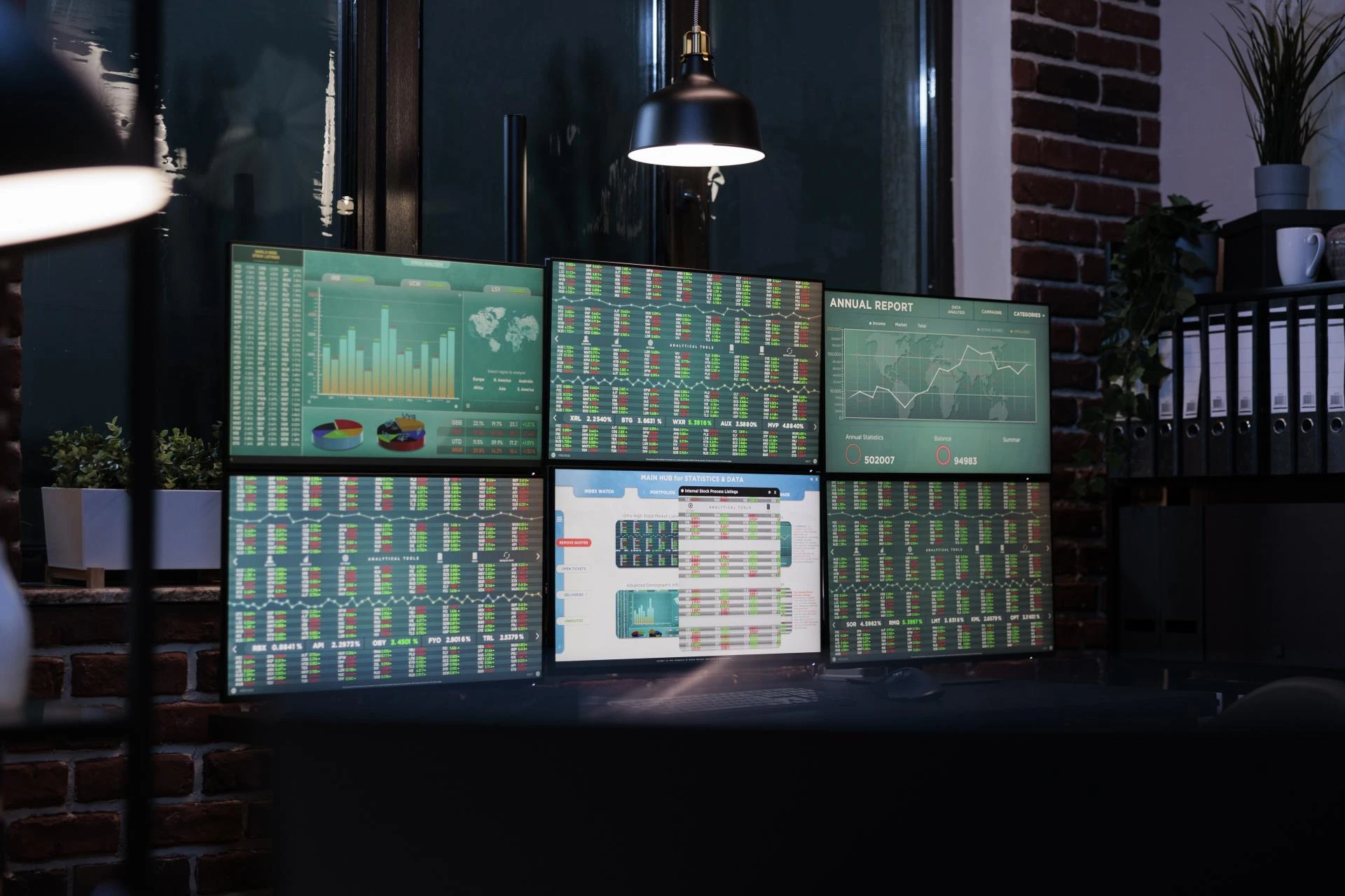

Artificial Intelligence is no longer a futuristic concept in financial markets it’s already transforming the way trading works.
At PFH Markets, we’ve witnessed firsthand how AI-driven tools are reshaping decision-making, risk management, execution speed, and market analysis. The future of trading is no longer just about charts and instinct. It’s about data, automation, and intelligent systems working alongside traders.
The question isn’t whether AI will impact trading. The question is: how can traders adapt and benefit from it?
Let’s explore what’s really changing.
From Manual Analysis to Intelligent Data Processing
Traditional trading relied heavily on manual chart reading, economic news interpretation, and pattern recognition. While those skills still matter, AI has dramatically enhanced how quickly and accurately market data can be processed.
Modern AI systems can:
- Analyze thousands of market variables instantly
- Detect patterns invisible to the human eye
- Identify correlations across global assets
- React to market conditions in milliseconds
This doesn’t eliminate the role of traders it enhances their capabilities. AI helps filter noise, allowing traders to focus on strategy rather than information overload.
Smarter Risk Management
One of the most powerful applications of AI is in risk assessment.
Markets are influenced by countless variables economic reports, geopolitical events, liquidity shifts, and investor sentiment. AI-driven models can assess risk exposure dynamically and adjust recommendations in real time.
Instead of static stop-loss levels or fixed strategies, AI allows for adaptive risk management.
At PFH Markets, innovation means continuously exploring technologies that support smarter decision-making and structured trading environments. AI-powered insights help traders understand volatility patterns and exposure levels more effectively.
Algorithmic Trading and Automation
Automation has been part of trading for years, but AI is taking it further.
Unlike traditional algorithms that follow rigid rules, AI-driven systems can learn and evolve. They analyze past performance, refine strategies, and adjust based on new market conditions.
This shift from rule-based systems to learning-based systems marks a major milestone in trading evolution.
However, automation does not mean “hands-off profits.” It requires:
- Clear strategy parameters
- Continuous monitoring
- Realistic performance expectations
- Strong risk controls
The future belongs to traders who understand how to combine human judgment with technological precision.
Emotional Discipline Through Technology
One underestimated benefit of AI in trading is emotional regulation.
Many trading losses come not from poor strategies but from emotional decisions — fear, greed, overconfidence, or panic.
AI-based tools help reduce emotional bias by:
- Providing data-driven signals
- Offering structured analytics
- Monitoring trading behavior patterns
- Highlighting deviations from strategy
Technology cannot remove emotion entirely, but it can reduce impulsive decision-making and reinforce discipline.
Market Prediction vs. Probability Optimization
There is a common misconception that AI can “predict” markets with certainty. In reality, no system can guarantee outcomes.
What AI truly does is improve probability assessment.
It enhances forecasting accuracy by processing:
- Historical data
- Real-time market flow
- Sentiment analysis
- Macroeconomic indicators
Instead of predicting exact price movements, AI helps traders optimize risk-to-reward scenarios.
The future of trading is not about certainty it’s about calculated probability.
Accessibility and Democratization of Advanced Tools
In the past, advanced trading technology was limited to large institutions and hedge funds. Today, innovation is becoming more accessible to retail traders.
Platforms that integrate intelligent analytics, automation support, and performance monitoring tools allow individuals to operate with capabilities once reserved for institutional desks.
At PFH Markets, our focus is on building environments where innovation supports transparency, efficiency, and structured growth. The goal is not to replace traders with machines but to empower them with better tools.
The Human Element Still Matters
Despite all technological progress, trading remains a human-centered activity.
AI can process data faster than any human.
It can detect patterns more efficiently.
It can automate execution.
But it cannot replicate intuition built through experience, nor can it fully understand personal financial goals, risk tolerance, or long-term vision.
The future of trading is hybrid.
Human insight + machine intelligence.
That combination is where true competitive advantage lies.
Final Thoughts
Artificial Intelligence is not a threat to traders it is an evolution of the trading landscape.
Those who resist technology may fall behind. Those who learn to integrate it thoughtfully will gain efficiency, clarity, and stronger risk control.
At PFH Markets, we believe innovation should serve discipline, not replace it. AI is reshaping execution, analysis, and risk management but the core principles of trading remain unchanged: strategy, patience, and structured decision-making.
The future of trading belongs to those who adapt intelligently.



















Sign in to leave a comment.