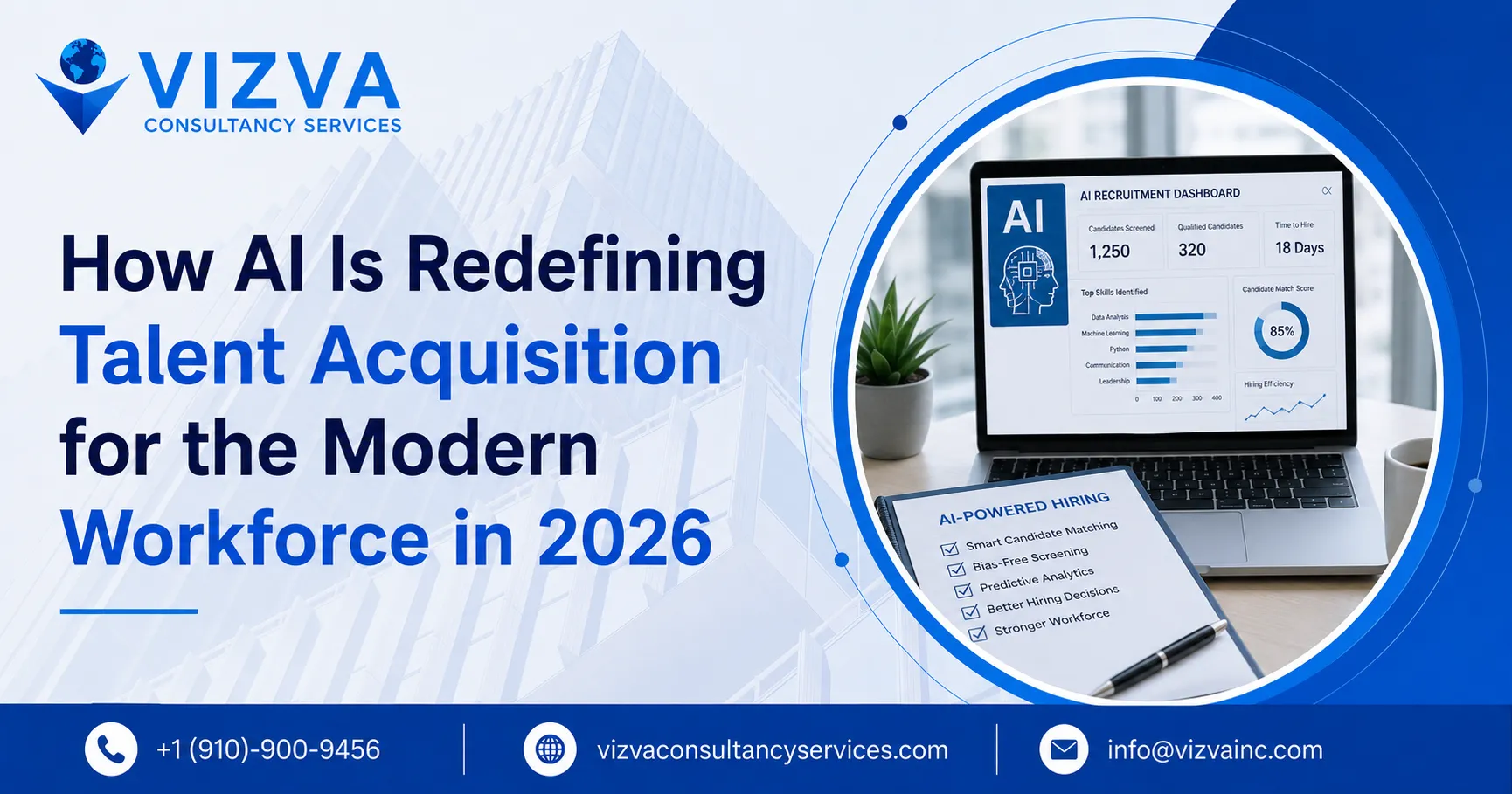
Ask any recruiter who's been doing this job for a decade what's changed, and they'll tell you the same thing: the resume pile doesn't exist anymore. Not really. Systems now rank, screen, and even schedule interviews before a human ever opens a candidate profile. That's the heart of AI in Talent Acquisition, and it's rewriting how hospitals, growing businesses, and staffing teams find people.
It's not only about speed, though speed is part of it. AI in Talent Acquisition changes who gets noticed in the first place, how fast someone moves through a pipeline, and whether a company can actually compete for talent that's genuinely scarce right now. Companies that get this right are filling roles quicker and, more importantly, keeping the people they hire.
So what does this actually look like in practice? Below, we walk through what AI in Talent Acquisition means day to day, where the trends are heading in 2026, and how to bring these tools into a hiring process without losing the human judgment that still makes or breaks a good hire.
What Is AI in Talent Acquisition?
At its core, AI in Talent Acquisition is the use of machine learning, predictive analytics, and automation to support sourcing, screening, interviewing, and decision-making. Most tools aren't trying to replace recruiters. They're built to clear away the repetitive work so people can spend their time on the parts of hiring that actually need a human. Teams building this capability internally often start with structured skills development workshops so recruiters learn to use these systems well, rather than just turning them on and hoping for the best.
- Automates resume screening and candidate ranking
- Predicts candidate success using historical placement data
- Powers chatbots that answer candidate questions instantly
- Flags strong-fit candidates faster than manual review alone
Why Is AI in Talent Acquisition Important in 2026?
AI use across HR functions has climbed sharply over the past two years, and recruiting is now the single most common place it shows up. This isn't a fringe experiment anymore. Most organizations use some form of AI somewhere in hiring today, usually for screening, candidate communication, or skills assessment, and hospitals competing for the same shrinking pool of specialized talent don't really have the option to sit this one out.
There's also a harder-to-ignore reason it matters: the results are measurable. Companies leaning into AI-supported hiring have reported noticeably faster time-to-fill and stronger hire quality than teams still doing everything by hand. There's a biased argument here too. When screening focuses on skills and performance history instead of resume formatting or where someone went to school, a wider, fairer pool of candidates tends to make it through.
How Is AI Recruitment Reshaping the Hiring Process?
AI recruitment used to mean keyword matching on a resume. That's changed. Today's platforms use natural language processing to understand context, so a strong candidate who described their experience differently than a job posting worded it doesn't just vanish from the shortlist.
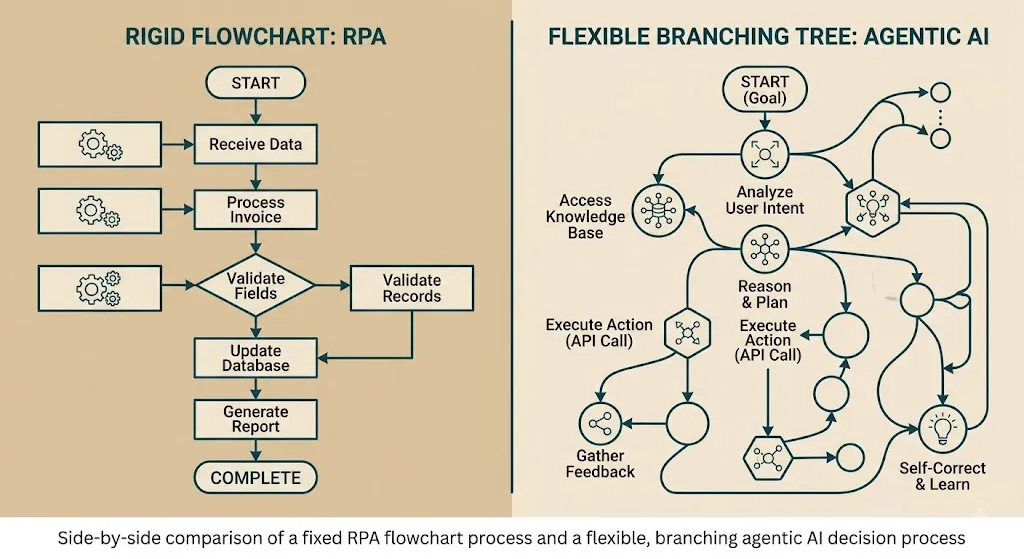
The newer piece is agentic sourcing. Instead of a recruiter running a search Monday morning, the search runs overnight and there's a ranked shortlist waiting by the time anyone logs in. For teams with high hiring volume, pairing this kind of AI recruitment with structured RPO Solutions hands off the entire recruitment function while still keeping that speed advantage.
What Talent Acquisition Trends 2026 Should Businesses Watch?
One of the clearest talent acquisition trends 2026 is the move toward skills-based hiring. Degrees and job titles carry less weight than they used to. AI helps surface relevant skills faster than a person scanning resumes ever could, but validating whether someone's actually a fit still comes down to structured interviews and real assessments.
There's a second trend worth watching too: talent intelligence platforms. These go well beyond a standard applicant tracking system, pulling in data from professional networks, market movement, and internal hiring history to help organizations plan ahead instead of scrambling when a role opens. And increasingly, talent acquisition trends 2026 point toward these tools living inside existing HR systems rather than running as separate software nobody remembers to check.
What Role Do AI Hiring Tools Play in Modern Recruiting?
AI hiring tools now touch nearly every stage of hiring, from first sourcing through scheduling and even early skills assessments. Interview intelligence tools are a good example; they capture conversation patterns so a hiring manager can compare candidates more consistently instead of relying on gut feel from one interviewer to the next.
What separates the good AI hiring tools from the gimmicky ones is restraint. The strongest platforms support a recruiter's judgment rather than trying to replace it. People in the field have started calling this a human-AI partnership: AI handles the data-heavy grind like scheduling and initial ranking, and recruiters keep the parts that need actual human context, relationship-building, culture fit, and the final call.
How Does Artificial Intelligence in Reruitment Address Bias and Risk?
There's a real upside to artificial intelligence in recruitment, but pretending it's risk-free would be dishonest. AI models can absorb the same biases baked into whatever historical hiring data trained them, which means someone still needs to be watching, auditing, and correcting courses along the way.
Organizations doing this well tend to build in a few safeguards: realistic job previews that filter out mismatched applicants early, ongoing monitoring of how AI-driven decisions actually play out, and regular bias checks across demographic groups. None of that happens automatically. It takes a team that treats artificial intelligence in recruitment as a tool to manage, not a system to trust blindly.
What Does Modern Workforce Hiring Look Like in 2026?
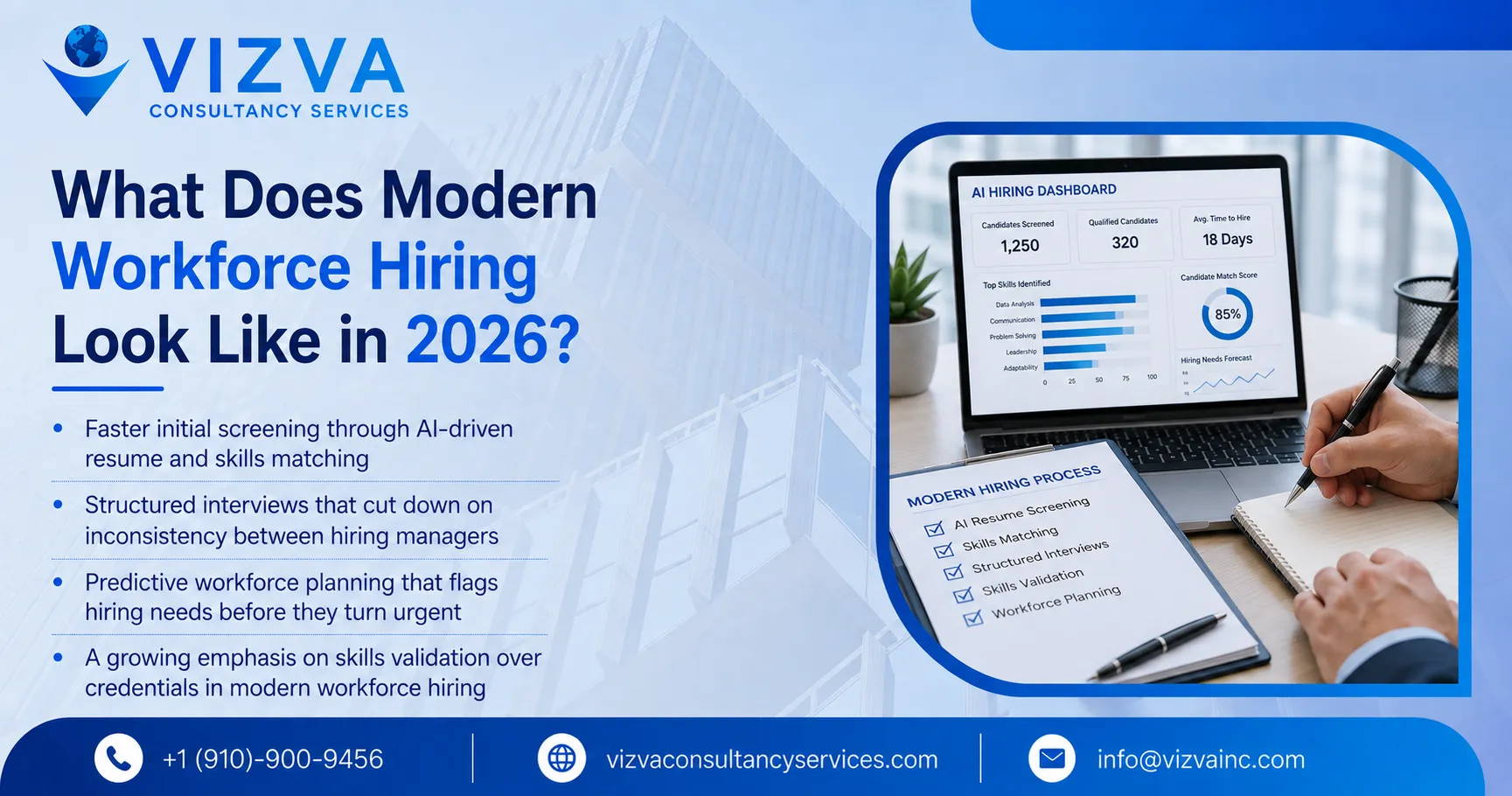
Modern workforce hiring blends automation with something that sounds almost old-fashioned: a renewed focus on actually talking to people.
- Faster initial screening through AI-driven resume and skills matching
- Structured interviews that cut down on inconsistency between hiring managers
- Predictive workforce planning that flags hiring needs before they turn urgent
- A growing emphasis on skills validation over credentials in modern workforce hiring
Why Partner with an Experienced Hiring Team for AI-Driven Recruiting?
Most internal HR teams don't have the bandwidth to figure this out alone, and that's a fair place to be. Vizva Consultancy Services pairs experienced recruiters with modern hiring technology, helping hospitals and growing businesses bring AI in Talent Acquisition into their process without losing the judgment calls that actually make a hire work out.
Conclusion
AI in Talent Acquisition isn't an emerging trend anymore it's just how hiring works now. AI recruitment tools handle the early screening, talent intelligence platforms guide long-term workforce planning, and 2026 looks like the year technology and human judgment settled into working together instead of competing. Businesses that hold onto that balance will keep out-hiring the ones betting everything on one side or the other.
Frequently Asked Questions
1. What is AI in Talent Acquisition?
It's the use of machine learning and automation to support resume screening, candidate matching, and interview scheduling throughout the hiring process.
2. How is AI recruitment different from traditional hiring software?
AI recruitment reads context through natural language processing rather than just matching keywords, which usually produces a more accurate shortlist.
3. Will AI hiring tools replace human recruiters?
Not really. Most AI hiring tools are built to take repetitive work off a recruiter's plate so they can focus on relationships and final decisions.
4. How can businesses reduce bias in artificial intelligence in recruitment?
Regular bias audits, human oversight of AI-driven decisions, and structured interviews all help keep bias risk in check.
5. What does modern workforce hiring look like for hospitals and growing businesses?
It's AI-driven screening speed paired with human-led interviews that focus on skills validation and long-term fit, not just how fast a role gets filled.
Thinking about bringing AI in Talent Acquisition into your hiring strategy the right way?
Our team helps businesses adopt modern recruiting technology without losing the human judgment that drives good hires. Reach out today, and let's talk about what talent acquisition trends 2026 could mean for your team.
























Sign in to leave a comment.