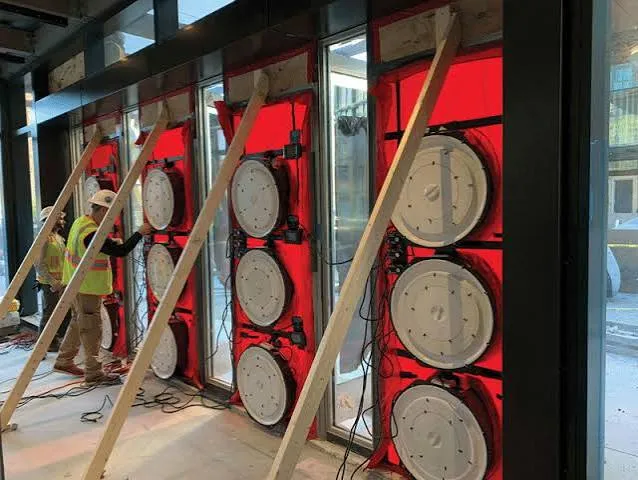

As energy codes become more stringent, building owners, architects, and contractors must focus on reducing air leakage to improve energy efficiency and overall building performance. One of the most effective ways to verify compliance is through air barrier testing, a process that evaluates how well a building's envelope prevents unwanted air movement. By identifying leaks and measuring airtightness, air barrier testing helps ensure that structures meet modern energy code requirements while supporting long-term operational savings.
Understanding Air Barrier Testing
An air barrier system is designed to control the flow of air through a building's walls, roof, windows, doors, and other envelope components. Even small gaps can allow conditioned air to escape and outdoor air to enter, increasing energy consumption and placing additional strain on HVAC systems.
Air barrier testing measures the effectiveness of this system by quantifying air leakage throughout the building envelope. The results provide valuable data that can be compared against local energy code requirements and project performance goals.
Why Energy Codes Focus on Air Leakage
Energy codes are intended to reduce unnecessary energy use and improve building efficiency. Excessive air leakage can lead to:
- Higher heating and cooling costs
- Inconsistent indoor temperatures
- Increased moisture intrusion risks
- Reduced occupant comfort
- Lower overall building performance
Because of these concerns, many building codes now require verification of building airtightness through testing rather than relying solely on visual inspections.
The Role of Air Leakage Testing
Air leakage testing provides measurable evidence of a building's air tightness. During the testing process, specialized equipment is used to pressurize or depressurize the structure while monitoring airflow rates.
The collected data helps project teams:
- Identify hidden leakage pathways
- Verify installation quality of air barrier materials
- Confirm compliance with energy code requirements
- Document performance for project stakeholders
- Reduce the risk of costly post-construction corrections
Testing early in the construction process can also help address deficiencies before they become expensive problems.
How Blower Door Testing Supports Compliance
One of the most widely used methods for evaluating building airtightness is Blower Door Testing. This procedure uses calibrated fans and pressure measurement devices to determine how much air enters or exits a building under controlled conditions.
Blower door testing helps construction teams:
- Measure overall envelope performance
- Locate leaks around windows, doors, and penetrations
- Verify that installed air barriers perform as designed
- Generate documentation required for code compliance
For many commercial and residential projects, blower door testing has become a critical step in demonstrating that energy performance targets have been achieved.
Additional Benefits Beyond Code Compliance
While meeting code requirements is often the primary goal, air barrier testing provides several long-term advantages:
Improved Energy Efficiency
Reduced air leakage decreases heating and cooling loads, helping lower utility costs.
Better Indoor Comfort
A tighter building envelope minimizes drafts and temperature fluctuations.
Moisture Control
Limiting uncontrolled airflow reduces the potential for condensation and moisture-related damage within wall assemblies.
Enhanced Building Durability
Properly functioning air barriers help protect building materials from long-term deterioration caused by air and moisture movement.
When Should Air Barrier Testing Be Performed?
The best results are often achieved when testing is incorporated into multiple phases of construction. Preliminary testing can identify installation issues before finishes are completed, while final testing confirms compliance and project performance.
By integrating testing into the quality assurance process, project teams can avoid delays and maintain confidence that the building will meet required standards.
Conclusion
Air barrier testing plays a vital role in helping buildings satisfy modern energy code requirements. Through accurate measurement of building airtightness, air leakage testing and Blower Door Testing provide objective data that supports compliance, improves energy performance, and enhances long-term building durability. For building owners and construction professionals seeking reliable building envelope verification, working with experienced testing providers such as Qed Lab Inc can help ensure projects meet both regulatory requirements and performance expectations.

























Sign in to leave a comment.