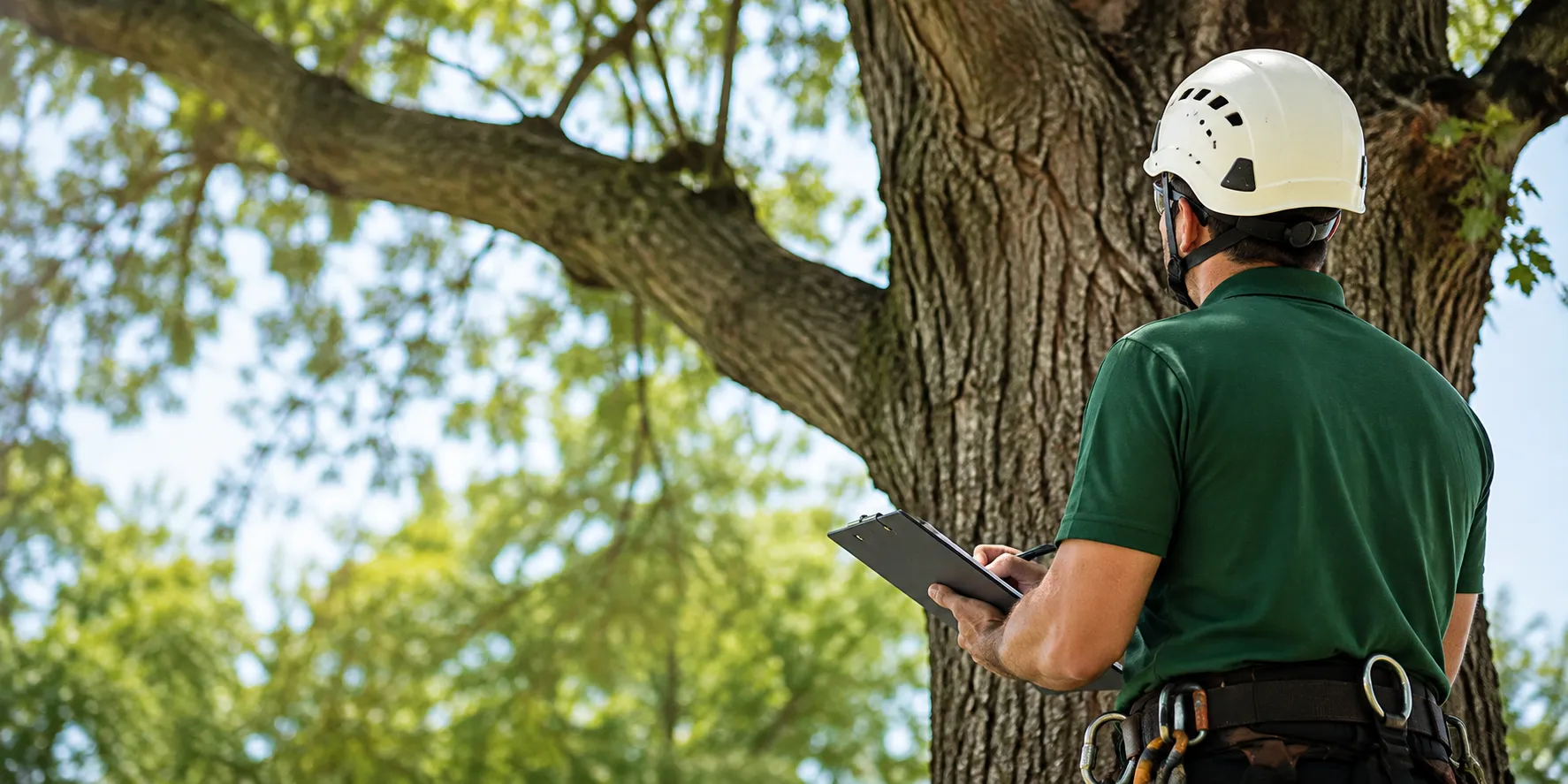

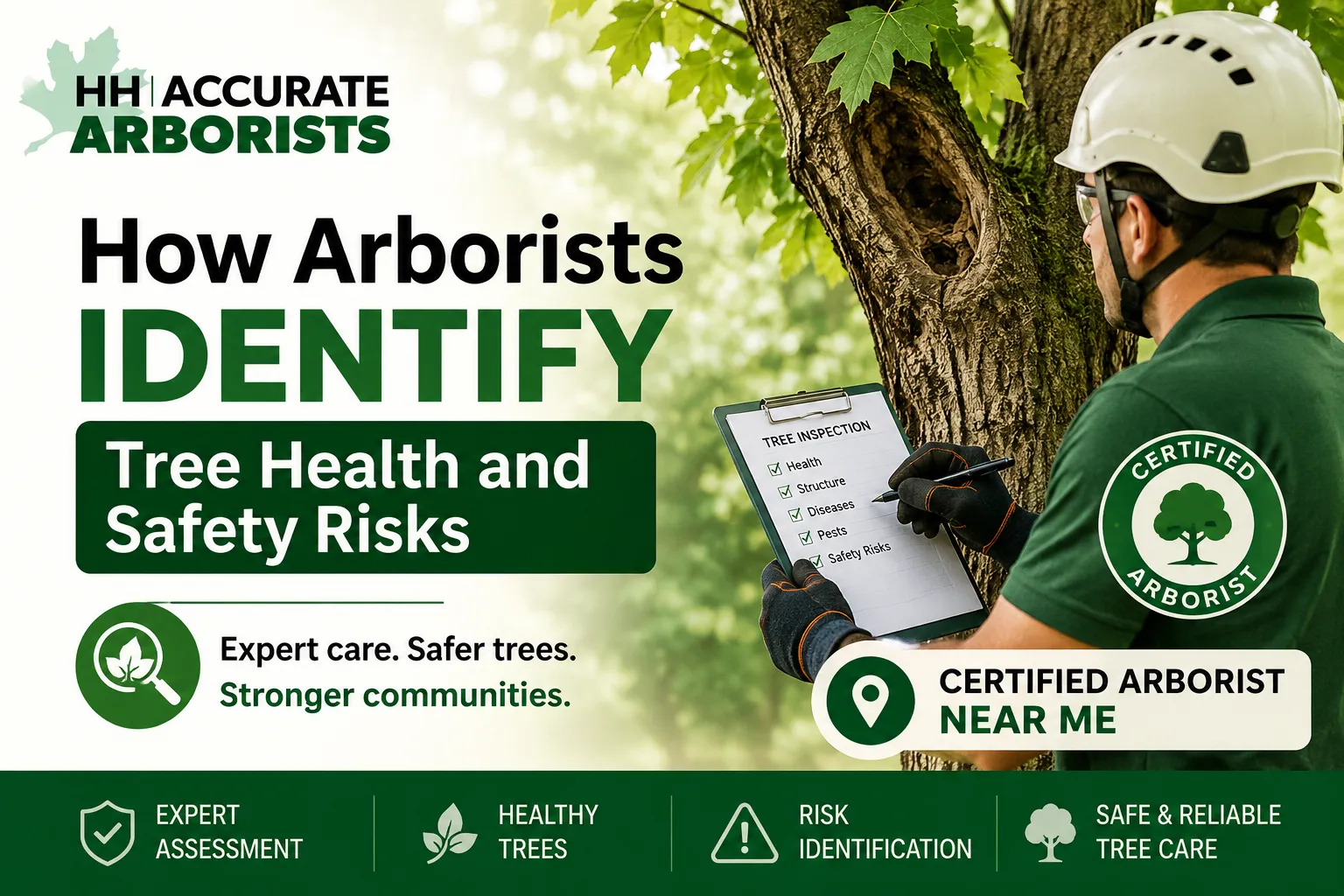
When searching for a certified arborist near me, homeowners often want to know what a professional actually looks for during a tree inspection. Arborists do more than simply look at leaves or branches. They assess the tree’s overall condition, structure, roots, trunk, canopy, surrounding area, and possible hazards. A careful inspection can help identify problems early and determine whether a tree needs pruning, treatment, monitoring, or removal.
Why Professional Tree Risk Checks Matter for Your Property
Trees can look healthy from a distance while still having hidden structural problems. Decay inside a trunk, damaged roots, weak branch connections, or storm injuries may not always be easy for a homeowner to recognize. UW-Madison Extension recommends professional assessment when trees are large, damaged, leaning, close to buildings or utility lines, or showing signs of decline.
A professional assessment also looks at the location around the tree. A branch over a driveway may create a different concern than the same branch growing over an open lawn. Arborists consider both the condition of the tree and what could be affected if a branch or part of the tree fails.
How Arborists Check the Tree’s Overall Health
The inspection usually starts with the tree’s overall appearance. An arborist may look at the size and color of leaves, canopy density, branch growth, deadwood, and signs of unusual growth. Yellowing leaves, thinning foliage, dead branches, bark damage, unusual growths, and changes in normal growth can provide useful clues about the tree’s condition.
The arborist also considers the tree species, age, growing conditions, and recent changes around the property. A tree that has experienced construction, soil changes, poor drainage, or root damage may show signs of stress later. This is why looking at only the visible canopy does not always provide the complete picture.
What Arborists Look for Around the Tree Trunk
The trunk is an important part of a tree risk inspection. Arborists check for cracks, cavities, missing bark, wounds, decay, fungal growth, unusual swelling, and other signs of structural problems. Some trunk defects can indicate internal decay or weakened wood, especially when combined with other symptoms.
UW-Madison Extension notes that signs such as hollowed areas, large scars, missing bark, seepage, and shelf fungi can indicate possible decay. A professional can determine whether these signs create a meaningful structural concern and what action may be appropriate.
How Branches and Canopy Reveal Potential Tree Risks
Branches are another major part of a tree safety assessment. Arborists look for dead, broken, cracked, hanging, or poorly attached branches. They may also check for branches that are rubbing against each other or growing toward buildings, streets, sidewalks, and utility lines.
A thinning canopy or dead branches can sometimes indicate stress below ground or problems affecting the trunk. UW-Madison Extension explains that damage to roots and trunks can contribute to dieback and thinning in the upper canopy.
This type of assessment is one reason homeowners looking for tree care services near me should choose a provider that understands tree structure rather than focusing only on cutting branches.
Why Roots Matter When Assessing Tree Stability
Roots provide water and nutrients while also helping anchor the tree. However, much of the tree’s important root system is relatively shallow and can be affected by digging, soil compaction, construction, changes in drainage, or added soil. Damage to roots may not become visible immediately, which makes root-zone inspection important.
An arborist considers the area around the trunk and the wider root zone when looking for possible problems. Exposed roots, damaged roots, soil changes, or nearby construction can all provide clues about the tree’s condition. Protecting the root zone can also help prevent future decline.
How Weather Damage Can Change Tree Safety Risks
Wisconsin weather can create additional challenges for trees. Strong winds, heavy snow, and ice can break branches or cause trunks and entire trees to fail. Even trees that appear healthy can sometimes suffer serious structural damage during severe weather.
After a storm, arborists look for broken limbs, hanging branches, trunk cracks, split areas, and other damage. Large trees near homes, buildings, streets, or sidewalks deserve particular attention because a damaged part may create a greater safety concern. If a damaged branch is high or difficult to reach, professional assistance is safer than attempting the work yourself.
Why Tree Location Changes the Level of Risk
The same tree defect can have different consequences depending on where the tree stands. A weak branch above an empty section of yard may have less potential impact than one directly above a home, parked vehicle, sidewalk, or frequently used area.
Arborists therefore consider the tree and its surroundings together. Utility lines require special caution because fallen branches or trees can cause serious injuries, fires, outages, or other damage. Homeowners should never attempt to remove tree parts that are touching or near electrical lines.
For tree service Wisconsin, understanding local property conditions and seasonal weather can be especially useful when planning tree inspections and maintenance. A Madison WI arborist can also evaluate trees in relation to the structures, streets, landscaping, and other features around a property.
What Happens After an Arborist Finds a Problem?
Finding a defect does not automatically mean that a tree must be removed. The appropriate response depends on the tree’s condition, location, risk level, and the type of problem found. Possible recommendations may include pruning, removing specific damaged branches, monitoring the tree, improving growing conditions, supporting certain branches, or removing the tree when necessary.
The goal is to understand the problem and choose a reasonable management option. HH Accurate Arborists can help property owners understand what an inspection reveals and what type of tree care may be appropriate for their situation.
Common Signs Arborists Consider During Inspections
| Area Checked | Signs That May Need Attention |
|---|---|
| Leaves and canopy | Thinning, unusual color, premature leaf loss |
| Branches | Dead, broken, cracked, or weak branches |
| Trunk | Cavities, cracks, wounds, decay, missing bark |
| Roots and soil | Root damage, exposed roots, compacted soil |
| Tree position | Leaning, unstable appearance, structural concerns |
| Surroundings | Buildings, vehicles, sidewalks, or utility lines |
| Storm damage | Split limbs, hanging branches, broken sections |
When Should You Schedule a Professional Tree Check?
A professional assessment can be worthwhile when a tree is large, leaning, damaged by a storm, located close to a structure or utility line, or showing signs of disease, insects, or decline. It can also be useful before major pruning, construction, or other work that may affect the tree or its root zone.
Regular attention can help homeowners notice changes before they become more difficult to manage. If you notice unusual leaf color, dead branches, trunk damage, fungal growth, significant canopy thinning, or recent storm damage, consider having the tree evaluated rather than trying to diagnose the problem from appearance alone.
Frequently Asked Questions About Tree Risk Checks
1.How often should a homeowner have trees inspected?
There is no single inspection schedule that works for every tree. The need depends on tree age, condition, location, weather exposure, and previous damage. Trees near homes, roads, sidewalks, or utility lines may deserve closer attention, especially after severe weather.
2.What signs suggest a tree may be unsafe?
Leaning, large dead branches, cracks, cavities, trunk decay, broken limbs, damaged roots, and significant storm damage can indicate possible concerns. These signs do not automatically mean the tree must be removed, but they are good reasons to seek a professional assessment.
3.Can an arborist tell if a tree has hidden decay?
An arborist can look for visible clues that may suggest decay, such as cavities, fungal growth, wounds, missing bark, or unusual trunk conditions. Some decay may be hidden, so the seriousness of a suspected problem may require a more detailed professional evaluation.
4.Should I call an arborist after a major storm?
Yes, especially when large branches have broken, the trunk has split, the tree is leaning, or the tree is close to a building or utility line. Storm-damaged trees can have unstable sections that are dangerous to handle without appropriate equipment and experience.
5.Can tree problems be prevented with regular care?
Some tree problems can be reduced through proper planting, pruning, root-zone protection, and routine monitoring. UW-Madison Extension notes that construction, soil compaction, root injury, and other preventable damage can contribute to tree decline.


























Sign in to leave a comment.