

Children with autism frequently have co-occurring conditions. Anxiety, ADHD, intellectual disability, sensory processing disorder, epilepsy, and sleep disorders are among the most common. When a child carries multiple diagnoses, their needs do not fit neatly into any single service category, and families often find themselves coordinating between providers who each see only part of the picture. ABA programs in Atlanta that have experience with complex profiles approach these children differently, with more comprehensive assessment, tighter coordination with other specialists, and more flexible programming.
Understanding the Intersection of Diagnoses
Co-occurring conditions complicate behavior in ways that are easy to miss without proper assessment. A child with both autism and ADHD may struggle to stay engaged in therapy sessions for reasons that go beyond typical resistance. A child with anxiety may show what looks like non-compliance but is actually avoidance driven by fear. If the ABA team does not account for these co-occurring factors, they may design a program that addresses the surface behavior without touching the underlying driver.
Experienced ABA providers build co-occurring conditions into their functional behavior assessments from the start. They consult with psychiatrists, psychologists, or developmental pediatricians who are managing those conditions to make sure that behavioral goals and medical management are working in the same direction rather than against each other.
Children with intellectual disability alongside autism often need additional time on foundational skills, more repetition before mastery, and more intensive generalization programming. These children can make meaningful progress in ABA, but the timeline and the specific approach need to reflect their full profile from the very beginning.
How Programs Adapt for Complex Learners
ABA programs that serve children with multiple diagnoses tend to be more individualized than standard programs. This means more frequent goal reviews, more collaboration with outside specialists, and more creativity in identifying what motivates a particular child and what conditions allow them to learn most effectively.
Sensory needs, for example, may require the therapy environment to be structured differently. Children with significant sensory sensitivities might need access to preferred textures or objects, reduced auditory input, or movement breaks built into the session structure. These accommodations are not add-ons; they are essential to keeping the child regulated enough to learn.
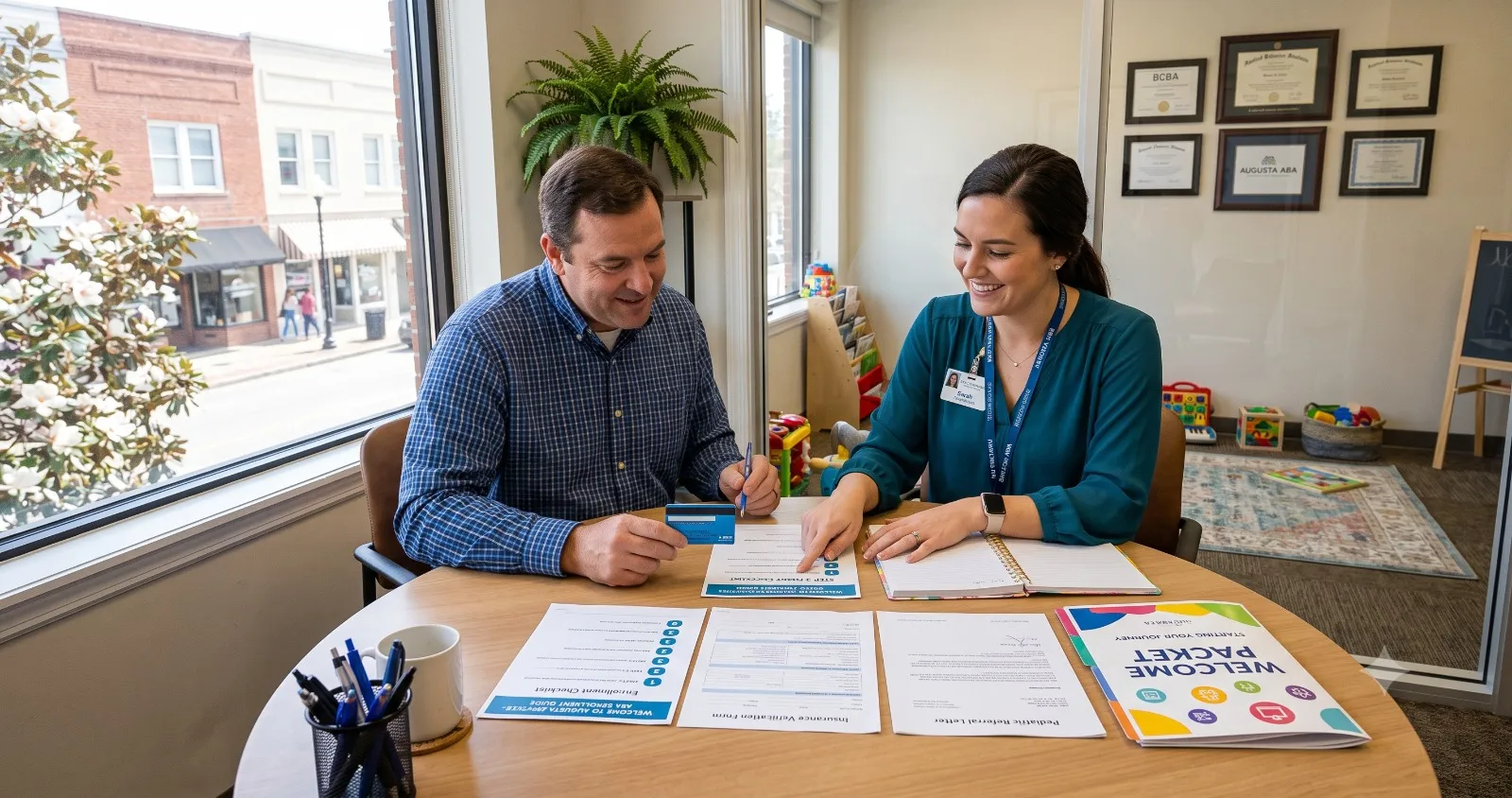
Behavioral programs for children with anxiety often incorporate gradual exposure elements. If a child has a significant fear of transitions, that anxiety may need to be addressed directly as part of the ABA program before progress on other goals can accelerate. Families in Atlanta whose children have complex profiles can learn more about how specialized programs approach multiple diagnoses. For families in other parts of Georgia, Samba autism care provides services in Augusta with experience supporting children who have more than one condition affecting their development.
What Families Should Expect
Working with a child who has multiple diagnoses requires patience and a long-term perspective. Progress may be slower and less linear than with a child whose profile is more straightforward. Families should expect more frequent program updates, more communication between providers, and more iteration on goals before finding the right approach for their individual child.
What they should not expect is that multiple diagnoses make meaningful progress impossible. With the right team, appropriate programming, and consistent family involvement, children with complex profiles regularly make gains that improve their quality of life and expand their independence. The key is finding a provider who approaches the complexity with curiosity and thoroughness rather than trying to fit a complicated child into a standard template. Providers who ask good questions, collaborate with other specialists, and treat the family as an essential source of information are the ones best positioned to serve children with layered needs effectively.




























Sign in to leave a comment.