
Walk through any modern vehicle assembly facility, and one thing becomes clear almost immediately, the precision of individual metal components dictates everything downstream. A door panel that fits a fraction of a millimetre out of tolerance creates ripple effects across the entire production line. This is the reality that drives automotive metal stamping companies to treat quality not as a department, but as a discipline embedded into every stage of their operation.
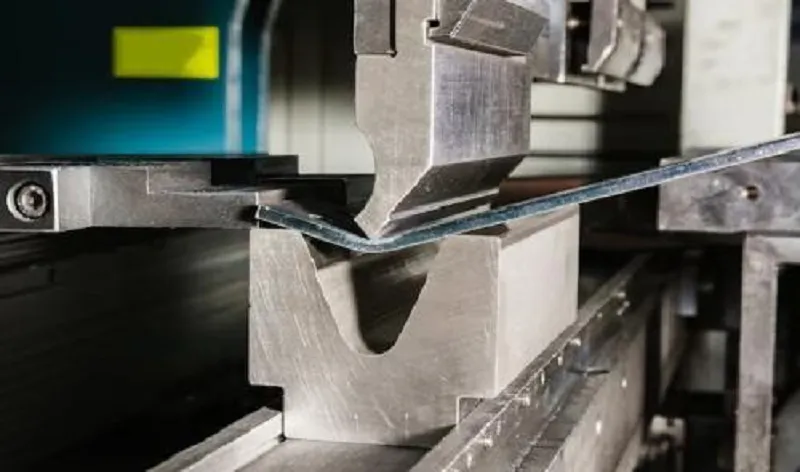
Automotive stamping is the process of converting flat sheet metal into defined shapes using dies and presses. On the surface, it sounds straightforward. In practice, it demands an extraordinary level of process control, material knowledge, and equipment precision, especially when a single stamping line might be producing tens of thousands of parts per shift.
What Sets Automotive Metal Stamping Apart from General Stamping
Industrial stamping covers a wide range of sectors, including electronics, appliances, and hardware. But automotive stamping operates under a different tier of expectations. Vehicle safety standards, crash-testing requirements, and consumers' long-term reliability demands mean that every stamped bracket, frame rail, roof panel, or reinforcement plate must meet exact specifications every single time.
Automotive metal stamping companies that supply directly to OEMs (original equipment manufacturers) typically hold IATF 16949 certification, the international standard for quality management systems in the automotive supply chain. This certification isn't just paperwork. It mandates documented processes, measurable outcomes, continuous improvement cycles, and third-party audits. It is, in many ways, the entry ticket to supplying tier-1 automotive manufacturers.
The Three Pillars of Quality in Automotive Stamping
1. Die Quality and Maintenance
The stamping die is the foundation of part quality. A progressive die that gradually transforms a metal strip into a finished component must maintain dimensional accuracy across millions of cycles. Automotive metal stamping companies invest heavily in die design, using simulation software to model material flow, springback behavior, and stress points before a single piece of steel is cut.
Die maintenance is equally critical. Scheduled inspection intervals, hardness testing of die surfaces, and rapid repair protocols ensure that tooling degradation doesn't silently introduce defects into the production stream. Companies with in-house tooling capabilities have a clear advantage here, they can make precise adjustments without waiting on external vendors.
2. Statistical Process Control (SPC)
Leading automotive stamping operations don't just inspect finished parts, they monitor the process in real time. Statistical process control involves measuring key variables (press force, material thickness, dimensional readings) at defined intervals and charting them against control limits. When a measurement trends toward an out-of-control condition, operators intervene before defects actually occur.
This shift from reactive inspection to proactive process monitoring is one of the defining differences between a mid-tier stamping supplier and one trusted by global automotive brands. It requires both the right measurement tools and a workforce trained to interpret and act on data.
3. Material Traceability and Incoming Inspection
Automotive stamping is only as consistent as the raw material feeding into it. Coil steel arriving at a stamping facility may have subtle variations in hardness, surface condition, or thickness that can affect forming behavior. Reputable automotive metal stamping companies maintain strict incoming material inspection protocols, measuring thickness, hardness, and tensile properties before the coil ever reaches the press floor.
Material traceability ensures that if a quality issue surfaces downstream, the source can be identified and isolated quickly. Heat numbers, coil IDs, and supplier certifications are tracked and retained as part of the production record.
Technology's Role in Modern Automotive Stamping Quality
The integration of vision systems, laser measurement, and coordinate measuring machines (CMMs) has transformed in-process and final inspection in automotive stamping. Where a technician with calipers once checked parts manually, automated vision systems now scan 100% of output at line speed, flagging dimensional deviations, surface defects, and edge condition issues without slowing production.
Some facilities have moved toward digital twin technology, where a virtual model of the stamping process runs in parallel with physical production, continuously comparing real outputs against predicted outcomes and flagging anomalies for human review.
Continuous Improvement as a Cultural Commitment
Quality at scale isn't a static achievement. Material suppliers change. Die wear accumulates. Production volumes fluctuate. The automotive metal stamping companies that sustain top-tier quality treat continuous improvement, through APQP, FMEA, 8D problem solving, and kaizen events, as ongoing operational practice, not a one-time initiative.
The companies that have built strong reputations in automotive stamping understand something fundamental: a single major quality escape doesn't just cost money. It costs trust. And in a supply chain as demanding and interconnected as automotive manufacturing, trust, once damaged, is extremely difficult to rebuild.
For manufacturers evaluating stamping partners, the question shouldn't just be 'Can they hit the spec today?' It should be 'How do they ensure they hit it every day, at volume, for the life of the program?' The answer reveals whether a supplier is truly equipped for automotive-grade quality, or merely hoping to achieve it. Companies like Eigen Engineering have built their reputation in automotive stamping precisely by answering that question with documented process discipline, not assumptions.


























Sign in to leave a comment.