
More than at any other time in the past, the AEC industry experiences greater pressure to deliver faster results, save costs, coordinate efforts, and increase accuracy during the design and construction process. On top of that, the industry suffers from issues such as design changes, lack of labor force, late material delivery, and the rising complexity of construction projects.
This can no longer be handled by traditional means.
One may now understand why BIM services have been increasingly used by many companies in the AEC industry as not only an efficient tool for design but also as a wiser way of managing the entire project. The use of BIM services enables teams to reduce delays, avoid mistakes, improve communication, and take wise decisions.
In order to remain competitive in their specific fields, AEC companies have made BIM a requirement.
Why Speed and Accuracy Have Become the Biggest Challenges in Construction
Each project team hopes for timely delivery without overspending. However, many delays happen before work even begins.
Some of these include:
- Incomplete drawings
- Inefficient collaboration among departments
- Late design modifications
- Human errors in quantity calculations
- Clashes at the site due to MEP, structural, and architectural systems
- Inefficient communication between stakeholders
A clash in duct layout or a wrong hole in the beam could cause a domino effect throughout the schedule. The result is RFI, redrawing, manufacturing changes, and expensive site idling.
This is why BIM modeling services make a significant impact.
BIM Creates a Single Source of Truth for Every Stakeholder
One of the major reasons why mistakes happen in projects is the disconnection between information. While the architects are basing their work on one copy of the model, the engineers use another one, and the contractors yet another outdated one.
BIM coordination service helps to solve this problem by enabling everybody to operate the same model, which is centrally located and includes all geometric data as well as updates.
That means:
- Fewer misunderstandings
- Faster approvals
- Better version control
- Clearer communication across trades
- More confidence in construction documents
For firms managing multiple consultants or remote teams, this level of visibility is critical.
Clash Detection Prevents Costly Site Problems Before They Happen
Nothing slows a project down like discovering conflicts during construction.
Examples include:
- Pipe routes intersecting beams
- Cable trays blocking HVAC ducts
- Equipment access zones ignored in layout planning
- Ceiling congestion in tight service corridors
These issues are expensive when found on site—but relatively easy to solve in a coordinated BIM model.
Using 3D BIM clash detection, teams can identify and resolve problems during preconstruction. This reduces rework, protects schedules, and keeps subcontractors productive.
Many firms now see clash detection as one of the highest ROI parts of BIM services for construction.
Faster Estimating and Better Cost Control
Estimating from 2D drawings is time-consuming and prone to missed quantities. When revisions happen, teams often need to repeat takeoffs manually.
With 5D BIM services, quantities are linked directly to model elements. As the design evolves, quantities and cost data can be updated faster and more accurately.
Benefits include:
- Quicker bid preparation
- Improved procurement planning
- Better cost forecasting
- Reduced material waste
- Stronger budget control throughout the project lifecycle
For developers and contractors facing margin pressure, this is a major advantage.
Better Scheduling Through 4D Construction Planning
Many delays happen because schedules are built separately from the actual design.
With 4D BIM modeling, project timelines are connected to model components, allowing teams to visualize the construction sequence before work begins.
This helps teams answer practical questions such as:
- Can two trades work in the same zone at once?
- Is crane access available when steel arrives?
- Are temporary works planned correctly?
- Which activities create bottlenecks?
Visual planning improves coordination between site teams, project managers, and subcontractors. It also makes schedules easier for clients to understand.
Supporting Renovation and Existing Building Projects
In retrofits, upgrading, and renovations, old plans are incomplete and inaccurate. Thus, there’s inherent danger right from the start.
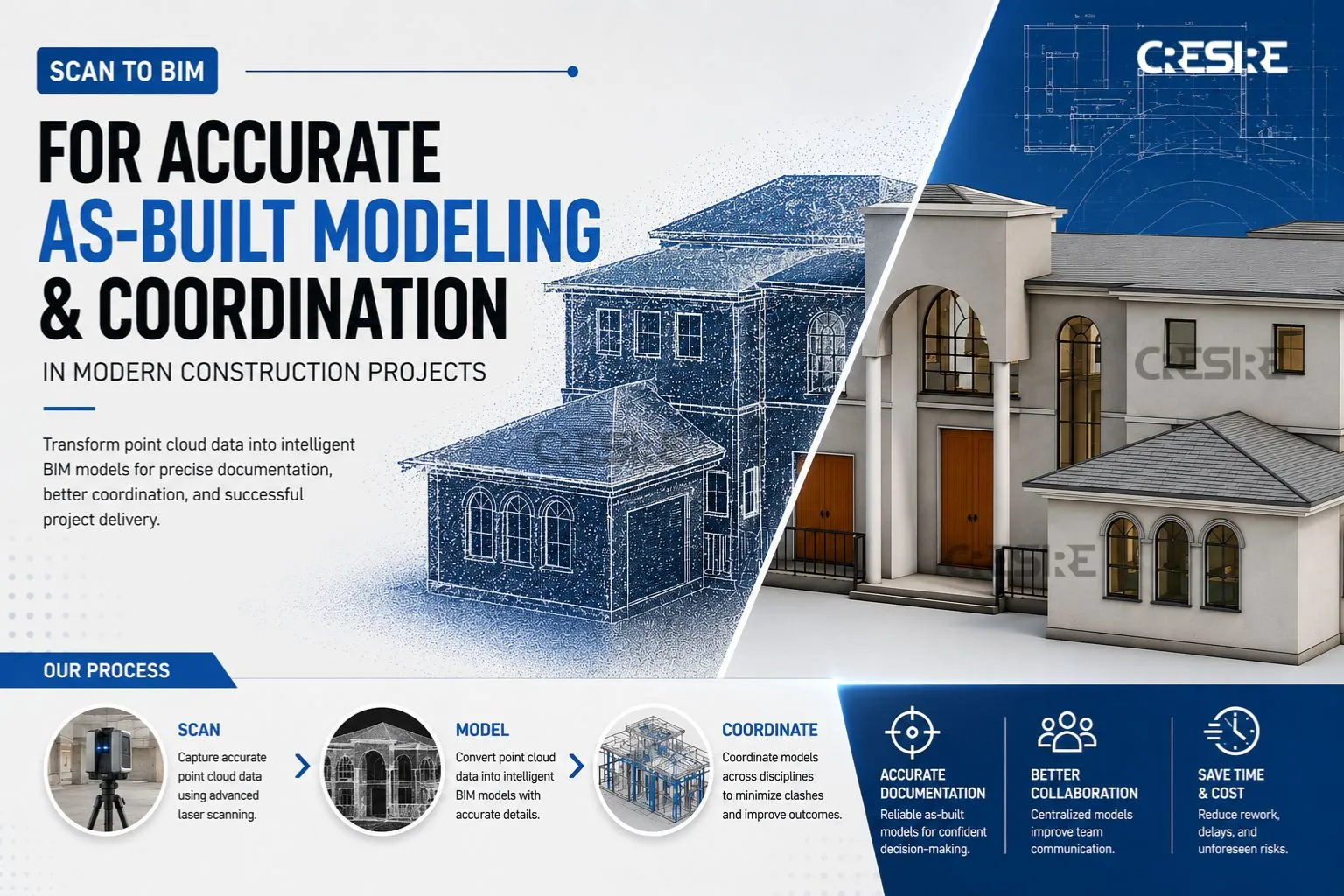
This is why scan-to-BIM solutions are popular. Laser scanning helps understand the current state of the facility and converts this data into intelligent BIM models.
This works well in the following cases:
- Hospitals
- Airports
- Factories
- Chemical plants
- Historical structures
- In-use commercial facilities
No need to make assumptions about what lies hidden; you’ll be able to plan based on the actual existing conditions.
BIM Helps Firms Scale Without Expanding Internal Teams
Many AEC firms are winning more work but struggling to hire enough in-house modelers and coordinators.
Outsourcing to experienced offshore BIM services or dedicated BIM support teams allows firms to scale production without increasing overhead.
This model helps with:
- Revit modeling backlogs
- Shop drawing production
- Clash coordination support
- As-built model updates
- Documentation deadlines
The right external BIM partner acts as an extension of the internal team, helping firms stay responsive during peak workloads.
Clients Now Expect More Than Drawings
Today’s owners want better visibility, lifecycle data, and smoother handovers. They are asking for models that support operations, maintenance, and future upgrades.
That means BIM deliverables are no longer only for designers, they’re for facility teams too.
Modern BIM consulting services can support:
- Asset data integration
- COBie deliverables
- Maintenance planning
- Digital twin readiness
- Space management
- Lifecycle decision-making
Firms that provide this added value stand out in a crowded market.
How to Choose BIM Services That Actually Solve Problems
Not all BIM support is equal. Some providers only model geometry. Others understand construction realities, sequencing, documentation standards, and client outcomes.
When selecting a BIM partner, look for:
- Experience in your sector (commercial, industrial, healthcare, infrastructure)
- Strong coordination workflows
- Revit, Navisworks, and point cloud expertise
- Clear QA/QC processes
- Reliable communication and turnaround times
- Understanding of local codes and standards
The best BIM services reduce stress, not create more management work.
Final Thoughts
As firms strive to do more with fewer resources, reduced schedules, reduced budgets, and increased expectations, there are numerous instances where the conventional approach leads to delays, inefficiencies, and errors.
This is why BIM services have become inevitable for firms looking to optimize their project delivery process.
Whether it is through BIM coordination services or 3D modeling, 4D scheduling, 5D estimating, or even scan to BIM conversion, having the appropriate BIM strategy goes a long way in ensuring that the firm performs optimally.
























Sign in to leave a comment.