
A traveler paying for a hotel abroad, an ecommerce company accepting international orders, or a finance team preparing a monthly report can all face the same problem: currency values change constantly. A price that looks correct in the morning may produce a different converted amount later in the day. When exchange information is manually collected or updated too slowly, even small differences can create inaccurate invoices, confusing customer experiences, and reporting errors.
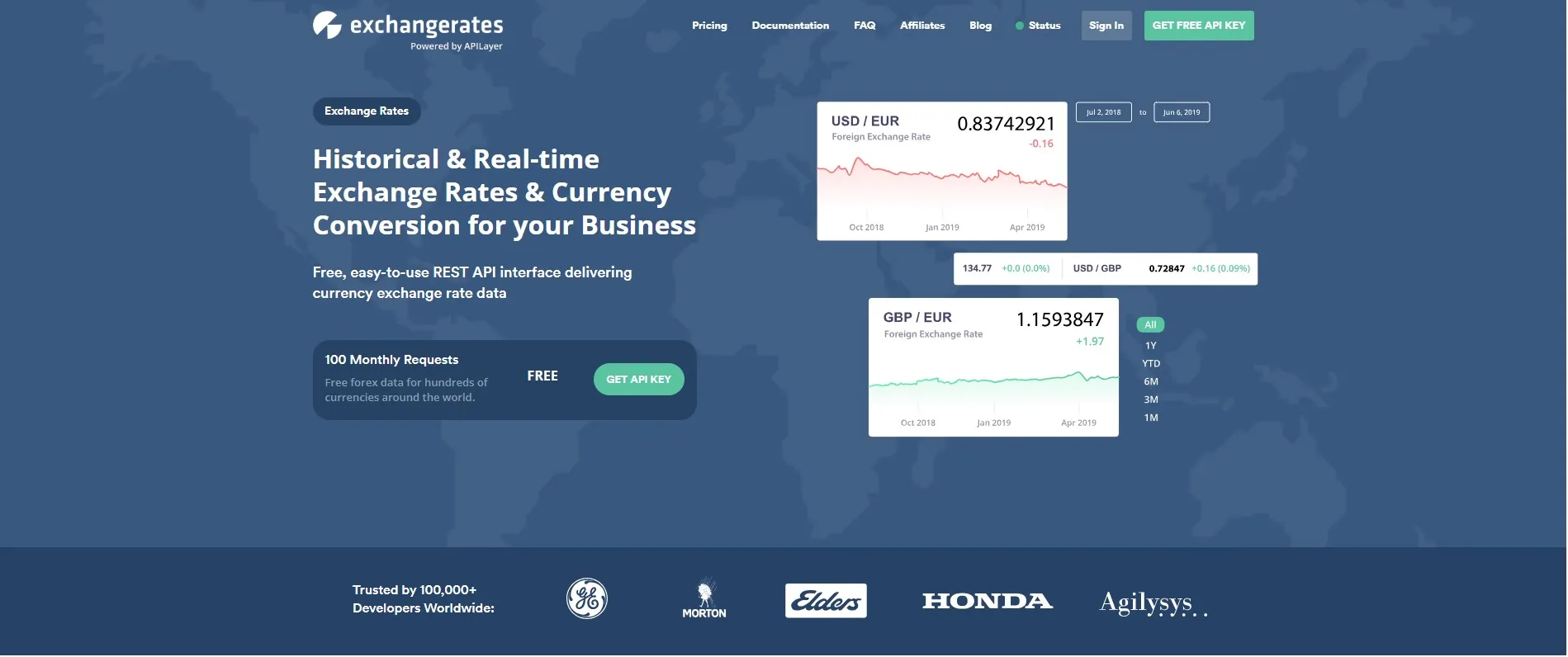
For businesses that depend on international transactions, automated exchange data can make this process more consistent. A currency rates api can provide structured exchange rate information that applications can use without requiring teams to repeatedly search for and enter rates manually.
Why Do Businesses Need Real Time Exchange Rate Data?
Businesses need current exchange rate data because currency values fluctuate throughout the day and outdated information can affect financial calculations.
Consider an online store that sells products in euros but maintains its internal accounting in US dollars. If the store uses a rate from several days ago, the displayed product price may no longer reflect current market conditions. The same issue can occur with invoices, subscription billing, expense management, travel applications, and international financial reporting.
Manual updates can work for small internal tasks, but they become difficult to maintain as transaction volume increases. A spreadsheet might contain hundreds of currency values, while a global application may need to support dozens or even hundreds of currencies.
Automated exchange data reduces repetitive work by allowing software to retrieve values programmatically. This also makes it easier to maintain a consistent process across different applications and departments.
For example, a basic workflow could look like this:
- An application receives an amount and the source currency.
- The application identifies the target currency.
- It requests the latest available exchange rate.
- The conversion calculation is performed.
- The converted amount is displayed or stored.
This approach creates a repeatable process instead of depending on manual updates.
What Are the Main Ways to Get Currency Exchange Rates?
Businesses generally use manual data collection, financial data providers, or APIs depending on their requirements.
Manual collection is straightforward and can be useful for occasional calculations. A person can check an exchange rate and enter it into a spreadsheet. The drawback is that the process requires human involvement and can quickly become inefficient when rates need frequent updates.
Another option is using a financial website or online currency calculator. These services are convenient for individuals and one time calculations. However, copying information from a website into an application is not an efficient workflow for software based systems.
A third approach is integrating an exchange rate API directly into an application. This allows software to request structured data when it needs it. Developers can then use that information for calculations, dashboards, reports, ecommerce pricing, or other automated processes.
The right approach depends on the frequency of updates, number of currencies, application requirements, and level of automation needed. A small business performing a few monthly calculations may not need an automated system, while a global ecommerce platform can benefit considerably from programmatic access.
How Does an Exchange Rate API Work?
An exchange rate API works by allowing an application to request currency information through a web based endpoint and receive structured data in a machine readable format.
A developer typically sends parameters such as the base currency and requested currencies. The service then returns exchange rate information that the application can process.
A simplified request might look like this:
import requests url = "https://api.exchangeratesapi.io/latest" params = { "base": "USD", "symbols": "EUR,GBP,INR" } response = requests.get(url, params=params) data = response.json() print(data)
The exact endpoint, authentication method, parameters, and response structure depend on the API provider.
Once the response is received, developers can use the values inside their application. For example, an ecommerce platform could use exchange data to calculate an approximate international price, while a reporting system could use it to standardize financial figures.
Developers should also consider error handling. An application should be prepared for unavailable data, invalid currency codes, request limits, network failures, or unexpected API responses.
Caching can also be useful. If an application does not require a new exchange rate for every individual transaction, temporarily storing recently retrieved data can reduce repeated requests and improve performance.
What Should You Consider When Choosing an Exchange Rate Solution?
The most important factors are data freshness, currency coverage, API reliability, documentation, request limits, and ease of integration.
Data freshness matters when calculations depend on frequently changing rates. Businesses should understand how often rates are updated and whether the update frequency matches their use case.
Currency coverage is another consideration. A company operating across several regions may require more currencies than a business serving a single market. Checking supported currencies before integration can prevent limitations later.
Documentation is equally important for developers. Clear documentation should explain endpoints, parameters, authentication, response formats, error messages, and usage limits. Good documentation can significantly reduce development time.
Request limits should also be reviewed. Applications that process large numbers of requests need to understand how many calls are included within their selected service level.
Security should not be overlooked either. API credentials should be stored securely rather than placed directly into publicly accessible frontend code or repositories.
Finally, businesses should consider how easily the service fits into their existing technology stack. A simple REST based interface and predictable response format can make integration easier across programming languages and frameworks.
How Can Currency Conversion Be Automated in Real Applications?
Currency conversion can be automated by combining exchange rate data with a clear conversion workflow and appropriate validation.
Suppose an application receives an amount of 1,000 USD and needs to display the approximate value in EUR. If the current USD to EUR rate is 0.92, the calculation is:
1,000 × 0.92 = 920 EUR
The application can retrieve the rate programmatically and perform this calculation without requiring an employee to enter the value manually.
For more complex systems, developers may store the source currency, target currency, original amount, exchange rate used, timestamp, and converted amount. This creates an audit trail that can be useful for financial reporting.
Businesses should also distinguish between indicative exchange rates and the actual rate applied by a bank, card network, payment processor, or financial institution. These values may differ because of fees, spreads, timing, and transaction specific conditions.
For developers looking for a structured solution, a foreign exchange rates api with currency conversion can provide a practical foundation for applications that need automated currency data and conversion functionality.
What Are Common Mistakes When Using Exchange Rate Data?
The most common mistakes involve relying on outdated rates, ignoring decimal precision, failing to record timestamps, and treating every exchange rate as the final transaction rate.
Precision deserves particular attention. Currency calculations can produce fractional values, so applications should use appropriate numerical handling rather than relying on basic floating point operations for sensitive financial calculations.
Another common mistake is failing to define the purpose of the rate. A rate used for displaying an estimated product price may not be appropriate for accounting or settlement.
Developers should also decide how their application behaves when the API cannot be reached. A fallback strategy, cached value, or clear error message can prevent an external data problem from becoming a larger application failure.
Testing is important as well. Applications should be tested with different currency pairs, large and small amounts, unavailable currencies, invalid requests, and temporary service interruptions.
How Can Businesses Build a Reliable Currency Workflow?
A reliable currency workflow begins by identifying exactly where exchange rates are needed and how frequently they must be updated.
Businesses can then select a suitable data source, integrate it into their application, validate the returned information, and define how rates will be stored or cached. Monitoring should also be added so technical teams can identify failed requests or unusual responses.
The goal is not simply to retrieve a number. The goal is to create a dependable process around that number.
For an international ecommerce business, that might mean using exchange data to support localized pricing. For a travel application, it could help users understand approximate costs in another currency. For a finance platform, it could support standardized reporting across multiple markets.
Automated currency data can therefore become part of a wider financial technology workflow rather than functioning as an isolated calculation tool.
Conclusion
Currency fluctuations create practical challenges for businesses, developers, travelers, and financial teams working across borders. Manual exchange rate collection may be sufficient for occasional calculations, but automated access becomes increasingly useful as applications grow.
An API based approach can reduce repetitive work, support consistent calculations, and make currency information easier to integrate into digital products. Businesses should still consider update frequency, currency coverage, precision, request limits, security, and the difference between reference rates and actual transaction rates.
When implemented thoughtfully, automated exchange rate data can help applications handle international currency information more efficiently while giving developers a structured foundation for building reliable conversion workflows.


























Sign in to leave a comment.