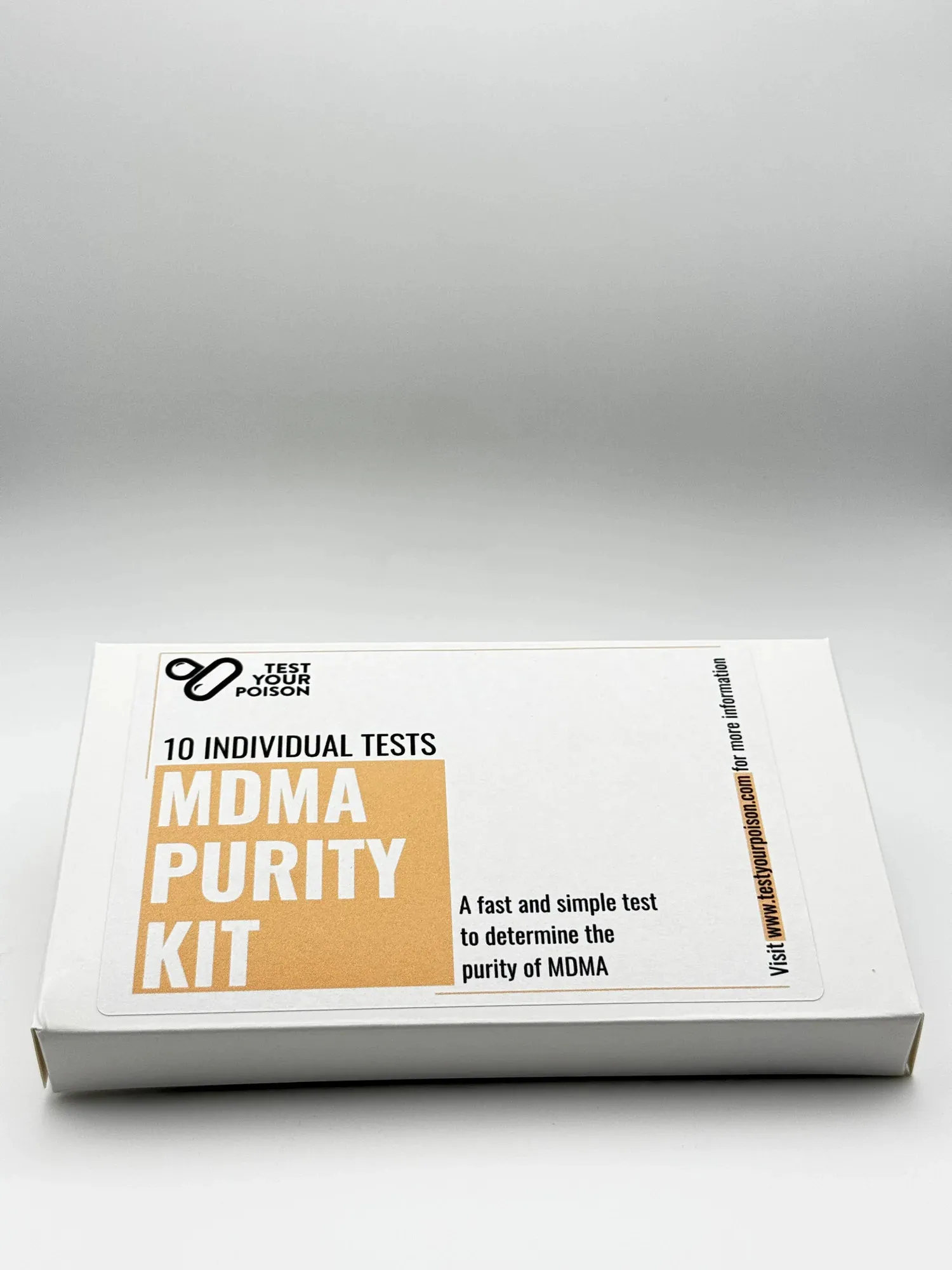
Understanding what is actually present in a substance can be difficult when its contents are uncertain. An MDMA purity test kit can provide useful information about the relative presence of MDMA in a sample, helping people recognize that appearance alone cannot establish purity. While testing cannot eliminate every risk, it can contribute to a more informed approach to harm reduction.
Why Does MDMA Purity Matter?
MDMA, commonly known as Molly or Ecstasy, may be sold in forms that contain other substances. The appearance, colour, or texture of a sample cannot reliably reveal what is inside it. This uncertainty is one reason drug checking can play a role in harm-reduction education.
Purity testing focuses on a specific question: how much of the expected substance appears to be present relative to the test's reference scale? It does not provide a complete chemical analysis, but it can offer additional information that would otherwise be unavailable.
How Can Purity Testing Support Harm Reduction?
Harm reduction is based on practical steps that help reduce potential risks rather than assuming that every situation can be made completely safe. Drug checking fits into this approach by providing information before decisions are made.
An MDMA purity test kit can indicate whether a sample appears to contain a relatively low, moderate, or high level of MDMA according to its colour-based reference system. This information can help highlight uncertainty and encourage a more cautious attitude toward an unknown sample.
However, a stronger-looking result should never be interpreted as proof that a substance is safe. A purity result and overall safety are two different things.
What Information Can MDMA Testing Provide?
The main value of purity testing is context. Instead of relying only on assumptions about a sample, testing can provide an observable reaction that can be compared with the supplied colour chart.
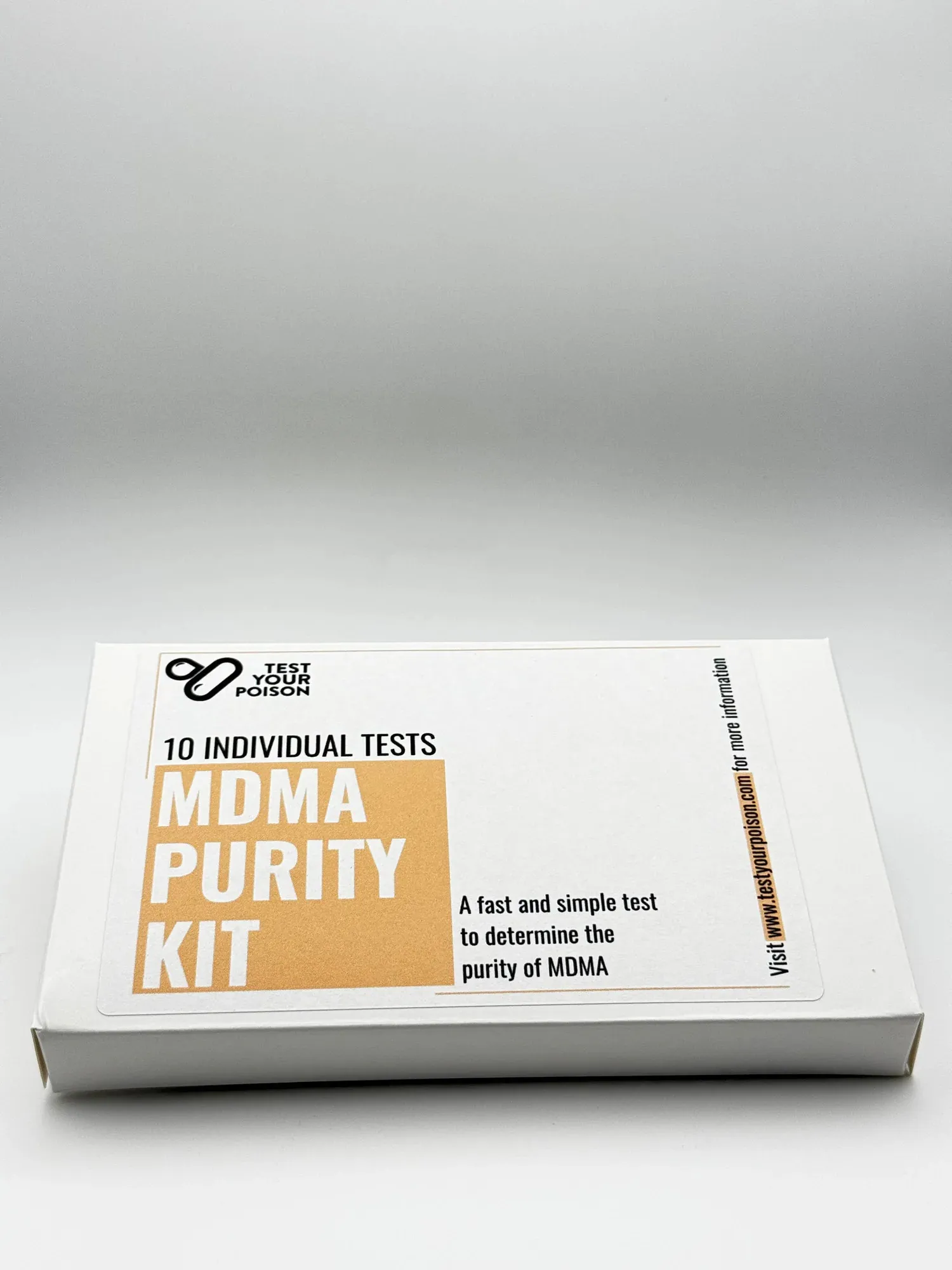
The MDMA purity kit from Test Your Poison is designed to give an indication of relative MDMA purity. The product information explains that results can vary depending on factors such as sample characteristics and handling. It also notes that certain substances can produce cross-reactions.
This distinction is important because a reagent test should not be treated as a laboratory analysis. It cannot identify every possible substance or provide a definitive percentage of purity.
MDMA Purity Testing Has Important Limits
No at-home reagent test can answer every question about an unknown sample. Lighting, impurities, sample characteristics, and other substances can affect how a reaction appears. Test Your Poison also states that reagent testing is not 100% conclusive.
For this reason, an unexpected or unclear result should not be treated as confirmation. More advanced laboratory techniques are needed when precise identification and quantitative analysis are required.
It is also worth remembering that MDMA drug test kits can serve different purposes. Some kits are designed for identification, while a purity kit is intended to provide an indication of relative purity. Understanding this difference helps prevent people from expecting one type of test to answer questions it was not designed to answer.
Why Responsible Interpretation Matters
Testing is only useful when its results are interpreted realistically. A result suggesting higher relative MDMA content does not mean that the sample is free from other substances, nor does it guarantee a particular outcome.
Good harm-reduction practice therefore involves recognizing both what a test can tell you and what it cannot. Testing should be viewed as one source of information rather than a guarantee of safety.
This is especially important because illicit-market substances can vary considerably from one sample to another. A previous result should not automatically be assumed to represent a different sample.
Making Drug Awareness More Practical
Harm reduction becomes more meaningful when information is accessible and understandable. Testing can encourage people to question assumptions, recognize uncertainty, and learn about the limitations of drug-checking methods.
Rather than presenting testing as a way to make drug use completely safe, responsible education should explain that testing can reduce some uncertainty while leaving other risks unresolved. This balanced perspective makes drug-checking information more useful and credible.
Conclusion
MDMA purity testing can support harm reduction by providing additional information about the relative presence of MDMA in an unknown sample. An MDMA purity test kit cannot guarantee safety or replace laboratory analysis, but it can help people better understand the limitations and uncertainty surrounding a sample.
For anyone interested in responsible drug awareness, Test Your Poison provides testing resources designed to support informed decision-making and a practical harm-reduction approach.
Frequently Asked Questions
What is an MDMA purity test kit used for?
An MDMA purity test kit is designed to provide an indication of the relative amount of MDMA present in a sample through a colour-based reaction. It is not a substitute for laboratory testing.
Can an MDMA purity test kit identify every substance in a sample?
No. A purity test has limitations and may not identify every adulterant or unexpected substance. Cross-reactions can also influence the result.
Is an MDMA purity test the same as an MDMA identification test?
Not necessarily. Purity testing focuses on the relative presence or concentration of MDMA, while identification tests are generally designed to indicate whether a particular substance is present.
How reliable are MDMA drug test kits?
Their reliability depends on the specific test and how the result is interpreted. Reagent testing is not 100% conclusive, and factors such as lighting, impurities, and unwanted substances can affect the reaction.























Sign in to leave a comment.