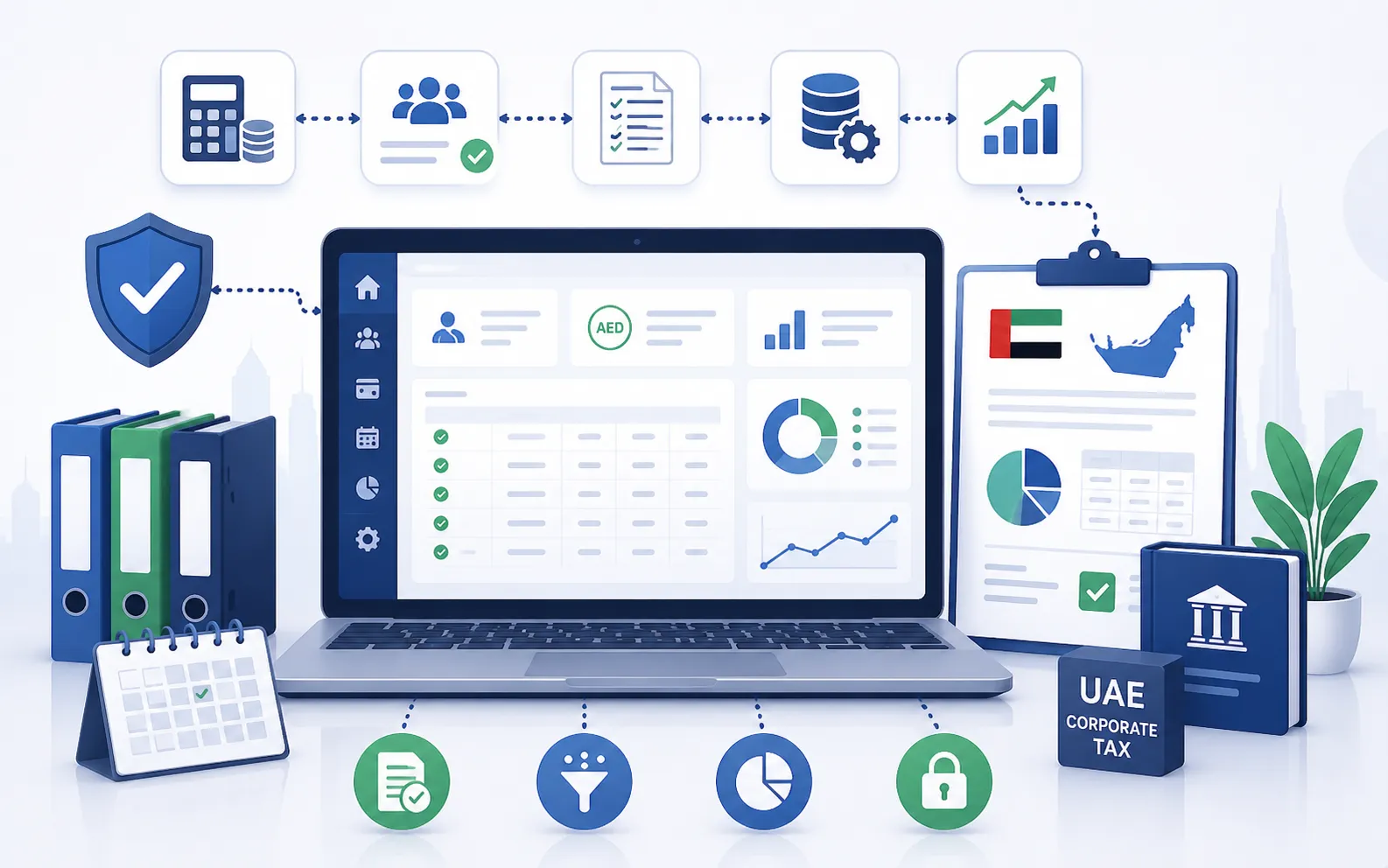

The introduction of corporate tax in the UAE has changed how businesses manage financial records, employee expenses, and regulatory reporting. Companies are now expected to maintain accurate payroll records and ensure financial data supports tax compliance. While payroll primarily focuses on employee compensation, it also plays an important role in preparing reliable financial information for tax reporting.
Using Payroll Software UAE enables businesses to automate payroll processing, maintain organized employee records, generate accurate payroll reports, and reduce manual errors that could affect corporate tax reporting. By integrating payroll with accounting and financial management systems, organizations can simplify compliance while improving operational efficiency.
Understanding the Connection Between Payroll and Corporate Tax
Payroll is more than simply paying employees on time. Every payroll cycle generates financial data that contributes to overall business expenses.
This information includes:
- Employee salaries
- Allowances
- Bonuses
- Overtime payments
- Leave payments
- End-of-service benefits
- Payroll taxes where applicable
- Employee deductions
These payroll expenses become part of a company's financial statements, which are essential for preparing accurate corporate tax reports.
Why Manual Payroll Creates Tax Reporting Challenges
Many businesses continue to manage payroll manually using spreadsheets or disconnected systems.
This approach often results in:
- Data entry errors
- Duplicate records
- Missing payroll information
- Incorrect salary calculations
- Delayed reporting
- Difficulty reconciling expenses
When preparing corporate tax reports, these inaccuracies can require significant time to correct and may increase compliance risks.
Automated payroll software eliminates many of these common problems.
Centralized Payroll Records Improve Accuracy
Modern payroll software stores all payroll information in a centralized database.
Instead of maintaining multiple spreadsheets, businesses can access:
- Employee profiles
- Salary history
- Payroll transactions
- Bonus records
- Allowances
- Leave payments
- Final settlements
Having all payroll data in one place makes tax preparation much more organized and efficient.
Automatic Payroll Calculations Reduce Errors
Manual payroll calculations can introduce mistakes that affect financial reporting.
Payroll software automatically calculates:
- Monthly salaries
- Overtime
- Bonuses
- Incentives
- Leave deductions
- Employee benefits
- Final settlements
Automation ensures calculations remain consistent throughout the financial year.
Accurate payroll information contributes directly to more reliable corporate tax reporting.
Better Financial Reporting for Tax Preparation
Corporate tax reporting requires complete financial visibility.
Payroll software generates detailed reports covering:
- Payroll summaries
- Salary expenses
- Department-wise payroll costs
- Employee compensation reports
- Monthly payroll registers
- Annual payroll statements
These reports help finance teams prepare financial statements more efficiently while reducing manual compilation work.
Integration with Accounting Systems
One of the biggest advantages of payroll software is seamless integration with accounting platforms.
Payroll transactions can automatically update:
- General ledger
- Salary expense accounts
- Employee liability accounts
- Accrued expenses
- Financial reports
This reduces duplicate data entry while ensuring financial records remain synchronized.
Improved Expense Tracking
Payroll represents one of the largest operating expenses for many organizations.
Automated software allows businesses to track:
- Salary costs by department
- Project-based payroll expenses
- Branch-wise employee costs
- Monthly payroll trends
- Annual compensation expenses
These insights support more accurate financial reporting and budgeting.
Simplified Employee Benefit Management
Employee benefits must also be recorded accurately for financial reporting.
Payroll software manages:
- Paid leave
- Annual leave encashment
- Bonuses
- Incentives
- End-of-service benefits
- Allowances
Automated calculations ensure these expenses are consistently reflected in company records.
Faster Year-End Financial Closing
Year-end closing becomes much easier when payroll information is already organized.
Payroll software prepares:
- Annual salary reports
- Employee earning summaries
- Payroll reconciliation reports
- Expense breakdowns
- Benefit statements
Finance teams spend less time gathering payroll information and more time reviewing financial accuracy.
Enhanced Audit Readiness
Businesses may need to provide payroll records during financial reviews or audits.
Payroll software maintains:
- Historical payroll records
- Salary revisions
- Employee payment history
- Payroll approvals
- Audit logs
- Transaction history
Having organized documentation simplifies audit preparation and improves transparency.
Better Compliance Through Consistent Documentation
Proper documentation supports strong financial governance.
Payroll software stores:
- Employee contracts
- Salary structures
- Payroll approvals
- Leave records
- Benefit calculations
- Payment history
Maintaining complete documentation reduces the risk of missing financial information during reporting.
Real-Time Payroll Insights
Modern payroll software offers dashboards that display payroll information instantly.
Businesses can monitor:
- Current payroll expenses
- Employee compensation trends
- Department spending
- Payroll growth
- Budget utilization
Real-time visibility helps management make informed financial decisions throughout the year rather than waiting until year-end.
Reducing Administrative Workload
Manual payroll processing consumes valuable HR and finance resources.
Automation reduces repetitive tasks such as:
- Payroll calculations
- Salary processing
- Payslip generation
- Payroll approvals
- Report creation
- Data reconciliation
This allows HR and finance teams to focus on higher-value activities.
Supporting Multi-Branch Businesses
Organizations with multiple locations often struggle to standardize payroll.
Payroll software centralizes payroll operations across all branches.
Benefits include:
- Uniform payroll policies
- Centralized employee records
- Branch-wise reporting
- Standard salary calculations
- Consolidated financial reports
This consistency improves company-wide financial reporting.
Secure Payroll Data Management
Payroll contains sensitive employee information that must be protected.
Modern payroll systems provide:
- User access controls
- Secure databases
- Data encryption
- Automatic backups
- Audit trails
- Role-based permissions
These features help safeguard confidential payroll information while supporting compliance requirements.
Scalability for Business Growth
As businesses hire more employees, payroll complexity increases.
Automated payroll software easily manages:
- Growing workforce
- Multiple departments
- Various salary structures
- Different employee categories
- Multiple business entities
The system scales without significantly increasing administrative effort.
Better Decision-Making with Payroll Analytics
Payroll software provides valuable business intelligence.
Management can analyze:
- Payroll cost trends
- Workforce expenses
- Department efficiency
- Employee growth
- Compensation planning
- Budget forecasts
These insights help businesses improve financial planning and resource allocation.
Best Practices for Using Payroll Software for Corporate Tax Preparation
Businesses can maximize payroll accuracy by following several best practices:
- Keep employee records updated.
- Verify payroll information regularly.
- Integrate payroll with accounting software.
- Conduct monthly payroll reconciliations.
- Review salary structures periodically.
- Generate regular payroll reports.
- Maintain secure payroll access controls.
- Archive payroll records systematically.
Following these practices improves reporting accuracy and supports smoother corporate tax preparation.
Future of Payroll Automation
Payroll software continues to evolve with intelligent automation.
Future capabilities are expected to include:
- AI-powered payroll validation
- Predictive payroll analytics
- Automated compliance monitoring
- Intelligent anomaly detection
- Real-time financial reporting
- Cloud-based payroll collaboration
These innovations will further simplify payroll management while supporting increasingly sophisticated financial reporting requirements.
Conclusion
Corporate tax reporting requires accurate financial records, and payroll data plays an important role in building those records. Manual payroll processes often introduce errors, create reporting delays, and increase administrative work, making tax preparation more difficult than necessary.
Payroll software helps businesses automate salary calculations, centralize employee records, generate detailed payroll reports, integrate with accounting systems, and maintain organized documentation. By improving payroll accuracy and streamlining financial reporting, organizations can prepare for corporate tax reporting with greater confidence, reduce compliance risks, and support long-term business growth.






























Sign in to leave a comment.