

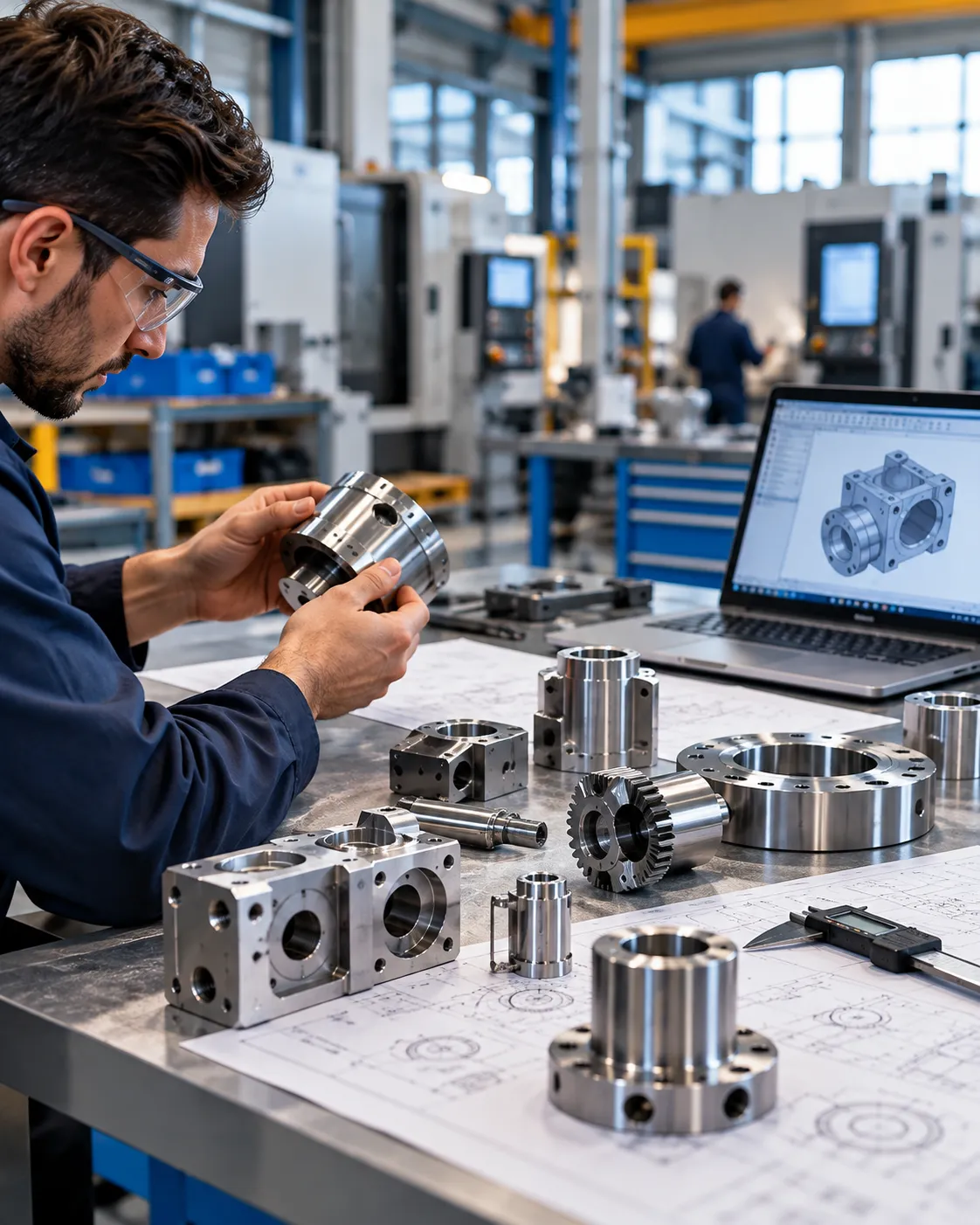
Industrial machinery depends on the accuracy, strength, and reliability of its individual components. Even a minor dimensional error in a mechanical part can affect equipment efficiency, increase vibration, or cause unexpected downtime. Precision-engineered components help manufacturers maintain consistent performance, improve operational reliability, and meet demanding production requirements.
Working with an experienced machine parts manufacturer can help businesses source components designed around specific machinery, operating conditions, and engineering tolerances. From CNC-machined metal parts to custom mechanical assemblies, precision manufacturing plays an important role in modern industrial operations.
Why Does Precision Engineering Matter in Industrial Machinery?
Precision engineering focuses on producing components that meet exact dimensional specifications and functional requirements. These components help machinery operate smoothly under different loads, speeds, and environmental conditions.
Key advantages include:
- Improved dimensional accuracy: Precisely manufactured parts support correct alignment and consistent mechanical movement.
- Reduced equipment downtime: Components designed to meet specifications can help minimize premature wear and unexpected failures.
- Better operational efficiency: Accurate mating surfaces and component tolerances can reduce friction, vibration, and unnecessary energy losses.
- Consistent production quality: Repeatable manufacturing processes help maintain uniformity across production batches.
- Longer component service life: Appropriate materials, surface finishes, and manufacturing methods can improve durability in demanding applications.
Which Manufacturing Techniques Improve Component Performance?
Selecting the right manufacturing process is essential for achieving the required accuracy, strength, and finish.
CNC Machining for Complex Geometries
Computer Numerical Control (CNC) machining produces intricate components with repeatable dimensions. It is particularly useful for shafts, housings, brackets, and other parts requiring close tolerances.
Material Selection for Specific Applications
Steel, aluminum, stainless steel, and engineering plastics offer different combinations of strength, weight, corrosion resistance, and machinability. Choosing the right material helps ensure components withstand their intended operating conditions.

Surface Finishing and Quality Inspection
Grinding, polishing, and other finishing processes can improve surface characteristics where required. CNC turning and milling help achieve precise component dimensions and complex geometries, while dimensional inspections and appropriate quality-control procedures verify that finished components meet engineering specifications.
How Can Businesses Choose the Right Manufacturing Partner?
Before selecting a supplier, industrial buyers should evaluate several practical factors:
- Technical capabilities: Confirm that the supplier can manufacture the required geometries, materials, and tolerances.
- Quality assurance: Ask about inspection equipment, measurement procedures, and documented quality controls.
- Customization options: Ensure the supplier can work from engineering drawings, CAD files, or specific component requirements.
- Production capacity: Assess whether the supplier can support prototypes, small batches, and repeat orders.
- Delivery reliability: Review production lead times and communication practices to minimize supply-chain disruptions.
A capable manufacturing partner should understand both the technical specifications and the real-world demands of the equipment.
Frequently Asked Questions
How do precision-engineered components improve machinery reliability?
They help maintain accurate alignment, reduce unwanted movement, and support consistent operation when manufactured and installed correctly.
Which industries benefit from precision-machined parts?
Automotive, aerospace, medical equipment, automation, electronics, and general industrial manufacturing can all benefit from application-specific components.
Why is choosing the right machine parts manufacturer important?
The right partner can help meet dimensional requirements, select suitable materials, maintain quality standards, and deliver components that match the intended application.




























Sign in to leave a comment.