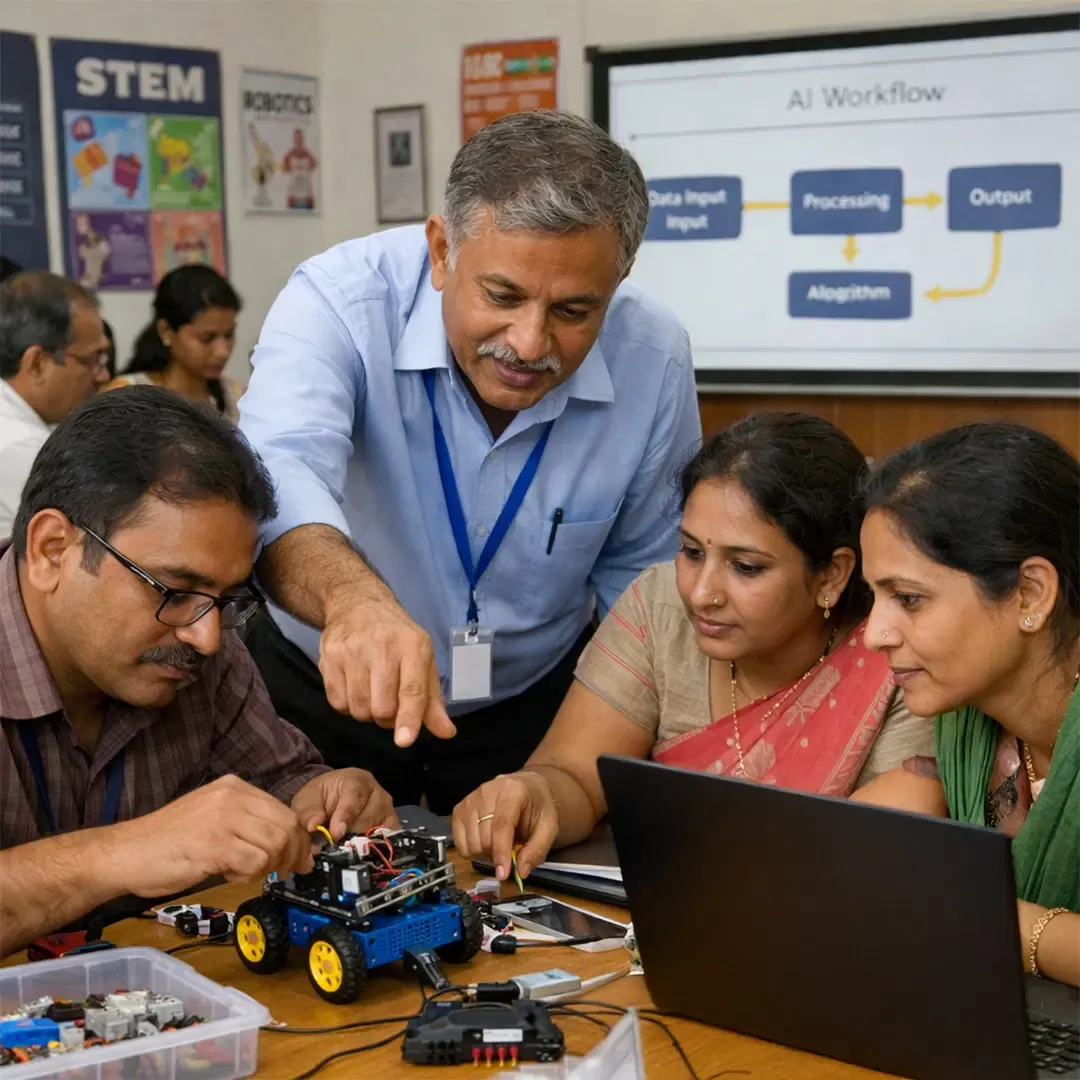

Walk into a modern classroom today and you may find robots, sensors, and lines of code where chalkboards once stood. Yet research shows that the majority of teachers feel underprepared to teach these subjects before they receive real support. The good news is that this gap is easy to close.
With the right coding and robotics training for teachers, even an educator who has never touched a circuit board can lead a confident, hands-on class within weeks. Schools everywhere are adding these skills to the curriculum, and teachers are rightly eager to keep up. The secret is picking an approach that builds skill steadily instead of overwhelming everyone at once.
Start With Real Tools, Not Just Theory
Teachers learn best the same way students do, by doing. Reading a manual about motors and loops rarely sticks, but practicing with an actual kit does. When a school invests in a proper Robotics lab for schools, teachers gain a space to experiment, break things, and fix them without any pressure. Handling the same equipment their students will use turns abstract ideas into muscle memory. A teacher who has already built a simple line-following robot walks into class ready to guide rather than guess.
Follow a Step-by-Step Learning Path
Coding and robotics are wide fields, so trying to master everything at once often leads to burnout. A structured path works much better. Effective coding and robotics training for teachers usually begins with visual block-based coding, moves into text languages like Python, and then layers in electronics and robotics. Each stage quietly builds on the one before it. Short, regular practice sessions also beat rare marathon workshops. When teachers notice quick wins early on, their motivation grows and the harder topics start to feel completely reachable.
Practice Inside the Lab, Together
Some of the best learning happens when teachers train inside the very environment they will teach in. A well-equipped Robotics lab for schools lets educators rehearse full lessons, test projects, and spot tricky moments before students ever arrive. Learning beside curious students helps too. Children ask fearless questions that push teachers to understand each concept more deeply. This shared curiosity keeps everyone growing at the same time, and it makes the classroom feel far more like a team effort than a lecture.
Lean on Mentors and Ongoing Support
Nobody masters a tricky skill on their own. Good robotics training for teachers hands you mentors, lesson plans you can actually use, and a real person to call when a project just won't cooperate. And that ongoing help matters way more than one big, intense workshop, because the messiest questions only show up once you're actually standing in front of a class. A quick check-in here, a refresher there, a few colleagues going through the same thing. That kind of backup turns early flops into "oh, that's how it works" moments instead of dead ends.
Conclusion
Honestly, picking up coding and robotics is a lot less scary than most teachers assume going in. Give it some hands-on practice, a sensible order to learn things in, and a mentor who sticks around, and a nervous beginner slowly becomes the person kids look to for answers. Solid robotics training for teachers isn't just about wiring and syntax, though. It gives teachers back the same spark they're trying to light in their students. And when a teacher actually feels sure of themselves, the whole room feels it too, and those young learners walk away a little more ready for the tech-heavy world ahead.


























Sign in to leave a comment.