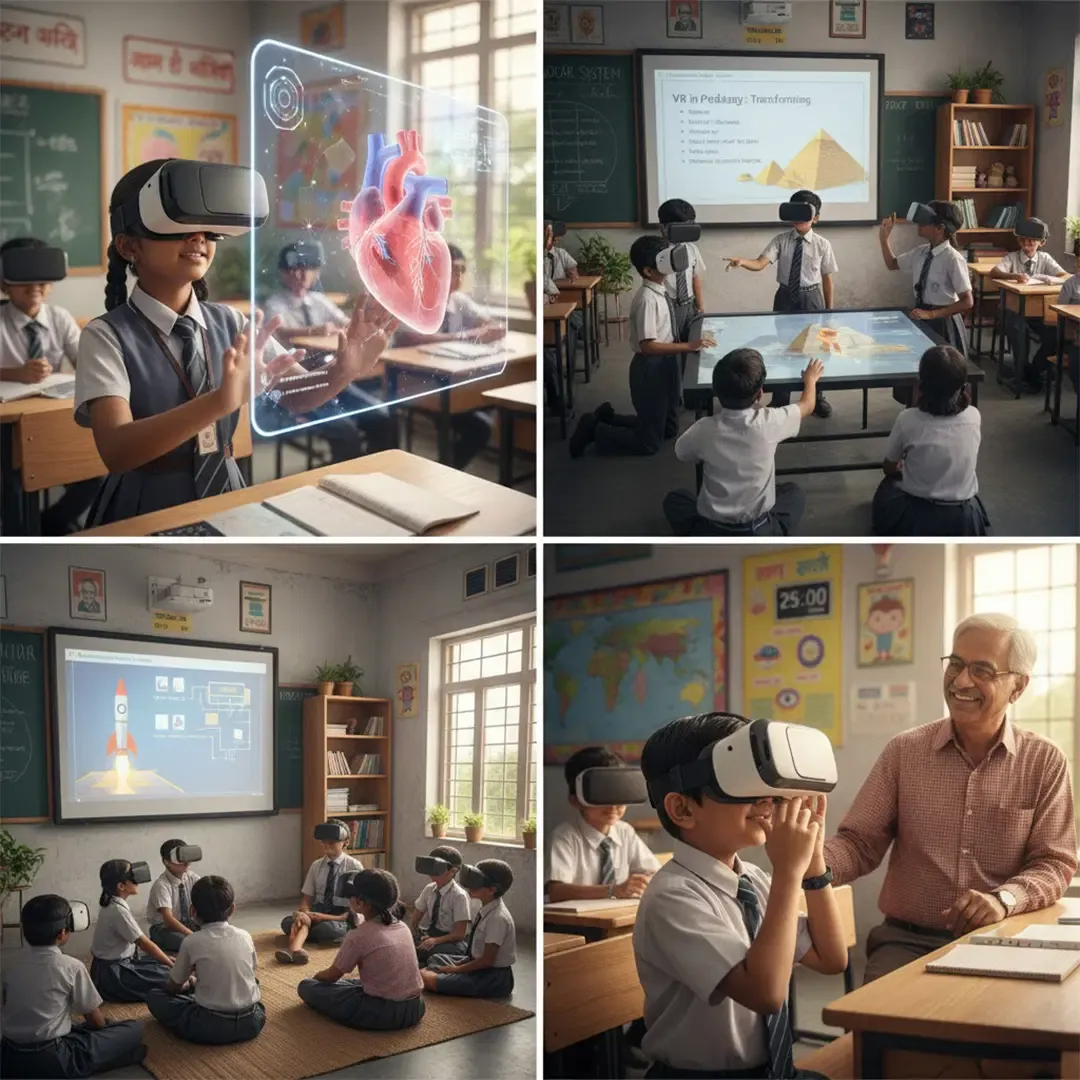

Ask a student to describe the water cycle and they might recite a diagram. Let them stand inside a storm cloud and watch rain form around them, and they will never forget it. That is the shift virtual reality in schools is quietly driving. Research suggests learners retain up to 75% more information when a lesson is delivered through immersive VR rather than a standard lecture. When a subject becomes a place you can walk through instead of a page you skim, understanding changes shape entirely.
Learning by Doing, Not Just Watching
The real power of immersion is participation. A child does not passively read about the human heart; they step inside it and watch valves open and close in real time. This is where AR VR labs earn their place in a modern school. Students explore ancient cities, dissect a virtual frog without any mess, or travel to the surface of Mars, all from their classroom. Because they are doing rather than memorising, attention stays high and the lesson sticks far longer.
Making Abstract Ideas Feel Real
Some concepts are genuinely hard to picture. Atoms, planetary orbits, and geological time all live on a scale we cannot normally see. Introducing virtual reality in primary education gives young learners a concrete, visual anchor for these ideas at exactly the age when curiosity is strongest. A seven-year-old who has "shrunk" to the size of a molecule grasps chemistry in a way no textbook illustration can match. Early exposure like this builds confidence long before these subjects feel intimidating.
A Safe Space to Explore and Fail
Mistakes are part of learning, but some experiments are messy, costly, or risky. Well-designed AR VR labs remove that barrier completely. A student can run a chemical reaction, wire a circuit, or perform a simulated experiment as many times as they like, with zero danger and no wasted materials. That freedom to try, fail, and try again nurtures the exact problem-solving mindset that classrooms often struggle to teach through worksheets alone.
Reaching Every Kind of Learner
Not every child learns best by reading or listening. Visual and hands-on learners, and students who find traditional lessons hard to follow, often thrive when a topic becomes something they can see and touch. Bringing virtual reality in schools into the mix gives these students a fair path to engagement. Teachers frequently notice quieter or struggling learners suddenly leaning in, asking questions, and taking ownership of their progress.
Conclusion
Beyond better grades, immersive learning teaches children to be comfortable with technology they will use for the rest of their lives. Weaving virtual reality in primary education into everyday teaching gives students a genuine head start in a world moving quickly toward digital work and creativity. The classroom stops being a room full of facts and becomes a doorway to experiences.
If your school is ready to bring immersive learning to life, RoboSpecies will help you design, set up, and run a complete lab tailored to your students. Reach out today and turn ordinary lessons into experiences your students will actually remember.























Sign in to leave a comment.