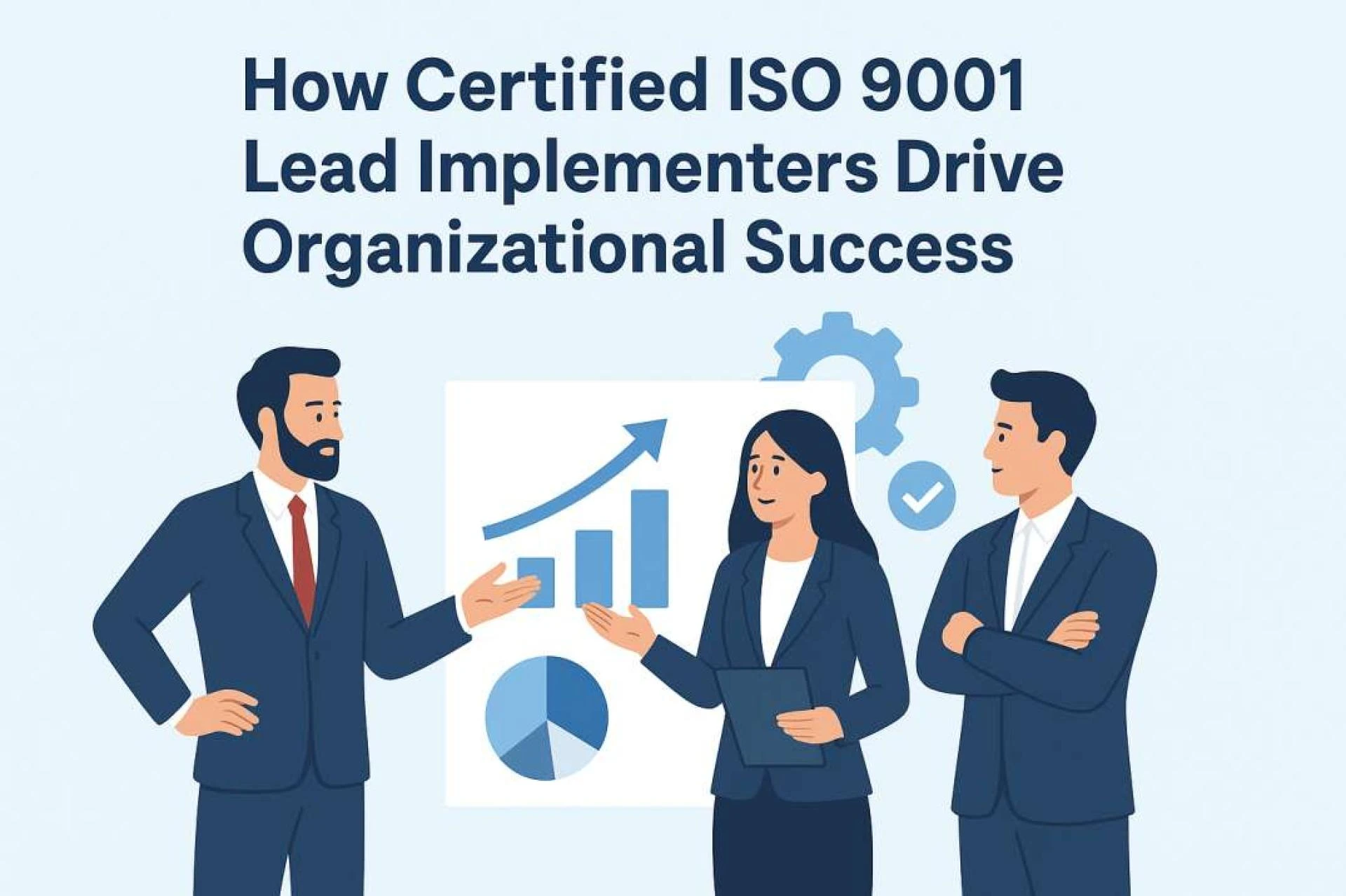

 In today’s competitive business environment, maintaining consistent quality, customer satisfaction, and operational efficiency is not just an option—it’s a necessity. Organizations across industries are recognizing that a well-structured Quality Management System (QMS) can be the key to sustained success. This is where ISO 9001 Lead Implementer Training plays a vital role. Certified ISO 9001 Lead Implementers act as change agents who lead their organizations toward quality excellence, compliance, and continuous improvement.
Understanding the Role of a Certified ISO 9001 Lead Implementer
A certified ISO 9001 Lead Implementer is a trained professional responsible for planning, executing, and maintaining the ISO 9001 Quality Management System within an organization. Their expertise ensures that quality principles are embedded across all business processes—from procurement and production to customer service and management review.
The ISO 9001 Lead Implementer Training equips professionals with practical skills to interpret the standard’s requirements, conduct gap analyses, create process documentation, and establish a culture of quality across all levels. More than just a compliance role, it’s about leading the organization toward strategic growth and customer trust.
Building a Culture of Quality and Accountability
One of the biggest contributions of a certified Lead Implementer is fostering a culture of quality within the organization. They help employees understand that quality is not confined to the quality control department—it’s a shared responsibility. By implementing structured processes, performance metrics, and continual improvement mechanisms, they ensure that every team member contributes to quality objectives.
Through ISO 9001 Lead Implementer Training, professionals learn to promote communication, accountability, and ownership among teams. This cultural shift results in fewer errors, better resource utilization, and improved employee morale—all of which directly support long-term organizational success.
Driving Operational Efficiency and Consistency
Efficiency and consistency are core elements of ISO 9001. Certified Lead Implementers analyse workflows, identify inefficiencies, and develop standardized procedures to ensure that products and services meet quality benchmarks every time.
They utilize process mapping, performance indicators, and risk-based thinking—concepts emphasized in ISO 9001 Lead Implementer Training—to eliminate redundancies and prevent issues before they occur. The result is a more agile organization with optimized operations, reduced waste, and better cost control.
When organizations operate efficiently and consistently, they not only improve profitability but also gain a competitive edge in the marketplace.
Enhancing Customer Satisfaction and Loyalty
The foundation of ISO 9001 lies in understanding and meeting customer requirements. Certified ISO 9001 Lead Implementers ensure that customer feedback, complaints, and satisfaction levels are systematically monitored and analysed.
By applying what they learn during their ISO 9001 Lead Implementer Training, they implement corrective and preventive actions that continuously enhance service quality. This proactive approach to quality assurance builds stronger customer relationships and fosters long-term loyalty—an essential element of business growth and brand reputation.
Ensuring Compliance and Risk Management
In an era of increased regulatory scrutiny, compliance and risk management have become business priorities. ISO 9001 Lead Implementers play a crucial role in ensuring that organizational practices align with both the ISO standard and legal requirements.
Training programs teach them to identify, evaluate, and mitigate potential risks that could disrupt operations or affect quality performance. By implementing a systematic risk-based approach, organizations become more resilient and better equipped to adapt to changing market conditions.
Supporting Continuous Improvement and Innovation
Continuous improvement is the heart of ISO 9001. Certified Lead Implementers encourage teams to look for opportunities to improve processes, enhance performance, and innovate. They establish measurable objectives, monitor progress, and use data-driven insights to drive change.
The ISO 9001 Lead Implementer Training emphasizes the Plan-Do-Check-Act (PDCA) cycle—a systematic approach that ensures every improvement initiative is both effective and sustainable. This ongoing pursuit of excellence helps organizations stay competitive and adaptable in an ever-evolving business landscape.
Conclusion
Certified ISO 9001 Lead Implementers are more than quality professionals—they are strategic enablers of success. With the knowledge and skills gained from ISO 9001 Lead Implementer Training, they guide their organizations toward operational efficiency, regulatory compliance, and customer satisfaction.
Their leadership helps build a culture of quality that drives continuous improvement and innovation, ensuring the organization’s long-term growth and success. In short, investing in ISO 9001 Lead Implementer Training is not just about achieving certification—it’s about empowering professionals to lead their organizations toward excellence.



























Sign in to leave a comment.