
Clean website structure allows search engines to find, categorize, and rank pages efficiently by providing a logical map for their automated bots. When a site uses a clear hierarchy and organized links, it ensures that search engines do not miss valuable content or get lost in a messy layout. A well ordered site architecture also helps search engines understand which pages are the most important, leading to better visibility in local search results for service businesses in Vancouver, WA.
In the competitive Southwest Washington market, a disorganized website is a liability. Search engines prioritize sites that they can crawl easily because it saves them time and computing power. This guide examines how technical organization influences online reach and provides a path for service providers to improve their digital foundation. Industry specialists with decades of experience consistently find that the foundation of a high ranking site is not just the words on the page, but the skeleton that holds it all together.
Organizing Information for Automated Crawlers
Search engines send out automated programs called spiders or bots to discover new content. These bots start at a home page and follow links to find other parts of the site. If the links are broken or hidden behind complex menus, the bot may leave before seeing everything the business has to offer.
Building a Logical Hierarchy
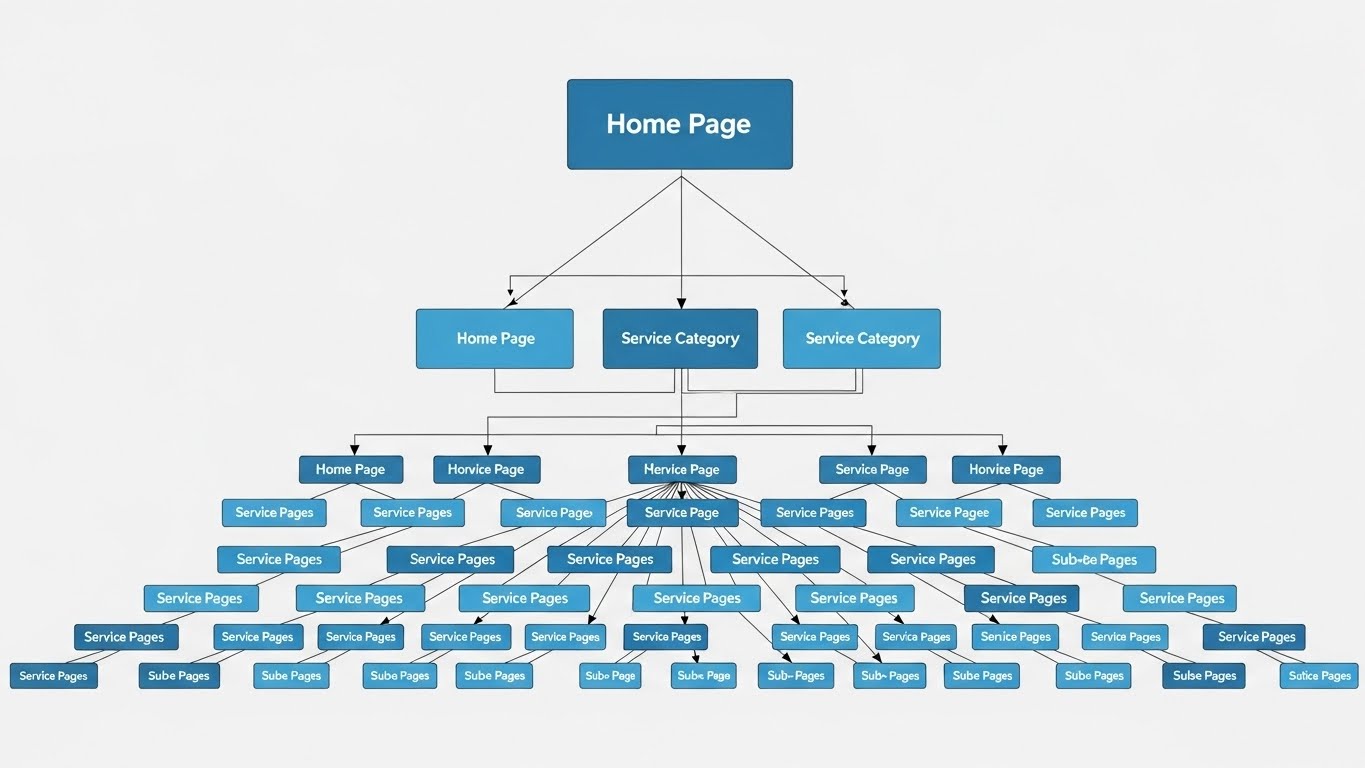
A successful website looks like a pyramid. The home page sits at the top, followed by main service categories, and then specific service pages. For a Vancouver HVAC company, this might mean a main Heating page that links out to furnace repair, heat pump installation, and boiler service. This clear path tells a search engine exactly how topics relate to one another.
URL Paths and Naming Conventions
The address of a page should tell both a user and a search engine what is on it. A clean URL looks like domain.com/services/plumbing instead of domain.com/p123. Short, descriptive URLs help search engines identify the subject of a page instantly. When URLs are logical, they are also easier for local customers to remember and share.
Navigation Menu Best Practices
Menus should be simple and predictable. Most users look for a services tab first. Putting the most profitable services in the main navigation ensures that search engine bots visit those pages most often.
Bonus Tips
Create a Functional XML Sitemap
An XML sitemap acts as a direct list of every important page on the site. Submitting this file to search engines ensures that even new pages are found quickly without waiting for a bot to stumble upon them through a link.
Improving the Crawl Budget Efficiency
Search engines do not spend an unlimited amount of time on a single website. They assign a crawl budget based on the site's authority and health. If a site is bloated with duplicate pages or heavy files, the bot might run out of time before it reaches the most important sections.
Internal Linking Strategies
Internal links connect one page to another. These links act as bridges for search engine bots. A blog post about winter home maintenance in Clark County should link directly to the company's insulation or heating service pages. This passes authority from one page to another and keeps bots on the site longer.
Technical Performance and Indexing
Slow websites frustrate search engines just as much as they frustrate people. Data shows that 40 percent of users will leave a site that takes more than three seconds to load. Search engines often penalize slow sites by crawling them less frequently. Keeping the structure light and the code clean ensures that bots move through the site at high speed.
Mobile Friendly Infrastructure
Most local searches happen on smartphones. Search engines now use mobile first indexing, which means they judge a site primarily by how it looks and works on a phone. A clean mobile structure avoids large pop ups or cluttered menus that might block a bot from seeing the content.
Comparing Site Architecture Styles
Different ways of organizing a site impact how quickly a search engine can find and index information. Choosing the right style is a primary factor in local SEO success.
| Feature | Flat Structure | Deep Structure | Disorganized Structure |
|---|---|---|---|
| Click Depth | 1 to 3 clicks to any page | 4 to 10 clicks to reach subpages | Random or unpredictable |
| Crawl Speed | Very Fast | Slow | Extremely Slow |
| User Experience | Excellent | Frustrating | Poor |
| Indexing Rate | High | Moderate | Low |
| SEO Strength | Strong | Moderate | Weak |
Things to Consider Before Making a Decision
Before restructuring a website, a business owner must evaluate their current digital standing. Changing the structure of a site can have immediate effects on how search engines view the brand.
- Evaluate current rankings to ensure successful pages are not accidentally deleted.
- Check for broken links that might be hiding valuable content from bots.
- Look at competitors in the Vancouver area to see how they organize their services.
- Determine if the current hosting provider is fast enough to support a larger site structure.
- Identify the most important services that need to be closest to the home page.
- Verify that all old URLs will be correctly redirected to new ones to avoid errors.
Regional Guidance for Pacific Northwest Businesses
In Vancouver, WA, and the surrounding Clark County area, weather plays a large role in what people search for. A clean structure allows a business to highlight seasonal services easily. For example, a spray foam company might want a clear section for attic insulation during the cold winters and crawl space moisture control for the wet springs. By keeping these services in a clean, logical structure, they ensure that search engines can surface the right page at the right time of year.
Common Questions about Website Organization
Understanding how technical details impact a business helps in making better marketing choices.
Does a small site need a complex structure?
No. For a small business with only a few services, a simple flat structure is best. The goal is to make every page easy to reach with just a few clicks.
Can a messy structure be fixed without a new site?
In many cases, yes. A professional can often reorganize menus and internal links without a complete redesign. However, sometimes a fresh start is more efficient for very old sites.
Will a clean structure help my local map ranking?
Yes. Search engines use the information on a website to verify a company's location and services. If they can read the site easily, they are more likely to show the business in the local map pack.
Bonus Tips
Use Descriptive Anchor Text
When linking between pages, use words that describe the destination. Instead of saying click here, use a phrase like contact our Vancouver furnace repair team. This provides more context for search engines to understand the page's topic.
Direct Answers to Site Structure Issues
What is the three click rule?
The three click rule suggests that a user should be able to find any piece of information on a site within three clicks from the home page. Search engines follow a similar logic to ensure they do not waste time in deep subfolders.
Why do duplicate pages hurt my site?
Duplicate pages confuse search engines. They do not know which version of a page is the original, which can lead to them ignoring both. A clean structure uses unique pages for every service.
How do breadcrumbs help search engines?
Breadcrumbs are small text links often found at the top of a page. They show the path from the home page to the current spot. They help bots understand the site's hierarchy and help users navigate back to main categories easily.
What happens if I change my URLs?
If a business changes a URL without setting up a 301 redirect, the search engine will see a 404 error. This can cause the page to disappear from search results entirely. Always use redirects when moving content.
Does the footer matter for structure?
Yes. The footer is a great place to put links to every main service page. This ensures that every page on the site has a link back to the most important areas, helping bots crawl the entire site from any starting point.
Summary of Structural Benefits
A clean website structure is the foundation of a successful online presence. It ensures that search engines can crawl every page, understand the relationship between different services, and index the content correctly. By focusing on a logical hierarchy, descriptive URLs, and efficient internal linking, Vancouver businesses can improve their visibility and reach more local customers. Technical health is not a one time project but a continuous commitment to quality that rewards a company with better rankings and higher user trust.
Strengthening Your Local Reach
Building a professional website structure takes time and technical knowledge. Many service businesses find that partnering with an expert allows them to focus on their trade while their digital rankings improve steadily. For those looking to grow their leads and fix their online foundation, Genius Marketing provides practical local SEO and website management. They help trades like HVAC, plumbing, and spray foam companies in Vancouver and Southwest Washington reach their growth goals. Contact them at (360) 519-5100 or email [email protected] to discuss a strategy that works for your specific needs.
Author: Spencer Hart, founder of Genius Marketing, has more than 25 years of experience in marketing and local SEO for service businesses. He helps spray foam, HVAC, plumbing, and other local companies bring in more leads and grow their revenue. Spencer is a serial entrepreneur and father of twins who leads a team focused on practical SEO and steady digital growth.
Reviewer: Jordan Lee is a marketing and local SEO specialist with more than 6 years of hands-on experience helping small and mid-size service businesses improve their online reach and steady lead flow.





























Sign in to leave a comment.