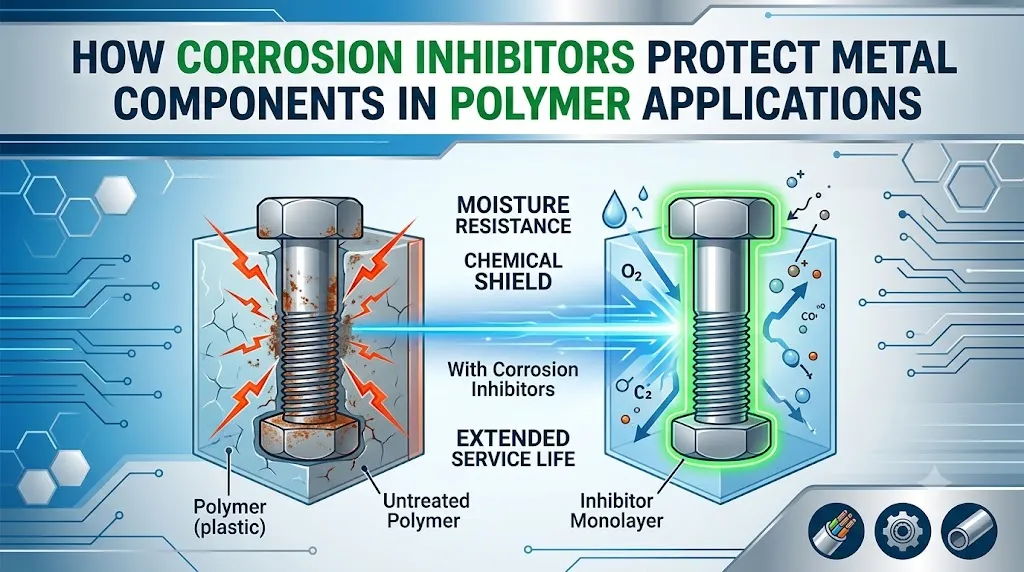

Metal components are frequently used alongside polymers in cables, wires, automotive parts, electrical systems, industrial equipment, and protective coatings. While polymers can provide excellent insulation, flexibility, and durability, the metal inside or underneath them can still be vulnerable to corrosion. Moisture, oxygen, chemicals, salts, and temperature changes can mainly damage metal surfaces and affect the final product's performance.
This is where a corrosion inhibitor for polymers can make a huge difference. These additives help reduce corrosion at the metal-polymer interface and provide an additional layer of protection, improving product reliability and service life.
Why Corrosion Is a Concern in Polymer Applications
Polymer materials are mainly resistant to many environmental conditions, but they do not always completely isolate metal components from moisture or corrosive substances. Small gaps, surface defects, processing conditions, or temperature changes can allow moisture and contaminants to reach the metal.
Once corrosion begins, it can lead to oxidation, surface deterioration, loss of electrical conductivity, weakening of components, and premature product failure. In applications such as electrical cables, connectors, automotive components, and industrial coatings, even minor corrosion can affect long-term performance.
Adding the right corrosion-protection additive during polymer formulation can help manufacturers address these risks before they become major problems.
How a Corrosion Inhibitor for Polymers Works
A corrosion inhibitor for polymers reduces the chemical reactions that cause metal corrosion. Depending on the formulation, the inhibitor may interact with the metal surface, forming a protective film that limits contact between the metal and corrosive agents.
Some inhibitors also help control the movement of moisture or aggressive ions around the metal surface. This can be particularly useful when polymers are exposed to humid, outdoor, marine, or chemically demanding environments.
The effectiveness of an inhibitor depends on various factors, such as the polymer type, metal substrate, operating temperature, exposure conditions, and processing method. Selecting an additive that is compatible with the overall formulation is therefore essential.
Anti-Corrosion Additives for Plastic Coatings
Plastic coatings are commonly used to protect metal components from environmental exposure. However, the coating itself needs to maintain its protective properties over time.
An anti-corrosion additive for plastic coatings can increase the coating's ability to protect the underlying metal. It can help reduce corrosion in damaged areas, improve resistance to moisture and chemicals, and support longer coating performance.
For manufacturers, the goal is not simply to add an inhibitor but to select one that works effectively without adversely affecting adhesion, appearance, flexibility, mechanical strength, or other important coating properties.
Corrosion Protection Additives for Cables and Wires
Cables and wires combine polymer insulation with metal conductors, making corrosion protection especially important. Moisture and environmental contaminants can eventually affect exposed or inadequately protected metal surfaces.
A corrosion protection additive for cables and wires can be incorporated into polymer compounds used for insulation, jacketing, or other protective layers. By helping limit corrosion around metal components, these additives can support electrical reliability and extend service life.
This becomes even more important in outdoor infrastructure, automotive systems, telecommunications, industrial installations, and other applications where cables may be exposed to humidity, temperature fluctuations, or chemical exposure.
Choosing the Right Corrosion-Resistant Polymer Additive Supplier
Choosing the right additive is as important as choosing the right polymer. Manufacturers should consider compatibility, processing temperature, dosage requirements, regulatory needs, application conditions, and long-term performance.
Working with an experienced corrosion-resistant polymer additive supplier can help manufacturers identify suitable solutions for specific polymer-metal combinations. A reliable supplier can also provide technical guidance and formulation support to help achieve consistent performance.
Conclusion
Corrosion can quietly reduce the reliability and service life of polymer products containing metal components. The right corrosion inhibitor can help manufacturers protect these components while maintaining the polymer system's performance.
From plastic coatings to electrical cables and wires, selecting a suitable corrosion inhibitor for polymers can provide valuable protection against moisture and other corrosive conditions. With the right formulation and support from an experienced additive supplier, manufacturers can develop polymer products that offer better durability, reliability, and long-term performance.


























Sign in to leave a comment.