Manufacturing businesses deal with many expenses, such as raw materials, labor, machinery, and factory overhead. If these costs are not tracked properly, profit margins can quickly shrink. Cost accounting helps manufacturers understand exactly where money is being spent so they can control expenses and protect profits.
By analyzing production costs in detail, businesses can reduce waste, improve pricing, and maintain stable margins even when costs change.
What You Will Learn
- How cost accounting works in manufacturing and how it differs from basic bookkeeping
- How tracking costs at each production stage helps control expenses
- How accurate cost data supports better pricing decisions
- How accounting systems connect financial records with daily operations
- How structured cost tracking improves planning and budgeting
What Is Cost Accounting In Manufacturing
Cost accounting focuses on recording and analyzing all expenses related to making products. It helps businesses understand how much they spend on materials, labor, and overhead during production.
Unlike general bookkeeping, cost accounting looks closely at production activities. This helps managers spot inefficiencies early and take action before costs rise further. It also supports long-term growth by giving businesses confidence that their margins are protected.
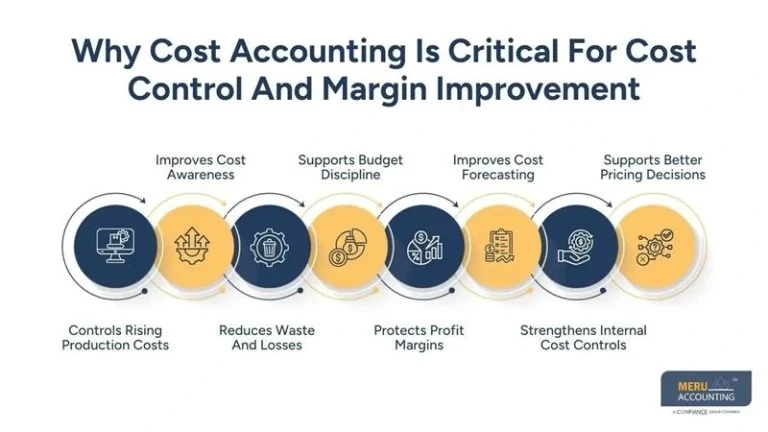
Why Cost Accounting Is Important
- Controls rising costs by identifying increases early
- Improves cost awareness across teams and departments
- Reduces waste by highlighting inefficient processes
- Supports realistic budgets based on actual cost patterns
- Protects profit margins even when costs fluctuate
- Helps with forecasting by using past data to predict future expenses
Understanding Manufacturing Costs
Manufacturers must track several cost components:
- Material costs which directly affect profitability
- Labor costs based on productivity and efficiency
- Overheads like utilities, maintenance, and rent
- Fixed and variable costs to understand cost behavior
- Profit margins to ensure products remain profitable
Methods Used In Cost Accounting
Businesses use different methods depending on their operations:
- Job costing for specific orders or batches
- Process costing for continuous production
- Standard costing to compare expected and actual costs
- Activity-based costing for more accurate overhead allocation
- Variance analysis to identify cost differences
Controlling Direct And Indirect Costs
Cost accounting helps monitor material usage, control labor hours, and allocate overheads correctly. Regular cost reports highlight differences between planned and actual spending so managers can adjust operations quickly.
Improving Pricing And Margins
When manufacturers know the true cost of each product, they can set prices that cover expenses and meet profit goals. Accurate cost data also helps avoid underpricing and supports better customer negotiations.
Improving Cost Visibility
Structured accounting systems keep financial records organized and provide clear cost reports. Better visibility helps businesses monitor expenses, control inventory costs, and maintain steady margins over time.
Supporting Inventory And Production Planning
Cost accounting helps estimate material needs, track work-in-progress, and value finished goods accurately. This reduces excess inventory, lowers storage costs, and supports better production scheduling.
Improving Efficiency
Cost data helps identify inefficient processes, improve resource allocation, plan maintenance, and reduce delays. Clear cost tracking also strengthens accountability across teams.
Risks Of Not Using Cost Accounting
Without proper cost tracking, businesses may struggle with poor pricing decisions, rising expenses, weak budgets, and unstable margins. Lack of visibility makes it harder to plan and grow confidently.
Key Takeaways
- Cost accounting gives clear insight into production expenses
- Accurate cost data helps control spending and protect margins
- Structured cost tracking improves pricing and budgeting decisions
- Better cost visibility supports efficient operations and planning
- Strong cost systems help manufacturers stay profitable over time
Meru Accounting understands real-world manufacturing cost challenges. Our experience helps address industry-specific cost issues.


























Sign in to leave a comment.