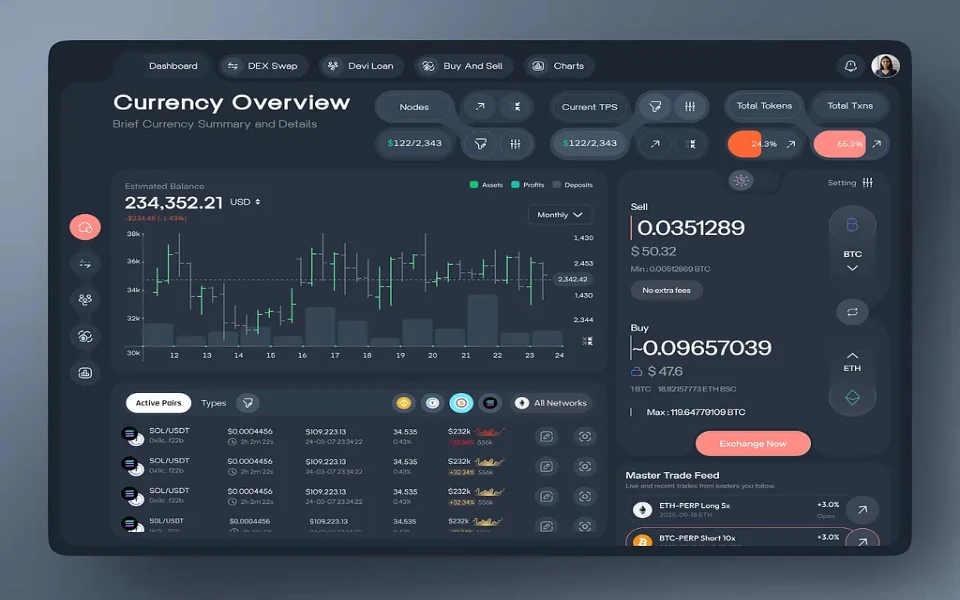

The digital asset economy has become one of the most influential developments in modern finance. Its growth is driven by the expansion of blockchain technology, increasing consumer adoption of cryptocurrencies, the emergence of tokenized assets, and new models of decentralized financial interaction. As businesses search for ways to participate in this evolving environment, crypto exchange development has emerged as one of the most direct and practical entry points.
Crypto exchanges serve as the operational hubs of the digital asset market. They allow users to trade, manage, and store cryptocurrencies, while offering businesses the infrastructure needed to engage with blockchain-based financial activity. Through structured cryptocurrency exchange software development, organizations can build platforms that provide access to global markets, enable new business models, and support a broad range of digital financial operations.
The following sections explore how crypto exchange development helps businesses integrate into the digital asset economy, adopt new technologies, and leverage emerging opportunities.
1. Establishing Access to the Global Digital Asset Marketplace
The digital asset economy operates globally and functions independently of traditional market hours or geographical constraints. Crypto exchanges provide a direct gateway into this space, allowing businesses to:
- List digital assets
- Support global users
- Facilitate 24/7 asset trading
- Expand operations beyond regional markets
Crypto exchange platform development removes the barriers associated with conventional financial systems, enabling businesses to reach broader audiences and engage in markets with high liquidity and continuous activity.
As digital currencies, stablecoins, and tokenized assets gain international traction, having access to this infrastructure becomes essential for organizations seeking relevance in modern finance.
2. Creating a Technological Foundation for Digital Asset Operations
Launching or integrating with a crypto exchange establishes a foundational technology layer that supports a variety of digital asset use cases.
This foundation typically includes:
- A high-performance trading engine
- Secure wallet infrastructure
- Blockchain integration modules
- Market data and analytics systems
- Compliance and verification tools
By building this foundation through crypto exchange development, organizations can support multiple blockchain-based services and applications. This infrastructure is adaptable and can scale with new technologies, making it suitable for long-term participation in the digital economy.
3. Enabling Businesses to Support Multiple Digital Asset Types
The digital asset economy is no longer limited to traditional cryptocurrencies. It now includes:
- Tokenized commodities
- Security tokens
- Stablecoins
- Utility tokens
- Tokenized real estate
- Digital identity assets
- In-game assets and NFTs
With well-structured cryptocurrency exchange software development, businesses can support a diverse range of assets. This flexibility is important because the future financial environment will likely include a mix of asset types across different blockchain networks.
Supporting multiple asset forms increases user engagement and allows businesses to remain competitive as the market evolves.
4. Building Secure Infrastructure for Asset Storage and Transactions
Security is a fundamental requirement in the digital asset economy. Users expect platforms to safeguard their assets from cyber threats, unauthorized access, and operational risks.
Crypto exchange development incorporates:
- Cold and hot wallet architecture
- Multi-signature authorization
- Encryption of sensitive data
- DDoS prevention systems
- Continuous monitoring and auditing
- Transaction risk analysis
This security infrastructure supports safe asset storage and secure transactions, enabling businesses to operate confidently in the digital environment. Without strong security measures, mainstream adoption becomes challenging, making these mechanisms essential components of any digital asset platform.
5. Supporting Regulatory Compliance and Transparency
As the digital asset economy expands, regulatory frameworks continue to evolve. Compliance has become a key factor influencing how businesses enter and operate within this sector.
Crypto exchange development services typically include support for:
- Know Your Customer (KYC) processes
- Anti-Money Laundering (AML) checks
- Transaction monitoring
- Audit logs
- Reporting tools
- Regional licensing compatibility
These features help businesses meet legal requirements in different jurisdictions and ensure that operations remain compliant. Adhering to regulations enhances platform transparency, builds trust with users, and reduces the risk of legal complications.
6. Facilitating Scalable Growth and High Transaction Volume
Digital asset trading can involve large transaction volumes, especially during market fluctuations.
Crypto exchange development ensures systems are designed for:
- High throughput
- Low-latency execution
- Scalable server architecture
- Efficient load balancing
- Real-time data updates
Scalability is crucial for businesses planning long-term participation in the digital asset economy. As more users adopt digital assets and trading activity increases, scalable systems prevent downtime and performance issues.
Crypto exchange development company expertise ensures that platforms can handle growth without compromising security or speed.
7. Offering Businesses Control Over Trading Rules and Platform Features
By building their own digital asset exchange, businesses maintain full control over:
- Trading policies
- Supported assets
- Liquidity options
- Platform upgrades
- Wallet management
- User onboarding workflows
- Transaction fees
- Market-making tools
This level of customization is not possible when relying on external platforms. Through crypto exchange platform development, businesses can adapt the system to match their goals, regulatory requirements, or market strategy.
Control over features ensures that the platform can evolve alongside technological advancements and user expectations.
8. Leveraging Market Analytics for Better Decision-Making
Crypto exchanges generate extensive data, including:
- Order book activity
- Market depth
- Trading volumes
- User behavior patterns
- Blockchain transaction data
- Asset performance trends
This data is valuable for strategic planning and risk management. With proper cryptocurrency exchange software development, businesses can integrate:
- Data visualization dashboards
- Real-time analytics systems
- Predictive modeling tools
- Market monitoring mechanisms
Access to comprehensive analytics helps businesses respond quickly to market changes, enhance user experience, and optimize internal operations.
9. Connecting Businesses to Decentralized Finance (DeFi) and Web3 Ecosystems
The digital asset economy is expanding beyond centralized trading environments.
Crypto exchange development supports integration with decentralized financial systems by enabling:
- Smart contract interactions
- Access to liquidity pools
- Token swaps
- Yield mechanisms
- Decentralized identity systems
- Web3 authentication
This connection allows businesses to participate in both centralized and decentralized finance, providing users with a wider range of tools and services.
As Web3 adoption accelerates in 2025, platforms that support both models offer more versatility and long-term relevance.
10. Allowing Businesses to Build Multi-Service Financial Ecosystems
Modern exchanges are no longer single-function platforms. Through crypto exchange development services, businesses can build interconnected systems that support multiple digital asset use cases.
Examples of ecosystem components include:
- NFT marketplaces
- Token sale platforms
- Staking and earning programs
- Asset tokenization modules
- Merchant payment tools
- Multi-asset wallets
- Institutional trading systems
This ecosystem approach increases platform utility and supports broader participation in the digital asset economy.
Businesses can gradually expand features as market trends shift, ensuring long-term flexibility.
11. Reducing Dependency on External Service Providers
Relying on external platforms limits control and introduces dependence on third-party policies and fee structures. Developing an internal platform reduces reliance on external systems and provides:
- Independence in decision-making
- Full ownership of user data
- Control over asset listings
- Customizable liquidity strategies
- Reduced long-term operational costs
- Direct access to market activity
This independence is essential for organizations that prioritize strategic flexibility and long-term operational stability.
12. Supporting Institutional and Enterprise-Level Participation
Institutions are increasingly entering the digital asset market. To serve institutional requirements, platforms need advanced features such as:
- Segregated custody
- Order execution algorithms
- Risk assessment modules
- Regulatory reporting
- Secure APIs
- High liquidity access
Crypto exchange development ensures the platform can meet these requirements and support institutional-grade operations.
This capability helps businesses reach new user segments and align with professional trading standards.
13. Enabling Businesses to Adapt to Ongoing Technological Evolution
Blockchain technology evolves quickly, introducing new standards and technical frameworks.
Investing in crypto exchange development ensures businesses remain adaptable by enabling support for:
- New blockchain networks
- Layer 2 scalability solutions
- Updated smart contract standards
- Tokenization protocols
- Digital identity systems
- Cross-chain interoperability
This adaptability is critical to long-term success in the digital asset economy, which is defined by continuous innovation.
Conclusion
Crypto exchange development provides businesses with the infrastructure, security, scalability, and flexibility needed to enter and thrive in the digital asset economy. By supporting a wide range of digital asset types, enabling global participation, and integrating advanced blockchain technologies, exchanges serve as essential gateways into modern financial ecosystems.
Through structured crypto exchange platform development and advanced cryptocurrency exchange software development, organizations gain the ability to build secure, data-driven, and future-ready systems that operate effectively in a rapidly evolving market. As digital assets continue to expand across industries, crypto exchanges will play a central role in connecting businesses with the global blockchain economy.






























Sign in to leave a comment.