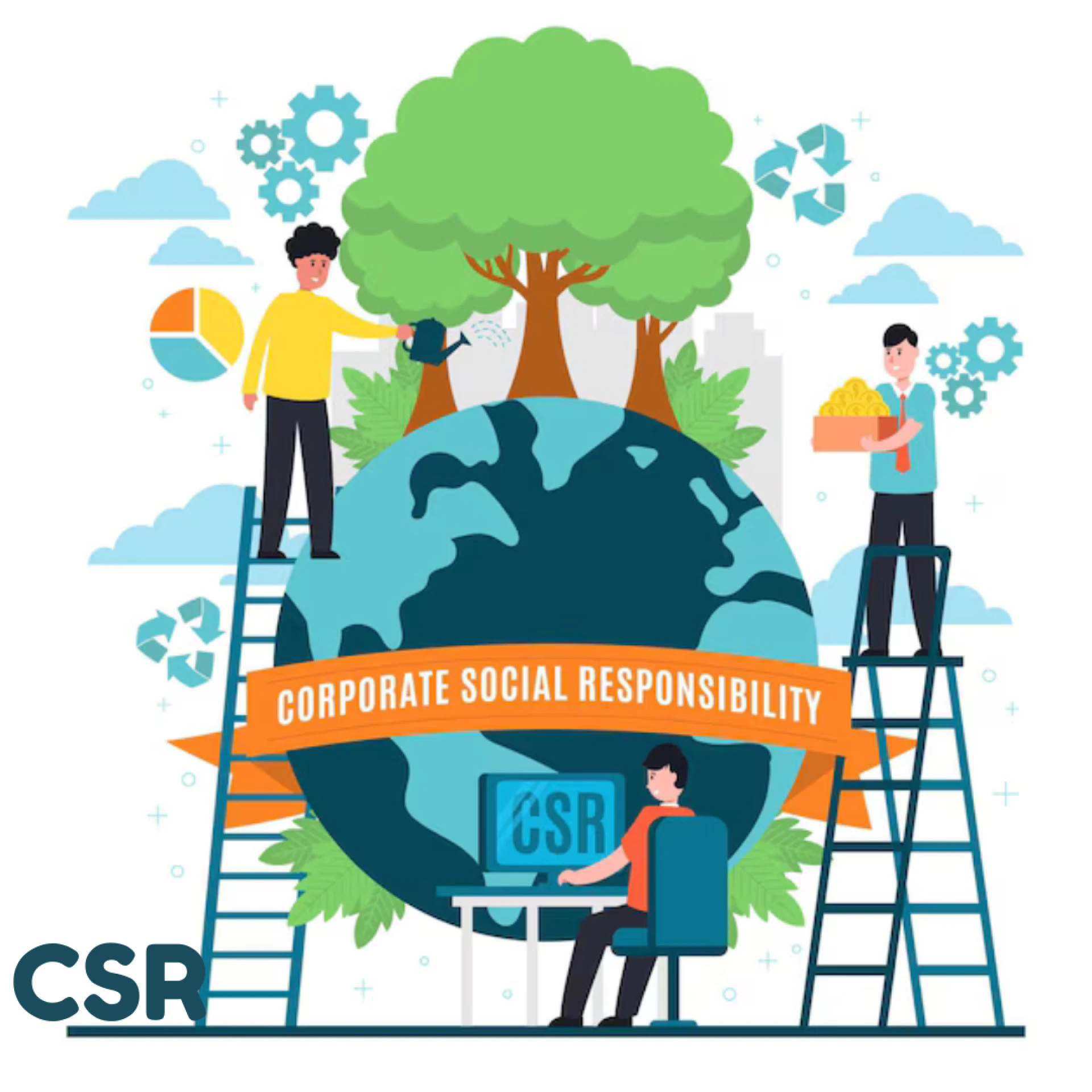

A key component of contemporary company strategies, corporate social responsibility (CSR) promotes a balance between ethical obligation and profitability. CSR initiatives have a big impact on a company's reputation, increase brand value, and promote social equity in addition to compliance. In this piece, we examine how well-thought-out CSR programs, efficient CSR registration, and appropriate use of CSR funds not only fulfill legal requirements but also have a long-lasting beneficial influence on businesses and communities.
Recognizing CSR and Its Applicability
Corporate Social Responsibility, or CSR, is the term used to describe a company's dedication to operating in an ethical, ecological, and socially responsible manner. It entails integrating business objectives with sustainability and inclusivity while utilizing resources to alleviate societal challenges.
Section 135 of the corporations Act, 2013 regulates corporate social responsibility (CSR) in India and requires some corporations to implement CSR programs. Reaching any of the following financial benchmarks during a fiscal year determines CSR applicability:
- A net worth of ₹500 crore or more.
- A turnover of ₹1,000 crore or more.
- A net profit of ₹5 crore or more.
Such companies must spend at least 2% of their average net profits (over the last three years) on approved CSR activities to confirm compliance.
The Role of CSR Registration
To formalize their commitment, companies must undergo CSR registration by filing Form CSR-1 with the Ministry of Corporate Affairs (MCA). This process confirms transparency and accountability in implementing CSR activities. The key steps involved are:
- Submitting company details, including CIN and PAN.
- Providing a copy of the board resolution approving CSR activities.
- Obtaining a Unique CSR Registration Number, which is mandatory for tracking and reporting CSR fund utilization.
Through CSR registration, businesses align their efforts with legal requirements while streamlining the execution of impactful projects.
CSR Activities: Strengthening Brand Value
1. Developing Corporate Reputation
CSR initiatives that address social issues such as education, healthcare, and environmental conservation demonstrate a company’s commitment to societal well-being. These fosters trust among stakeholders, including customers, investors, and employees.
For example, Tata Group’s long-standing commitment to rural development and education has solidified its reputation as a socially responsible corporation, developing its brand equity.
2. Building Customer Loyalty
Modern consumers are increasingly inclined toward brands that prioritize ethical and sustainable practices. Companies that transparently allocate CSR funds to community-centric projects build stronger emotional connections with their customers.
Nike’s “Move to Zero” campaign, which focuses on reducing environmental impact, has resonated with environmentally conscious consumers, boosting its market presence and loyalty.
3. Attracting and Retaining Talent
Employees prefer working for companies that actively engage in meaningful CSR activities. By involving employees in volunteering programs or sustainability initiatives, businesses can boost morale, improve job satisfaction, and reduce turnover rates.
A survey by Deloitte revealed that millennials are more likely to remain loyal to employers who emphasize sustainability and community engagement.
CSR Activities: Advancing Social Equity
1. Promoting Inclusive Growth
CSR initiatives that prioritize healthcare, gender equality, and skill development lessen socioeconomic inequalities and promote inclusive development. Businesses that make investments in underserved areas help society advance over the long run by guaranteeing that the financial gains are shared by all.
An excellent illustration of how CSR may promote social justice while boosting brand value is Hindustan Unilever's "Project Shakti," which gives rural women business chances.
2. Bridging Educational Gaps
CSR programs that emphasize education play a key role in ending the poverty cycle. Businesses might use CSR money to start schools, give away educational resources, or provide scholarships to deserving pupils.
Improving access to education in rural areas has been made possible in large part by the Infosys Foundation's initiative to create libraries and promote digital literacy.
3. Confirming Environmental Sustainability
Two important facets of CSR initiatives include combating climate change and encouraging environmental preservation. Businesses that make investments in afforestation, waste management, and renewable energy not only meet their CSR responsibilities but also help create a healthier planet for coming generations.
One example of the twin advantages of sustainable CSR activities is ITC's extensive afforestation initiative, which has produced green cover and rural jobs.
Strategic Allocation of CSR Funds
The efficient use of CSR funds is critical to achieving both business and societal goals. Companies must make sure that funds are allocated to activities listed under Schedule VII of the Companies Act, which include:
- Eradicating hunger and poverty.
- Promoting education and healthcare.
- Confirming environmental sustainability.
- Supporting gender equality and empowering women.
- Providing disaster relief and rehabilitation.
Proper planning, monitoring, and impact assessment confirm that CSR funds are utilized effectively, maximizing their benefits for both communities and the brand.
Challenges in CSR Implementation
1. Lack of Awareness
Many businesses struggle to recognize CSR applicability and the scope of permissible activities, leading to non-compliance or underutilization of funds.
2. Inefficient Fund Allocation
Improper planning or misallocation of CSR funds can hinder the success of initiatives and reduce their societal impact.
3. Monitoring Difficulties
Tracking the progress and effectiveness of CSR projects, especially in remote areas, poses significant challenges.
To overcome these issues, companies can:
- Partner with experienced NGOs and implementing agencies.
- Use technology for real-time monitoring and reporting.
- Seek professional consultancy to cross legal and strategic aspects of CSR registration and implementation.
The Synergy Between CSR and Business Growth
CSR is not merely a compliance requirement; it is a powerful driver of business growth. Companies that embrace CSR as a strategic priority enjoy multiple benefits, including:
- Competitive Advantage: Businesses with strong CSR credentials stand out in the market, attracting socially conscious customers and investors.
- Risk Mitigation: Addressing environmental and social challenges through CSR reduces reputational and regulatory risks.
- Innovation: CSR projects often inspire innovative solutions, such as eco-friendly packaging or community-based product designs.
Future of CSR: Trends and Opportunities
The future of CSR in India lies in innovation, collaboration, and scalability. Companies are increasingly leveraging digital technologies, such as artificial intelligence and blockchain, to improve the transparency and efficiency of their CSR initiatives.
Emerging trends include:
- Digital Education: Online learning platforms funded through CSR are bridging educational gaps in underserved regions.
- Green Energy Projects: Investments in renewable energy, such as solar and wind power, are gaining traction as key CSR activities.
- Community-Led Development: Companies are involving local communities in planning and executing CSR projects to confirm relevance and sustainability.
Conclusion
CSR initiatives are becoming strategic imperatives that match corporate goals with society’s demands rather than being discretionary. Businesses can increase their brand value and promote social equality by implementing impactful programs, allocating CSR funding appropriately, and registering for CSR in an organized manner.
CSR will become more and more important in creating a society that is egalitarian, inclusive, and balanced as long as companies continue to place a high priority on sustainability and ethical behavior. Businesses that successfully balance profit and purpose not only make money but also leave a legacy of constructive change.



























Sign in to leave a comment.