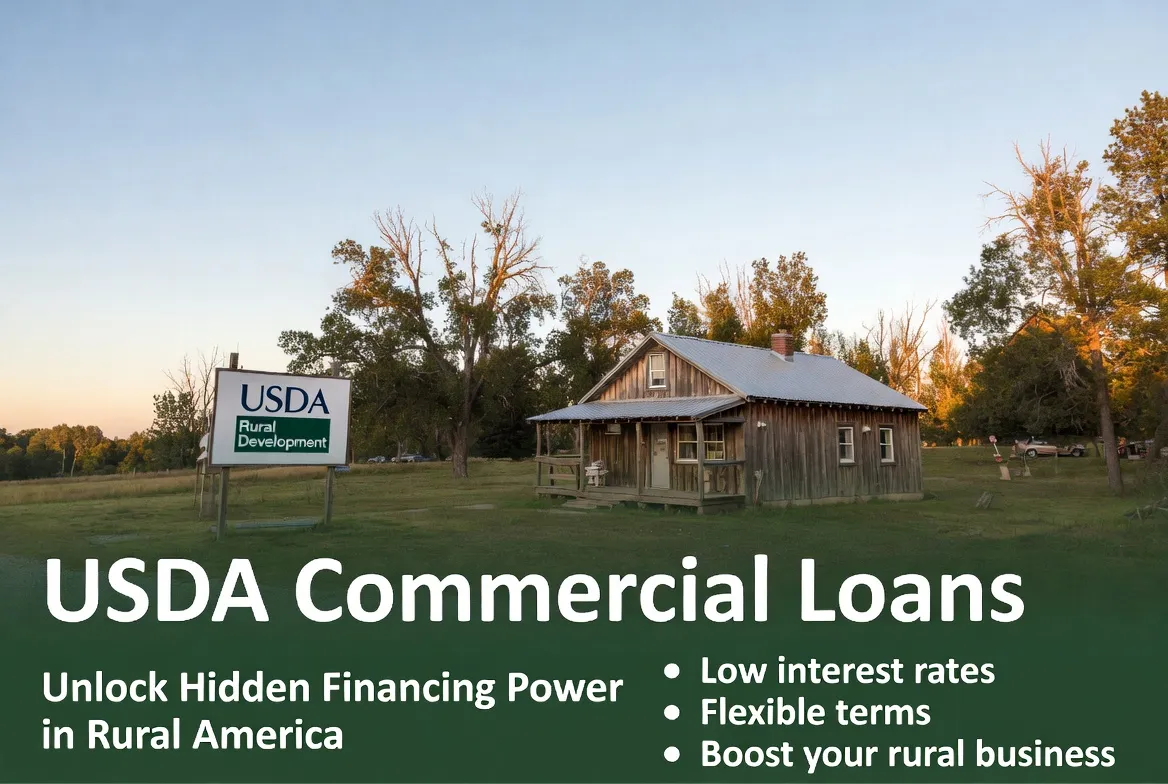
In an era of tightening bank credit and elevated interest rates, many business owners and real estate investors overlook one of the most powerful financing tools available: USDA Commercial Loans (formally the USDA Business & Industry or B&I Guaranteed Loan Program). These government-backed loans open doors to commercial real estate purchases, construction, expansions, and refinances in rural and suburban markets—places where traditional lenders often hesitate.
Whether you run a manufacturing plant, retail store, warehouse, medical office, or mixed-use property, USDA financing delivers longer terms, competitive rates, and higher loan-to-value ratios that can dramatically improve cash flow and project feasibility. This guide explores how these loans work, who qualifies, current 2026 terms, strategic advantages, potential drawbacks, and practical steps to secure one—helping you decide if this program fits your next growth move.
Why USDA Commercial Loans Matter More Than Ever in 2026
Rural and suburban America is experiencing a renaissance. Remote work trends, supply chain reshoring, and demand for local services have boosted economic activity outside major metros. Yet many businesses in these areas struggle with conventional financing due to thinner borrower profiles, unique property types, or perceived location risk.
The USDA B&I program bridges this gap by guaranteeing up to 85% of the loan for banks and correspondent lenders. This guarantee reduces lender risk, enabling:
- Longer amortizations (up to 30 years) for better monthly payments.
- Lower down payments (as low as 20%).
- Access to larger loan sizes (commonly $500K–$25M+).
- Funding for purposes banks often avoid, including working capital, equipment, and job-creating projects.
In 2026, with rates stabilizing but still elevated, these features create meaningful leverage—especially for value-add projects or businesses expanding in eligible areas.
Core Eligibility: Location Is King, But Not the Only Factor
The biggest requirement is property location. The project must be in a rural or eligible suburban area (generally populations under 50,000). You can verify eligibility instantly using the official USDA eligibility map.
Other key qualifications:
- For-profit businesses, nonprofits, cooperatives, tribes, or public bodies.
- Sound business plan with projected cash flow and job creation/retention potential.
- Reasonable credit (typically 680+ FICO) and debt service coverage.
- Tangible equity injection: 10% for existing businesses, 20% for startups.
No strict owner-occupancy rule exists, but stronger files often include it. Loans support owner-occupied or investment commercial properties like offices, retail, industrial, hospitality, and certain agricultural-related facilities.
Ineligible uses include speculative real estate, golf courses, certain recreational facilities, and pure investment properties without business activity.
2026 USDA B&I Loan Terms at a Glance
Current program highlights (subject to lender overlays and market conditions):
- Interest Rates: Term loans typically 7–8%; construction loans 10–11%.
- Max LTV: Up to 80% on term loans; 65% on construction.
- Down Payment: As low as 20% (term), 25% (construction).
- Terms: Up to 30 years.
- Loan Amounts: No hard maximum—practical range $500K to $25M+.
- Guarantee: 85% on loans under $5M; 80% on larger.
- Fees: USDA guarantee fee (one-time ~3% + annual 0.5%), plus standard lender/appraisal costs.
These terms often beat hard money or bridge alternatives for long-term holds while providing more flexibility than conventional bank loans in rural markets.
Strategic Uses: Real-World Applications
USDA B&I loans shine across diverse scenarios:
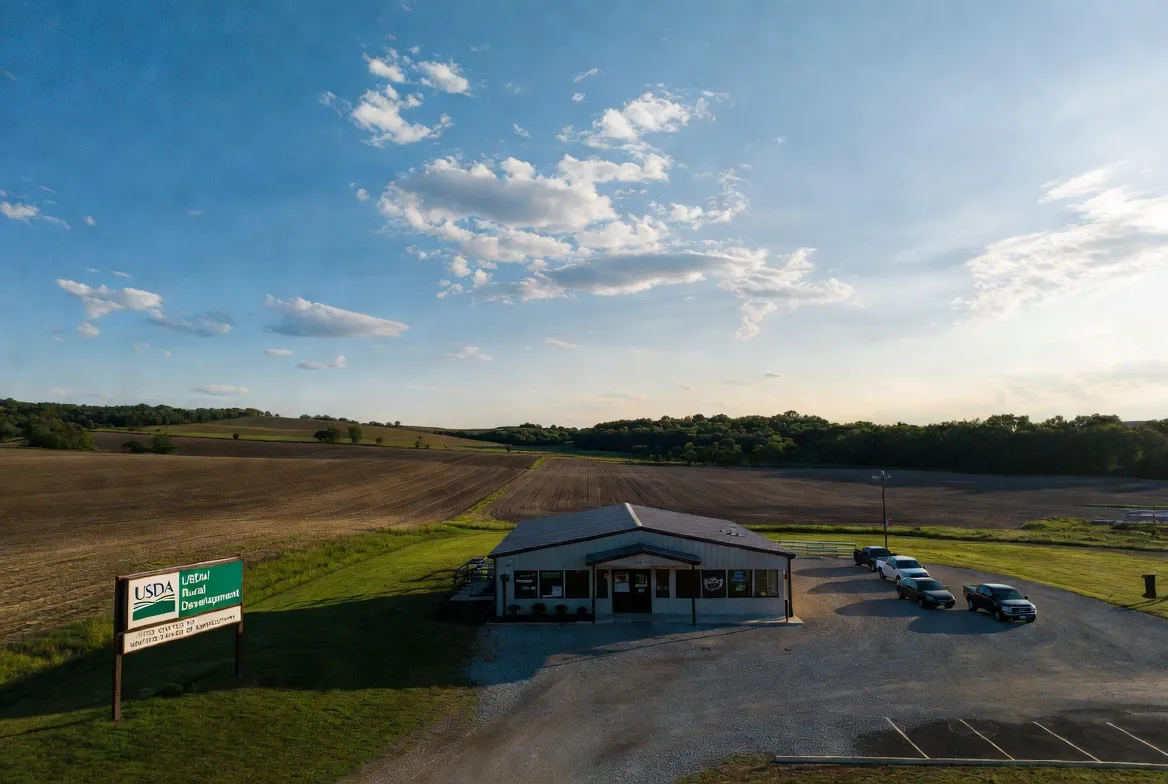
- Commercial Real Estate Purchase or Refinance — Acquire or stabilize office/retail/warehouse properties.
- New Construction or Renovation — Build or upgrade facilities with draw schedules and contingency allowances.
- Business Acquisition or Expansion — Fund equipment, working capital, or leasehold improvements.
- Debt Refinance — Consolidate higher-rate debt while improving terms (if it supports job retention).
- Mixed-Use Projects — Combine commercial space with limited residential when tied to business operations.
Edge cases: Loans can help seasonal businesses, agricultural processors, or tourism-related properties if they demonstrate rural economic impact. Always confirm with an experienced lender early.
Pros and Cons: Balanced View for Decision-Making
Advantages:
- Government backing improves approval odds.
- Extended terms enhance cash-on-cash returns.
- Flexible use of proceeds.
- Ideal where banks say “no” due to location or credit nuances.
- Potential for job-creation incentives in certain regions.
Challenges:
- Location restriction limits urban/suburban core applicability.
- Documentation-heavy process (3 years tax returns, business plans, appraisals).
- Processing time: 45–90 days typical.
- Minimum credit and equity standards still apply.
- Guarantee fees add to upfront costs.
Compared to SBA 7(a) loans, USDA B&I offers rural-specific advantages and often longer real estate terms. Versus conventional financing, it provides better LTV and flexibility but slower closings.
How to Apply Successfully: Step-by-Step
- Verify Location — Use the USDA eligibility tool.
- Assess Financials — Gather tax returns, financial statements, business plan, and projections.
- Choose the Right Partner — Work with lenders experienced in USDA B&I (many banks participate, but specialists close faster).
- Pre-Qualify — Submit preliminary info for feedback on structure and rates.
- Full Submission — Complete underwriting with appraisal and environmental reviews.
- Close — Expect 45–60 days with a prepared file.
Pro Tips: Order appraisals early, build conservative projections, and highlight job impacts. Strong equity and experienced operators often overcome marginal credit.
Common Pitfalls to Avoid
- Assuming all rural areas qualify (check the map).
- Underestimating documentation or timeline.
- Overlooking guarantee fees in pro formas.
- Using optimistic assumptions that fail stress tests.
- Choosing the wrong lender—experience with USDA shortcuts the process dramatically.
Your Next Step: Explore USDA Options with Confidence
USDA Commercial Loans represent a proven pathway to scale businesses and acquire income-producing properties in growing rural and suburban markets. With thoughtful planning, they deliver sustainable financing that aligns with long-term wealth building rather than short-term flips.
For a complete, up-to-date breakdown of rates, requirements, documentation checklists, and real borrower examples, dive into this authoritative resource: USDA Commercial Loan Guide 2026: Rates, Eligibility & Requirements
Whether you're a business owner, investor, or broker placing deals, understanding this program can unlock capital others miss. Start by confirming your project's eligibility today—your next facility, expansion, or acquisition may qualify for terms that truly move the needle.
Bottom Line: In 2026, success belongs to those who access every available tool. USDA B&I financing isn't just government-backed debt—it's a strategic advantage for building lasting value in America's heartland.























Sign in to leave a comment.