

The rapid rise of artificial intelligence (AI) has sparked remarkable advancements across industries, from healthcare to finance. But behind every intelligent system, there’s a foundational process that enables AI to understand and make decisions: data annotation.
This process involves labeling raw data such as text, images, and audio to help machine learning models interpret and learn patterns. In this article, we will explore the critical role of data annotation, the different types, and its benefits to businesses and industries alike.
As AI continues to evolve, the demand for data annotation will only increase. By the end of this article, you'll have a deeper understanding of how this process shapes AI and why it's essential for building robust, effective, and intelligent systems.
What is Data Annotation?
Data annotation is the process of labeling data to add meaning to it, enabling AI models to interpret and act on that data. Simply put, data annotation involves tagging raw information with contextual labels that machine learning models can use to learn and make decisions. This is essential for training AI systems, which rely on high-quality labeled data to develop accurate and efficient algorithms.
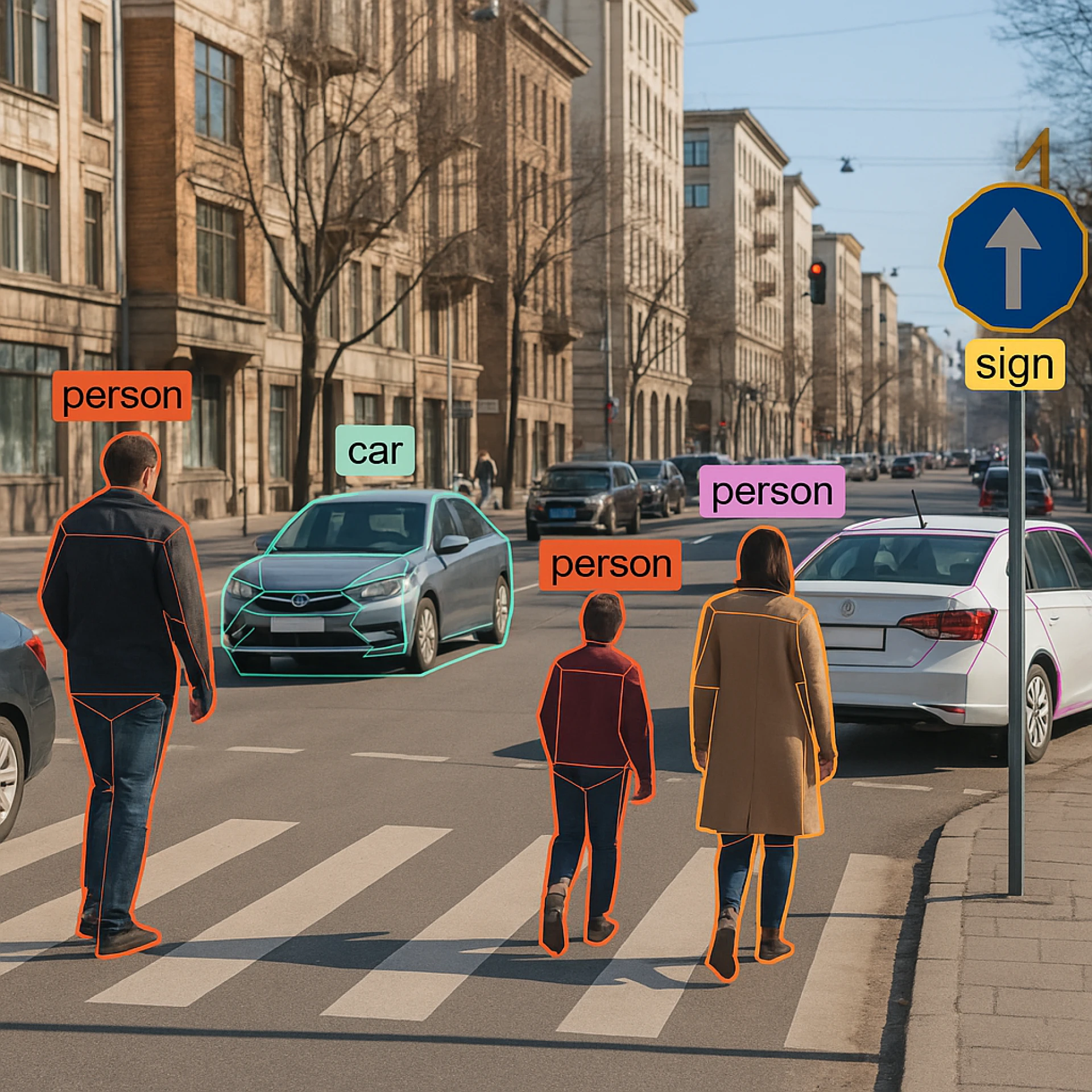
For example, in the context of self-driving cars, data annotation is used to label images and videos with elements like traffic signs, pedestrians, and lanes. The car's AI system can then learn to identify and respond to these elements, ensuring safe navigation on the roads.
The Key Types of Data Annotation
Different types of data require different kinds of data annotation to help AI models understand their content. Let's look at the most common types:
1. Image Annotation (Computer Vision)
In computer vision (CV), data annotation refers to labeling images or videos. This can involve labeling objects, people, or scenes to enable AI to identify these elements in real-world applications like surveillance, security, and autonomous vehicles.
- Object Detection: Identifying specific objects in an image (e.g., cars, people).
- Image Segmentation: Dividing an image into regions and assigning labels to each segment.
- Face Recognition: Annotating facial features for identification and security purposes.
2. Text Annotation (Natural Language Processing)
Data annotation is also critical in natural language processing (NLP), where the focus is on labeling text data. This could involve classifying sentiment, identifying key phrases, or categorizing documents.
- Sentiment Analysis: Tagging text as positive, negative, or neutral based on the emotions expressed.
- Named Entity Recognition (NER): Labeling entities like names, dates, or locations.
- Text Classification: Categorizing text into predefined groups, such as spam vs. non-spam.
3. Audio Annotation
Data annotation in the audio domain involves labeling sound clips for voice recognition or emotion detection. It's crucial for applications like voice assistants or sentiment analysis in customer service interactions.
- Speech-to-Text: Converting spoken language into written form.
- Emotion Detection: Identifying emotions based on voice tone.
- Sound Classification: Tagging specific sounds, such as sirens or alarms, for various industries.
How Data Annotation Powers AI Models
Data annotation provides the foundation for AI systems to perform accurate tasks. The more high-quality annotated data that AI systems have access to, the better they perform. Here’s how it powers AI:
1. Enabling Machine Learning
Machine learning algorithms depend on data to make decisions and predictions. The quality of the data directly influences the performance of AI models. Data annotation ensures that the data is not just raw but is labeled in a way that allows models to learn patterns and improve over time.
For example, a machine learning model trained on annotated images of fruits will learn to differentiate between apples, bananas, and oranges. As a result, the AI can then recognize these fruits in new, unannotated images with high accuracy.
2. Improving Accuracy
AI models are only as good as the data they are trained on. If the data annotation is inconsistent or inaccurate, the AI’s predictions will be unreliable. Proper annotation ensures that the model learns the correct information, improving its ability to make precise decisions.
3. Streamlining Processes
Data annotation simplifies the data processing pipeline. Annotating data provides a clear structure, making it easier for businesses to use data in AI training and deployment. Efficient data annotation tools speed up the process, enabling businesses to leverage AI quicker.
Data Annotation’s Role Across Industries
The applications of data annotation span multiple industries, demonstrating its versatility and importance in AI development. Here’s how it’s transforming various sectors:
1. Healthcare
In healthcare, data annotation is essential for developing AI models that can assist in diagnostics, such as detecting tumors or identifying diseases from medical imaging. Annotated medical images help train AI systems to recognize patterns in X-rays, MRIs, and CT scans, making it possible for doctors to diagnose diseases more accurately and quickly.
2. Retail
E-commerce businesses use data annotation to improve product recommendations and personalize the shopping experience. Annotating product images with key attributes (like color, size, and brand) allows AI systems to provide better search results and recommendations, improving the customer experience.
3. Automotive
The automotive industry heavily relies on data annotation for autonomous vehicle development. By annotating images from cameras installed on cars, companies can teach AI systems to recognize road signs, pedestrians, and obstacles, enabling the vehicle to navigate autonomously.
Why Data Annotation is Crucial for AI Development
Accurate and high-quality data annotation is crucial for the success of AI models. Here’s why:
1. Increased Efficiency
Properly annotated data ensures that AI systems can process information quickly and effectively. It reduces the need for constant model retraining and fine-tuning, saving time and resources for businesses.
2. Faster AI Deployment
With well-annotated data, AI systems can be trained faster, leading to quicker deployment. Businesses can bring their AI-powered products and services to market sooner, gaining a competitive advantage.
3. Scalable AI Solutions
High-quality data annotation allows AI systems to scale efficiently. As the data volume grows, AI models can continue to learn and improve without compromising performance. This scalability is crucial for businesses aiming to expand their AI capabilities.
Tools Used for Data Annotation
Several tools help businesses streamline their data annotation process. These tools offer features that make annotation more accurate and efficient. Let’s explore some popular options:
1. Labelbox
Labelbox is a cloud-based platform that provides advanced annotation tools for images, videos, and text. It offers features like AI-assisted labeling, making the process faster and more accurate.
2. CVAT (Computer Vision Annotation Tool)
CVAT is an open-source, web-based platform designed specifically for computer vision tasks. It supports various annotation types, including bounding boxes, segmentation, and key point labeling.
3. Prodigy
Prodigy is a powerful tool for text, image, and audio annotation. It focuses on active learning, enabling AI models to request annotations for uncertain data points, making the annotation process more efficient.
Ensuring Consistency and Accuracy in Data Annotation
The accuracy and consistency of annotated data directly impact the performance of AI models. To ensure high-quality annotations, businesses can implement the following strategies:
1. Inter-Annotator Agreement
Inter-annotator agreement (IAA) is a measure of how consistently multiple annotators label the same data. By tracking IAA, businesses can ensure that their annotations are consistent, reducing errors and biases.
2. Quality Control Measures
A robust quality control process ensures that any inconsistencies in the data are caught and corrected before they affect the AI model. This can involve reviewing data labels manually or using automated tools to identify discrepancies.
The Future of Data Annotation
As AI continues to evolve, the need for data annotation will only grow. With advancements in AI technology, new annotation techniques will emerge, especially in areas like 3D data labeling and augmented reality (AR). The demand for annotated data will increase across industries like healthcare, finance, and robotics, making data annotation a critical component in shaping the future of AI.
Conclusion: The Power of Data Annotation in AI Development
In conclusion, data annotation is the backbone of AI and machine learning. It turns raw data into valuable labeled information that enables AI models to learn and make decisions. Whether it's enhancing self-driving cars, improving healthcare diagnostics, or personalizing e-commerce experiences, data annotation plays a crucial role in creating intelligent systems that drive innovation and growth.
As businesses continue to adopt AI and machine learning, investing in high-quality data annotation will be key to their success. By using the right tools and strategies, businesses can ensure that their AI models are accurate, reliable, and capable of providing real-world value.






























Sign in to leave a comment.