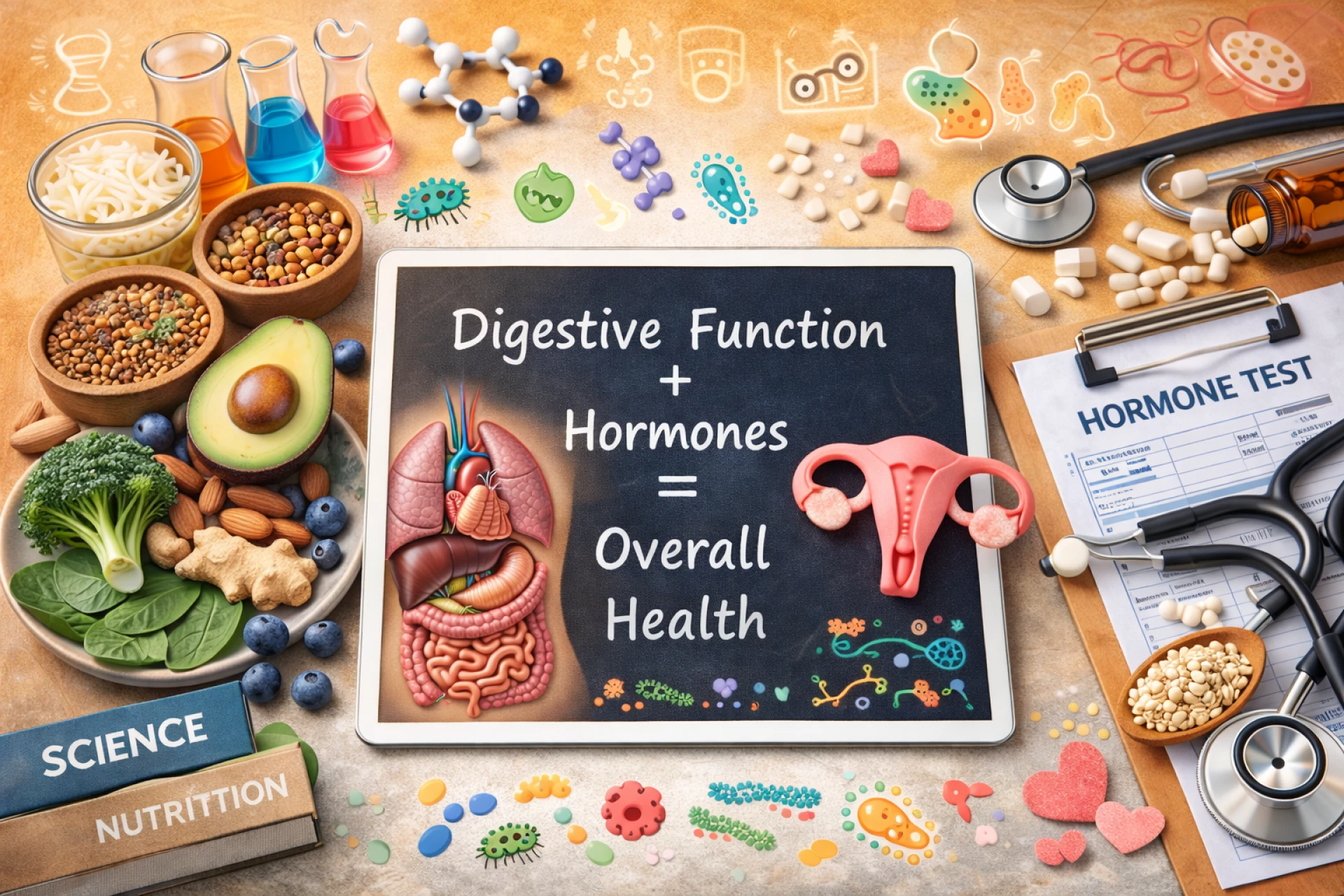

Digestive health is a foundational part of overall wellbeing, yet it is often misunderstood or oversimplified. Many people experience digestive symptoms such as bloating, discomfort, irregular bowel movements, or changes in appetite without fully understanding why these symptoms occur. At the same time, hormonal changes throughout life can significantly influence how the digestive system behaves. Looking at digestion through both a gastrointestinal and hormonal lens provides valuable nutrition science insights into why symptoms can fluctuate and how digestive health can be supported over time.
The digestive system does not operate in isolation. It is closely connected to the nervous system, immune system, and endocrine system. This means that digestion is influenced not only by what we eat, but also by stress levels, sleep quality, physical activity, and hormonal changes. Understanding this interconnectedness is essential when exploring gastrointestinal health and its impact on daily life.
Understanding gastrointestinal health
Gastrointestinal health refers to the effective functioning of the entire digestive tract, from the mouth through to the intestines. This includes digestion of food, absorption of nutrients, and elimination of waste. When gastrointestinal health is well supported, digestion tends to feel comfortable and predictable. When it is disrupted, symptoms can emerge that affect both physical comfort and quality of life.
The intestines play a particularly important role in gastrointestinal health. They are responsible for absorbing nutrients such as carbohydrates, proteins, fats, vitamins, and minerals. The intestinal lining also acts as a barrier, allowing nutrients into the bloodstream while keeping harmful substances out. Maintaining the integrity of this lining is a key focus of digestive health support.
Another crucial component of gastrointestinal health is the gut microbiota. This community of microorganisms assists with digestion, supports immune function, and interacts with metabolic and hormonal processes. Nutrition science insights increasingly highlight the role of the gut microbiota in overall health, including its influence on digestion and hormone regulation.
The digestive system and hormonal regulation
Hormones are chemical messengers that coordinate processes throughout the body, including digestion. Several hormones directly affect how the digestive system functions. For example, hormones regulate appetite, stomach emptying, intestinal movement, and the release of digestive enzymes.
The hormone digestion link is particularly evident in how gut motility changes across different hormonal states. Progesterone, for instance, can slow digestive movement, which may contribute to constipation in some individuals. Oestrogen can influence fluid balance and gut sensitivity, affecting bloating or abdominal discomfort.
Stress hormones such as cortisol also play a role in digestion. When stress levels are consistently high, cortisol can alter gut motility and increase gut sensitivity. This can make digestive symptoms more noticeable or persistent. Nutrition science insights recognise that managing stress is an important part of supporting gastrointestinal health.
Hormonal changes across life stages
Digestive symptoms often change across different stages of life, reflecting shifts in hormone levels. During adolescence, hormonal fluctuations may coincide with digestive sensitivity. In adulthood, work demands, stress, and lifestyle habits can interact with hormonal cycles to influence digestion.
Pregnancy introduces significant hormonal changes that can affect gastrointestinal health. Slower digestion, reflux, and constipation are common during this time. Nutritional needs also increase, requiring careful balance between comfort and adequate nutrient intake.
Menopause is another stage where the hormone digestion link becomes more noticeable. Changes in oestrogen levels can influence digestion, appetite, and body composition. Understanding these changes helps normalise digestive symptoms while highlighting the importance of tailored digestive health strategies.
The gut microbiota and hormones
The relationship between gut bacteria and hormones is an important area of nutrition science insights. Certain gut bacteria are involved in metabolising hormones, particularly oestrogen. This means that gastrointestinal health can influence how hormones are processed and eliminated from the body.
An imbalance in gut bacteria may affect this process, potentially contributing to symptoms such as bloating or changes in bowel habits. While research in this area is still developing, it reinforces the idea that digestive health and hormonal health are closely linked.
Supporting gut bacteria through nutrition is one way to support this relationship. Diets that include a variety of plant based foods provide fibres and compounds that nourish beneficial bacteria. This approach supports gastrointestinal health while also contributing to overall metabolic and hormonal balance.
Nutrition and digestive function
Nutrition plays a central role in digestive health. Regular meals help establish predictable digestive patterns and support stable blood sugar levels. Skipping meals or following highly restrictive eating patterns can place stress on the digestive system and disrupt hormonal regulation.
Balanced meals that include carbohydrates, proteins, and fats support digestion and satiety. Fibre intake is particularly important for gastrointestinal health, but tolerance varies between individuals. Gradual changes in fibre intake are often better tolerated than sudden increases.
Hydration supports digestion by helping maintain stool consistency and supporting metabolic processes. Gentle physical activity also contributes to digestive comfort by promoting gut motility and reducing stress.
Nutrition science insights emphasise that digestive health is not about perfection. Consistency and sustainability are more important than following rigid dietary rules. Supporting the digestive system over time requires flexibility and attention to individual needs.
Lifestyle factors affecting digestion
Lifestyle factors play a significant role in gastrointestinal health. Sleep quality influences appetite hormones and gut motility. Poor sleep can disrupt hunger and fullness cues, leading to irregular eating patterns that affect digestion.
Stress management is equally important. The gut and brain communicate constantly, meaning emotional stress can directly affect digestive function. Chronic stress may exacerbate digestive symptoms, even when dietary habits remain unchanged.
Establishing routines can provide digestive stability. Eating meals at similar times each day helps regulate gut motility and supports digestive comfort. These routines are particularly helpful for individuals experiencing ongoing digestive sensitivity.
Interpreting digestive symptoms
Digestive symptoms are often multifactorial, meaning they do not have a single cause. Gastrointestinal health can be influenced by food choices, meal timing, stress, sleep, physical activity, and hormonal changes. Viewing symptoms through this broader lens can reduce frustration and support more effective management.
The hormone digestion link helps explain why symptoms may fluctuate over time rather than remaining constant. For example, digestive discomfort may worsen during periods of high stress or hormonal change, even if diet remains the same.
Nutrition science insights encourage a personalised approach to digestive health. Understanding individual triggers and patterns allows for more targeted strategies that support both digestive comfort and nutritional adequacy.
A holistic view of digestive wellbeing
Digestive health is deeply connected to overall wellbeing. Gastrointestinal health influences energy levels, immune function, and even mood through the gut brain connection. Addressing digestive symptoms therefore has benefits that extend beyond the digestive tract.
A holistic approach considers nutrition, lifestyle, stress, sleep, and hormonal influences together. This perspective recognises that digestive health is dynamic and may change across different life stages or circumstances.
Education is a key part of digestive health support. Understanding how the digestive system works and how hormones influence digestion empowers individuals to make informed decisions and respond to changes with confidence.
Supporting long term gastrointestinal health
Long term gastrointestinal health is built through sustainable habits rather than quick fixes. Supporting digestion over time involves regular meals, balanced nutrition, adequate hydration, stress management, and flexibility.
Nutrition science insights continue to expand understanding of the complex relationship between digestion and hormones. Recognising the hormone digestion link helps explain why digestive symptoms are common and why they may change over time.
By viewing digestive health through a comprehensive, evidence informed lens, individuals can better support their gastrointestinal health and overall wellbeing in a way that is adaptable, realistic, and sustainable.

Sign in to leave a comment.