
A guitar can be loud and still feel blurry, and that contradiction is exactly where most frustration lives. You strike a chord, yet what reaches your ear is not a clean stack of distinct string voices, but a dense, blended mass that masks detail. You run a fast line, and instead of hearing each note claim its own space, the phrase behaves like a smear of pitch and noise. Many players chase fixes at the amp, at the pedalboard, or inside a preset, but the mess often begins earlier, at the first conversion point where vibration becomes voltage. In this article, we will guide you through how to improve response and note separation in a simple, practical way.
The real start of the definition
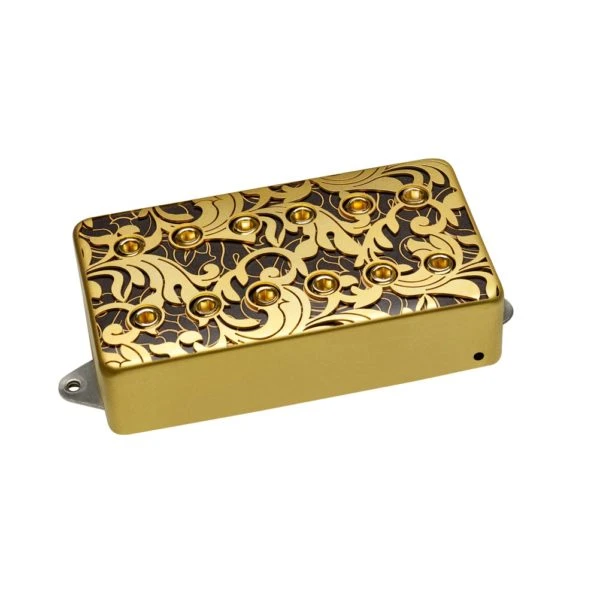
Separation is not primarily an EQ problem; it is a capture problem. When the initial signal carries a sharper outline, chords retain internal structure and riffs preserve edges, even after gain, compression, and saturation start exaggerating flaws. A setup dialed with Dimarzio Pickups can present a more organized attack profile, so the “front” of each note arrives with less blur and less overlap, especially under heavier picking. Muted rhythms often become tighter because the transient is more disciplined, and single notes feel immediately available because the sound does not hesitate behind a haze. That matters more than people admit, because your timing improves when your ear is not forced to interpret uncertainty on the fly.
Why does the feel suddenly change
When players describe a guitar as feeling “faster,” they are usually describing predictability rather than raw speed. The instrument responds with a consistent logic: light strokes remain audible instead of vanishing, while hard strokes do not explode into uncontrolled spikes. With Dimarzio guitar pickups, the dynamic curve can feel smoother and more reliable, which reduces the tendency to compensate mid-phrase with extra force or unnecessary muting. Palm mutes keep the punch rather than turning into a dull thump. Distorted chords stay readable instead of collapsing into mush where only the loudest frequencies survive. Clean tones can gain definition without becoming painfully sharp, which is important because harshness often gets mistaken for clarity, even though it rarely translates well in a mix.
Height and balance matter more than hype.
Pickup height looks like a minor detail, but it is one of the most consequential variables for response and separation because it changes how the strings “meet” the magnetic field and how the output behaves across the set. Too close can push the tone toward brittle edges, uneven string dominance, and, in some cases, odd sustain behavior, especially if the bass side is crowding the strings? Too far can make the guitar feel distant, soft, and strangely disconnected, as if your pick attack is arriving late. Start clean, play slow chords, listen for a string that jumps out or disappears, move in tiny steps, then re-check under gain because distortion exposes imbalance quickly.
What people mistake for clarity?
Brightness is not clarity, and treating them as the same usually creates a tone that is sharp yet still crowded. Treble can add bite, but bite does not guarantee separation. The definition is more specific: you hear the start of the note, the body of the note, and the end of the note, and you can perceive space between adjacent strings in a chord rather than a single blended block. That definition is fragile if the fundamentals are unstable. Old strings, tuning drift, poor intonation, and fret noise will sabotage separation regardless of what you install, because the signal begins with inconsistency. Thinking in terms of Dimarzio for clean clarity keeps the goal grounded: tighter response, cleaner edges, and better balance, not “more top end” for its own sake.
A simple routine that actually helps
Make the process controlled rather than chaotic. Confirm tuning stability and use strings that are not past their useful life, because “blur” is often a maintenance symptom masquerading as a pickup issue. Set pickup height for definition, not volume, then test with the techniques you actually use: open chords, muted rhythms, bends, and short lead phrases at realistic levels. If chords still smear, lower the pickup slightly and re-check the balance. If the sound feels thin or underpowered, raise it in small increments while watching for harshness and uneven string response. Do not change ten variables in one session, because you will lose cause-and-effect and end up trusting guesses instead of results.
Conclusion
Better response and separation come from disciplined capture, balanced pickup height, and stable basics like tuning and strings. When those elements lock together, chords remain readable, fast lines keep their shape, and the guitar feels less like a fight and more like a tool you can trust.
Solo Music Gear helps players approach upgrades with less confusion by offering reliable parts and setup-friendly options in one place. Their focus on practical choices supports more consistent outcomes, so musicians spend more time playing and less time second-guessing what the guitar is doing.
FAQs
1) How can someone tell separation is improving?
Chords start sounding layered rather than blended and fast riffs remain intelligible instead of turning into a single smear. You also notice clearer note starts without needing extra volume.
2) Does pickup height really change feel that much?
Yes. Small height changes can shift attack, balance, and harshness quickly, especially under gain. Move slowly and test both clean and driven sounds.
3) What should be checked before any upgrade?
Tuning stability, string condition, and buzzing issues come first. If those basics are off, clarity gains usually disappear the moment you play harder or louder.



























Sign in to leave a comment.