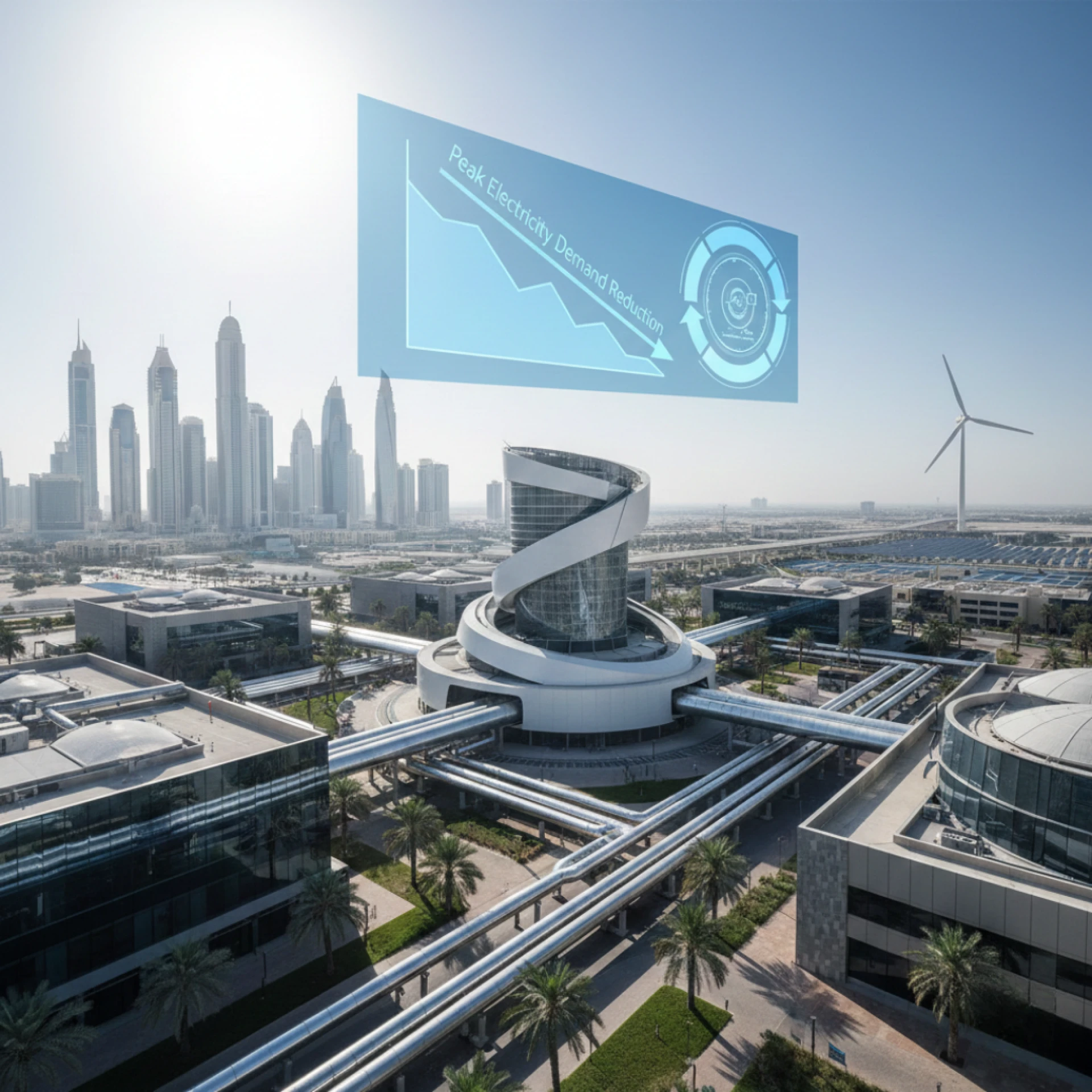

Smarter Cooling for a Hot Climate
Dubai’s long, hot summers mean air conditioning runs almost all year. This creates massive electricity demand, especially during peak afternoon hours. That’s where energy-efficient cooling systems like district cooling make a real difference. Instead of every building running its own chillers, district cooling supplies chilled water from a central plant to multiple buildings, helping you reduce strain on the power grid while keeping indoor spaces comfortable.
What Is District Cooling?
District cooling is a centralized system that produces chilled water in large plants and distributes it through insulated underground pipes to residential, commercial, and mixed-use developments. Inside each building, the chilled water passes through heat exchangers to cool indoor air. After absorbing heat, the water returns to the plant to be cooled again.
This shared approach is more efficient than having hundreds of separate cooling units operating at the same time across a neighborhood.
Lower Peak Electricity Demand
One of the biggest benefits of district cooling is its impact on peak electricity demand. Traditional air-conditioning systems in individual buildings often run hardest during the hottest parts of the day, when electricity use across the city is already high. This puts pressure on power plants and infrastructure.
District cooling plants, however, operate at a larger scale and higher efficiency. They can use advanced chillers, thermal energy storage, and optimized load management. For example, chilled water can be produced at night when electricity demand is lower and stored for use during the day. This reduces the need for extra power generation during peak hours and helps stabilize the grid.
Higher Efficiency at Scale
Large centralized plants use industrial-grade equipment that performs more efficiently than small, standalone systems. You benefit from better energy performance because these systems are designed to run at optimal load conditions. Central plants also use advanced monitoring and controls to adjust output based on real-time demand, reducing wasted energy.
By sharing cooling across many buildings, you avoid duplication of equipment and improve overall system efficiency.
Reduced Heat and Equipment in Buildings
When buildings rely on district cooling, they don’t need large chillers, cooling towers, or extensive mechanical rooms on-site. This reduces internal heat generation and lowers electricity use within the building itself. You also gain more usable space that would otherwise be taken up by cooling equipment.
Less rooftop machinery also means lower maintenance needs and longer equipment life.
Supporting a Sustainable Energy Future
Dubai continues to focus on sustainability and smarter infrastructure. District cooling supports these goals by cutting electricity consumption, reducing carbon emissions, and improving urban energy planning. It works especially well in high-density developments where many buildings have similar cooling needs.
Understanding why district cooling is expanding across Dubai helps you see how cities can stay comfortable while managing energy demand more responsibly. It’s a practical solution that keeps you cool without overloading the power grid.


Sign in to leave a comment.