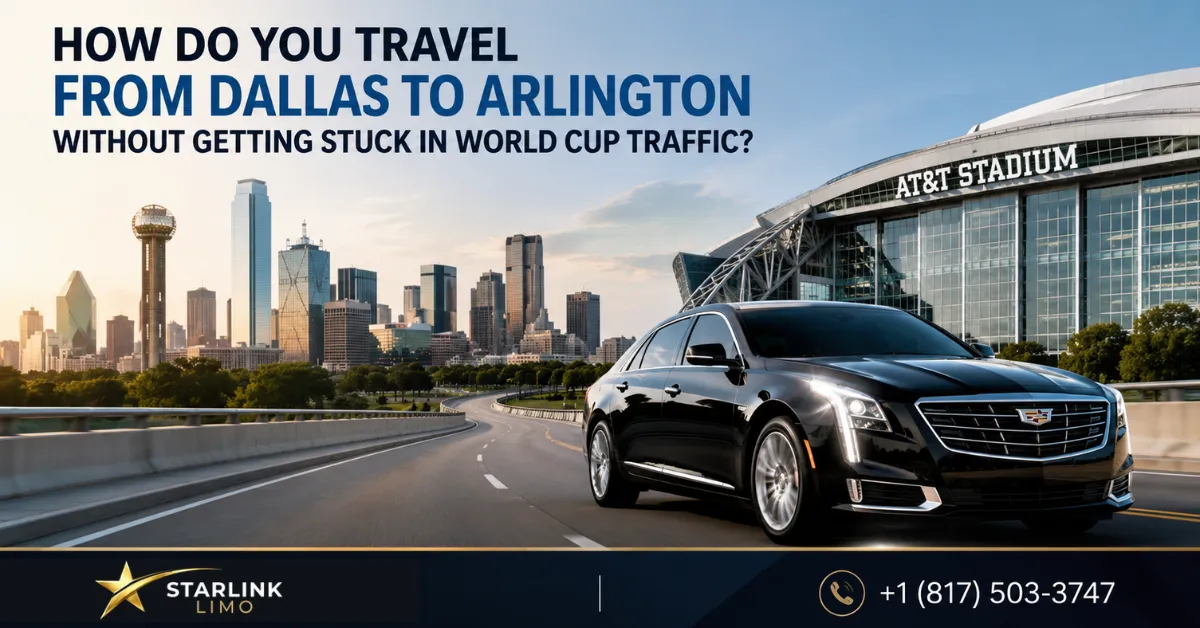

The 2026 World Cup is bringing nine historic matches to North Texas, including a highly anticipated semifinal. While the host city is officially labeled "Dallas," the tournament venue is actually AT&T Stadium (rebranded as Dallas Stadium for the tournament) located in Arlington, Texas.
For international tourists and out-of-state fans, this geographic distinction creates a massive logistical challenge. Arlington sits roughly 20 miles west of Downtown Dallas. Navigating this corridor on match days requires a precise transit strategy. Without a clear plan, you risk sitting in highway gridlock or walking miles in extreme summer heat.
This detailed guide breaks down the transit realities between Dallas and Arlington, explains why traditional navigation fails under mass stadium volumes, and outlines the fastest routes to ensure you do not miss kickoff by using reliable private chauffeur service.
Is There a Fast Way to Get From Dallas to AT&T Stadium on Match Day?
The short answer is yes—but only if you avoid traditional transport options.
Many international fans assume they can board a rapid transit metro line or passenger train from their hotels in Downtown Dallas directly to the stadium gates. However, Arlington holds a challenging title: with a population of approximately 400,000 residents, it is the largest city in the United States without a public mass transit system.
There is no direct rail connection, subway line, or scheduled public bus route operating between Downtown Dallas and AT&T Stadium.
The Standard Transit Options Breakdown
On match days, the lack of municipal transit forces the projected 90,000+ daily fans onto a highly congested road network. The table below compares the standard transport methods fans plan to use:
| Transport Method | Expected Travel Time (Match Day) | Key Pain Points & Logistical Bottlenecks |
|---|---|---|
| Self-Driving (Rental Car) | 90+ Minutes | High parking fees ($150+), extreme highway gridlock on Interstate 30, and confusing local road closures. |
| Rideshare Apps (Uber/Lyft) | 75 to 120+ Minutes | Severe surge pricing (often exceeding $200), massive cellular network delays, and a designated pickup zone (Lot 15) located far from stadium gates. |
| Trinity Railway Express (TRE) | 100+ Minutes | Requires taking the train from Dallas to CentrePort Station, then waiting for a connection on crowded event shuttle buses. |
| Private Chauffeur Service | 35 Minutes | Uses pre-arranged, verified routes, premium vehicle cooling, and utilizes direct, VIP-cleared stadium drop-off zones. |
When tens of thousands of vehicles converge on Arlington's entertainment district, standard lanes stall completely.
- Buses get stuck: Charter buses and public shuttles must use the same general-purpose lanes as commuter traffic on Interstate 30 and Highway 360.
- Uber rates skyrocket: High demand triggers immediate surge pricing multipliers, turning a standard $30 ride into an unpredictable expense.
- Gridlock takes over: Commuters, local transit, and lost drivers create gridlock on critical exit ramps, including Ballpark Way and Collins Street.
To arrive safely and on time, you must utilize a transport solution that leverages local routing expertise, bypasses general parking lanes, and maximizes passenger comfort.
Why Do Standard GPS Apps Fail When Ninety Thousand Fans Arrive?
Modern travelers rely heavily on mobile navigation apps like Google Maps, Apple Maps, or Waze. Under normal conditions, these apps calculate efficient routes using real-time GPS data. However, during a major stadium event like a World Cup semifinal, the digital infrastructure supporting these apps experiences severe stress.
Cellular Network Congestion
When 90,000 fans pack into the stadium area, they carry active mobile devices. Local cellular towers become completely overwhelmed by the concentrated demand for data, leading to a localized digital blackout.
When your phone loses high-speed data connectivity:
- Real-time traffic updates stop updating.
- GPS routing software fails to recalculate around sudden bottlenecks.
- Rideshare apps lag, preventing you from locating your assigned driver or updating your pickup pin.
Sudden and Unannounced Road Closures
Local police and stadium security operate a dynamic traffic control plan. Key arteries surrounding AT&T Stadium—including Randol Mill Road, Cowboys Way, and portions of North Collins Street—frequently convert to one-way streets, emergency-only lanes, or complete pedestrian zones.
Standard consumer GPS algorithms cannot react instantly to these physical street barricades. An app may instruct you to turn onto a street that has been barricaded by law enforcement, forcing you into a frustrating cycle of U-turns and missed exits.
The Chauffeur Advantage: Pre-Planned Physical Routing
Rather than relying on real-time cellular data, professional local chauffeurs navigate using deep, physical knowledge of the Arlington road network.
- They utilize vetted alternative arterials (such as Division Street, Abram Street, or Mayfield Road) to bypass the heavily congested I-30 exits.
- They monitor police-mandated traffic patterns through direct coordination with local transit authorities, ensuring they never enter a blocked or restricted zone.
- They maintain constant communication with dispatch offices using dedicated radio channels that bypass standard commercial cellular networks.
How Does a Professional Chauffeur Bypass the Highway Gridlock?
A professional chauffeur service does not just offer a premium vehicle; it provides a highly coordinated, tactical transit solution designed to handle high-volume crowds.
Direct Routing and Perimeter Access
Under the official AT&T Stadium parking and transit guidelines, local authorities establish dedicated access points for permitted commercial vehicles. While self-drive vehicles and rideshares are funneled into distant, high-congestion lots (like Lot 15), licensed limousines and executive black cars have specialized access.
Chauffeurs utilize dedicated drop-off zones located in closer proximity to the main entrance gates, such as Lot 1 and Lot 6. This authorization allows passengers to bypass the standard parking loops, saving up to 45 minutes of idling time on local access roads.
The Real Cost of Walking: Footstep and Heat Calculations
To understand the true value of a professional drop-off, consider the physical toll of walking from a standard rideshare or general public parking lot during a Texas summer.
In June and July, afternoon temperatures in Arlington consistently exceed 100°F (38°C), with high humidity pushing the heat index even higher. The asphalt in stadium parking lots can act as a radiator, reaching surface temperatures of 140°F (60°C).
- Rideshare Drop-Off (Lot 15): Requires an average walk of 3,200 steps (approximately 1.5 miles) to reach the main stadium security gates. Walking this distance on hot asphalt in high humidity can quickly cause dehydration and heat exhaustion.
- Distant Public Parking Lots: Often require a walk of 2,400 steps (over 1.1 miles) through unshaded, high-traffic pedestrian paths which can be more challanging for families and kids.
- VIP Chauffeur Drop-Off (Lot 1 or Lot 6): Reduces your walk to less than 400 steps, allowing you to enter the security screening area quickly and comfortably.
By choosing a professional chauffeur, you minimize physical fatigue, bypass the harsh "Oven Effect" of the parking lots, and step directly from a climate-controlled cabin into the stadium gates.
If you want to ensure a stress-free, reliable, and premium transit experience, you can secure your match-day travel with our expert Arlington stadium chauffeurs.
Frequently Asked Questions (FAQs)
1. Is there a train from Downtown Dallas directly to AT&T Stadium?
No, there is no direct rail service connecting Downtown Dallas to the stadium. The closest rail option is the Trinity Railway Express (TRE), which stops at CentrePort Station, roughly 10 miles north of the stadium. From there, fans must transition to event shuttle buses or local rideshares, which face the same highway traffic.
2. What is the designated rideshare drop-off and pickup location at AT&T Stadium?
For major events, rideshare services (like Uber and Lyft) are restricted to designated drop-off and pickup zones, typically located in Lot 15 or near the Esports Stadium Arlington area. This requires a walk of approximately 1 to 1.5 miles to and from the stadium gates. Additionally, finding your driver post-game can be difficult due to heavy traffic and cellular network lag.
3. How early should I leave Dallas for an afternoon World Cup match in Arlington?
On normal days, the drive from Downtown Dallas to Arlington takes roughly 25 to 30 minutes. On World Cup match days, you should plan for significant delays. It is highly recommended to leave at least 3 hours prior to kickoff if you are driving or using standard rideshare services, or 1.5 to 2 hours prior if you have secured a professional chauffeur with access to pre-cleared routes.
4. How hot does it get outside AT&T Stadium during the summer?
During June and July, daytime air temperatures in North Texas frequently soar past 100°F (38°C). Due to the heat-island effect of massive asphalt parking lots, the ground temperature can exceed 140°F (60°C), making long walks highly uncomfortable and physically demanding.























Sign in to leave a comment.