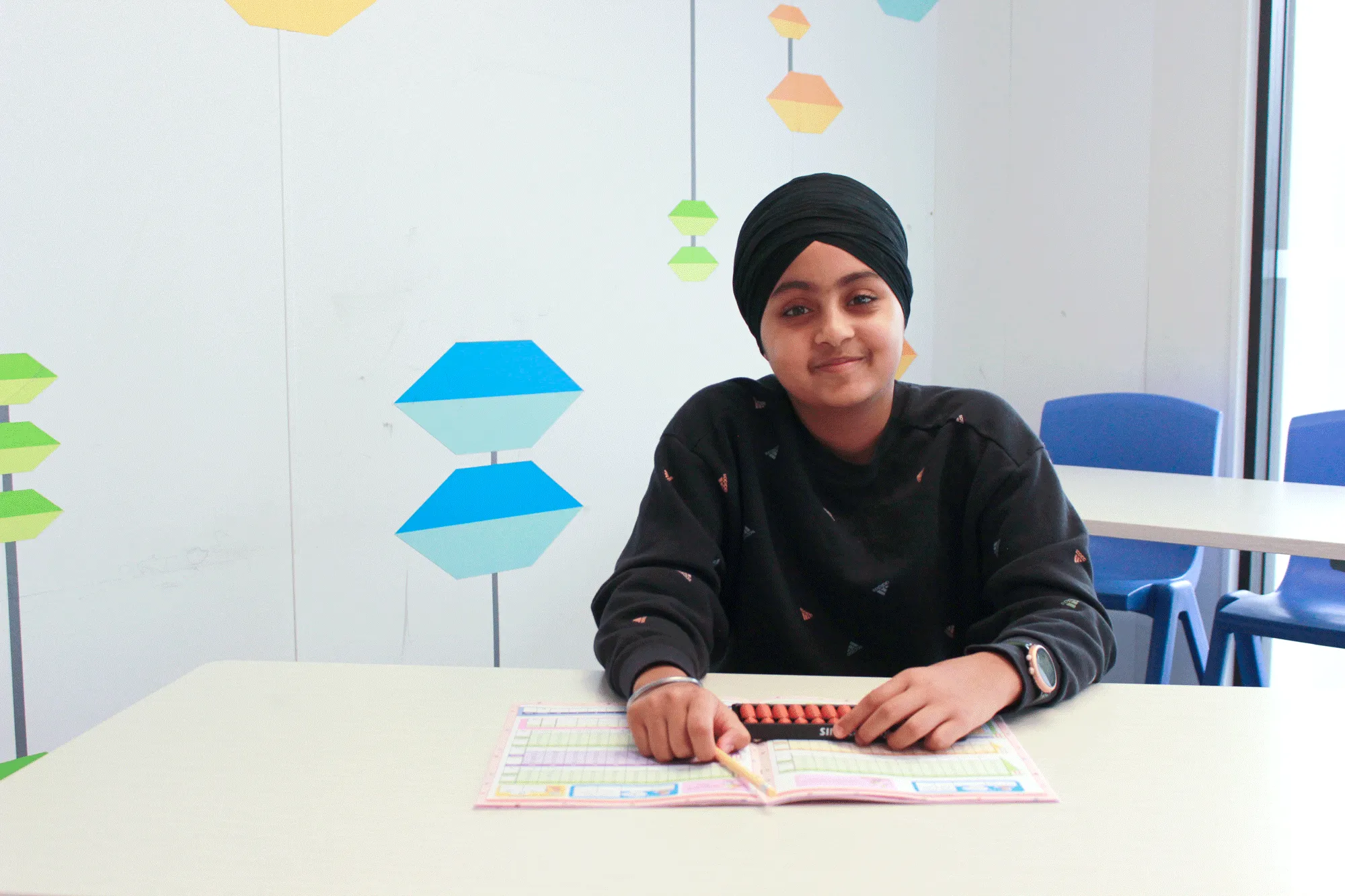

Strong mental maths is not about memorising endless answers; it is about understanding numbers so well that calculations become faster, clearer, and less stressful. Abacus training gives learners a practical way to see, touch, and eventually visualise numbers, which can make arithmetic feel more structured and manageable. If you are exploring how abacus improves mental maths, the key idea is simple: it turns abstract numbers into patterns the mind can recognise and use.
How does abacus training build mental maths skills?
Abacus training builds mental maths skills by connecting physical movement, visual memory, and number logic. At first, learners move beads to represent values, which helps them understand place value, addition, subtraction, multiplication, and division in a concrete way. Over time, they begin to picture the abacus in their mind and solve problems without needing the tool in front of them.
This shift from hands-on practice to mental visualisation is powerful. Instead of guessing or relying only on finger counting, students learn to “see” numbers as organised groups. That mental image gives them a step-by-step path through calculations, so they can work faster while still understanding what they are doing.
For many children, mental maths becomes easier when it feels like a process rather than a test. The abacus gives them that process. It shows where numbers belong, how values change, and why carrying or borrowing works.
The abacus turns numbers into visual patterns
Many learners struggle with arithmetic because numbers on a page can feel flat and disconnected. An abacus adds shape and movement to maths. Each bead has a value, each column represents a place, and every calculation becomes something the learner can physically build.
This is especially useful for place value. A child may know that 42 is “forty-two,” but the abacus helps them see that it is four tens and two ones. When numbers become visual, learners are less likely to treat maths as a set of random rules.
As practice continues, students begin to remember bead positions. A number is no longer just written digits; it becomes a picture. This supports mental maths because the brain can often process familiar visual patterns more quickly than repeated verbal instructions.
Useful skills developed through visual abacus practice include:
- Place value awareness: Students understand ones, tens, hundreds, and beyond more clearly.
- Number grouping: Learners recognise combinations that make 5, 10, 50, or 100.
- Sequential thinking: Calculations are completed in organised steps.
- Working memory: Students hold numbers and bead movements in mind while solving.
- Accuracy habits: Learners check whether each move matches the value they intend to create.
These skills do not only help with abacus work. They support school maths, homework, exams, and everyday problem-solving.
What math strategies do children learn through an abacus?
Children learn math strategies that help them break problems into manageable parts instead of trying to solve everything at once. Abacus training encourages learners to use number bonds, complements, place value, decomposition, and mental visualisation. These strategies make calculations feel less overwhelming and more logical.
For example, when adding numbers, a learner may not count one by one. Instead, they may use a “make ten” strategy or adjust a number using complements. This builds flexibility, which is one of the most important parts of strong mental maths.
Common abacus-based math strategies include:
- Making tens: Learners use combinations such as 6 and 4 or 7 and 3 to complete ten quickly.
- Using complements: Students learn how numbers relate to 5, 10, 50, or 100, which speeds up addition and subtraction.
- Breaking numbers apart: A calculation like 38 + 27 can be handled as tens and ones instead of one confusing block.
- Visualising movement: Students imagine bead positions and changes, supporting faster mental calculation.
- Checking with structure: Because the abacus follows clear place-value rules, learners can review their steps more easily.
These strategies help students move beyond memorised answers. They begin to understand why a method works, which makes it easier to apply the same thinking to new problems.
Practice builds speed without sacrificing understanding
Speed in maths is helpful, but speed without understanding can create mistakes and stress. A good abacus class usually starts slowly, giving students time to learn bead values, hand movements, and number relationships. Accuracy comes first; speed grows as the process becomes familiar.
This matters because many students feel pressure to answer quickly before they are ready. Abacus training can make speed feel like a result of practice rather than a demand. When learners repeat structured exercises, they gradually reduce hesitation.
The goal is not to turn every child into a calculator. The goal is to help them think more clearly with numbers. When students can picture the steps, they are more likely to stay calm during arithmetic tasks and less likely to lose track halfway through a problem.
Can an abacus class reduce math anxiety?
An abacus class can help reduce math anxiety by giving students a clear, repeatable method for approaching calculations. Math anxiety often grows when learners feel confused, rushed, or afraid of making mistakes. The abacus gives them something concrete to rely on, which can make maths feel less mysterious.
Confidence grows through small wins. A student who once struggled with basic addition may feel encouraged when they can solve problems by moving beads correctly. Later, when they can solve similar problems mentally, that confidence becomes even stronger.
Abacus learning can also change how children respond to mistakes. Instead of seeing a wrong answer as failure, they can trace the bead movement, find the step that went wrong, and correct it. This creates a more practical mindset: mistakes become part of learning, not proof that someone is “bad at maths.”
Parents and teachers can support this by praising effort, method, and improvement rather than only fast answers. A calm learning environment helps students associate maths with progress, not pressure.
What to expect from a good abacus learning routine
A strong routine blends instruction, repetition, mental practice, and review. Learners first need to understand the physical abacus, then practise enough for the movements to become natural. After that, mental visualisation becomes easier.
A balanced abacus routine may include:
- Short, regular practice: Consistency is more useful than occasional long sessions.
- Physical abacus work: Beginners need hands-on practice before moving fully into mental maths.
- Mental image exercises: Students gradually practise imagining the beads without touching the tool.
- Mixed operations: Addition and subtraction usually come first, followed by more advanced operations.
- Error review: Learners should understand where mistakes happen instead of simply moving to the next question.
- Encouraging feedback: Positive guidance keeps motivation high, especially for students with math anxiety.
Parents can help by keeping practice low-pressure. Ten focused minutes with full attention may be more helpful than a long session filled with frustration. The aim is steady growth.
Abacus training supports more than arithmetic
While the main focus is often mental maths, abacus training can support broader learning habits too. Students practise concentration, listening, memory, patience, and step-by-step thinking. These skills are useful in many subjects, not just mathematics.
Because the abacus requires attention to detail, students learn to slow down at the right moments. They must notice which column they are using, which beads are active, and how each movement changes the number. This careful attention can improve their overall approach to problem-solving.
It also helps learners become more independent. Once they know the method, they have a tool they can use to approach new calculations. That independence is one reason many families explore an abacus class as part of a child’s maths development.
Key takeaway
Abacus training improves mental maths by making numbers visible, structured, and easier to manipulate in the mind. It teaches practical math strategies, strengthens place value understanding, supports memory, and can help reduce math anxiety through clear, repeatable practice.
For learners who find arithmetic confusing or stressful, the abacus offers a bridge between hands-on understanding and confident mental calculation. With patience and regular practice, students can build speed, accuracy, and a healthier relationship with maths.
























Sign in to leave a comment.