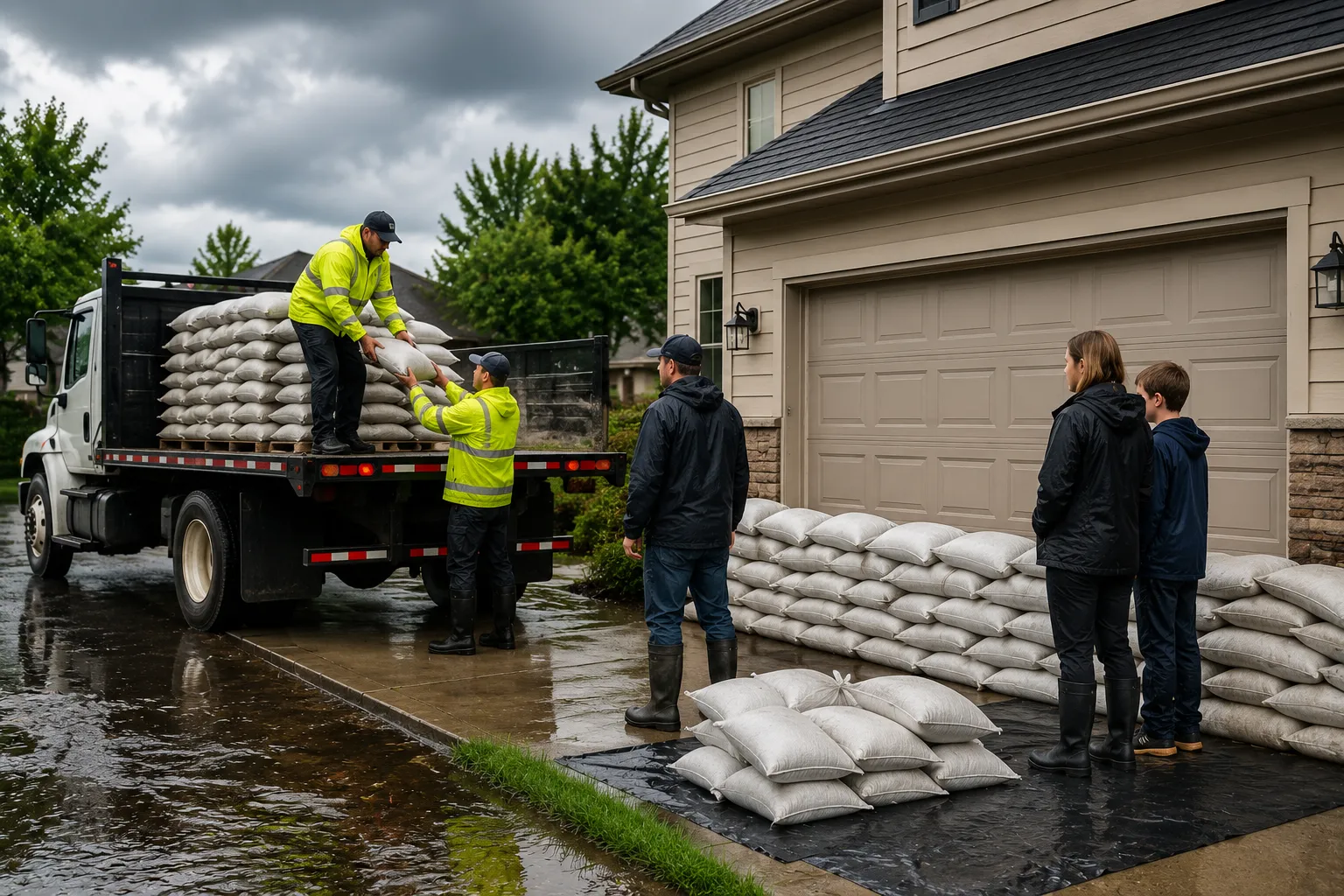

When Floodwater Rises, Every Minute Matters
A family wakes up to heavy rain and a phone alert about rising water nearby. The driveway is already wet, the street is filling, and there is little time to move outdoor items or protect low entry points. Then comes the question: How will the sandbags get here, and how fast can we use them?
For many families, property owners, and local businesses, emergency sandbag delivery is about getting the right supplies to the right place before conditions become worse. The process usually starts with identifying the need, confirming the delivery location, preparing the order, arranging transportation, and placing the bags where they can provide temporary support.
The key is planning early. Sandbags can help with temporary flood protection, but they are not a substitute for evacuation or official emergency instructions.
How Does Sandbags Delivery Work?
Sandbags delivery usually begins when a customer or emergency team identifies the quantity and type of bags needed. The supplier prepares the order, confirms the destination, schedules transportation, and sends the bags to the requested location. Once they arrive, the bags can be positioned as part of a temporary flood barrier or other emergency setup.
Why Is Emergency Sandbag Delivery Needed?
Flood emergencies rarely happen at a convenient time.
Heavy rain can arrive overnight. A storm system can change direction. A creek or drainage channel can rise faster than expected. In coastal areas, storm surge can create another layer of risk.
When water threatens homes, businesses, roads, or construction sites, people often need supplies without delay.
This is where Sandbags Delivery becomes part of an emergency response plan. The goal is not simply to move bags from one place to another. The goal is to get useful materials where they are needed while people still have time to work safely.
For a family, that may mean protecting a garage entrance or low doorway. For a business, it could mean placing temporary barriers near loading areas. For a local worksite, it may involve protecting equipment or managing water around a construction zone.
Still, timing matters.
FEMA guidance explains that sandbags may be used as temporary emergency flood protection, but they require planning and proper placement. In rapidly rising water, there may not be enough time to build an effective barrier.
That is why emergency preparation should begin before the water is already at the door.
What Happens When Someone Requests Sandbags During an Emergency?
The first step is usually determining what is actually needed.
The person requesting the bags may need to know:
- How many bags are required?
- Are the bags filled or unfilled?
- Where should they be delivered?
- Are they needed for a home, business, road, or worksite?
- How quickly are they needed?
- Is there enough space for a delivery vehicle?
These details help prevent confusion during a stressful situation.
A delivery location should be clear and accessible. If roads are already affected by flooding, transportation may become more difficult. Barricades, road closures, traffic restrictions, or emergency response activity can also change the safest route.
For this reason, early communication is valuable.
A clear delivery address, contact information, access instructions, and estimated quantity can help the process move more smoothly.
What Are the Biggest Problems Families Face During Emergency Delivery?
One of the biggest problems is waiting too long.
Families often focus first on the weather forecast. Then they notice water collecting near the property. By the time they start looking for supplies, demand may already be high.
Another problem is assuming that sandbags alone will stop every flood.
They are temporary tools. Their effectiveness depends on proper placement, the type of flooding, the amount of water, the condition of the bags, and how much time is available.
The solution is to think ahead.
If your area is known for flooding, learn your local risks before severe weather arrives. Keep important items above possible flood levels. Know evacuation routes. Pay attention to local emergency alerts.
The U.S. government’s Ready.gov flood safety and preparedness guidance recommends preparing a household plan, knowing evacuation routes, gathering emergency supplies, and following official instructions during flooding.
For families who want another layer of temporary protection, properly placed sandbags may help redirect or slow shallow water around selected areas.
Can Sandbags Be Delivered to Homes and Businesses?
Yes, depending on local road conditions and delivery availability.
Residential delivery may involve a home, driveway, garage, or another accessible location. Commercial delivery may involve a warehouse, construction site, public facility, or business property.
The important point is access.
A delivery vehicle needs a safe place to reach the destination. During a flood, normal access can change quickly. A road that was open in the morning may be closed later in the day.
This is one reason Sandbags Delivery should be arranged as early as possible when severe weather is expected.
For local communities, the process can also involve coordination between residents, businesses, emergency management teams, public works departments, and local responders.
The exact process varies by location. Some communities may operate public sandbag stations or emergency distribution points. Others may rely on private suppliers or local agencies.
Residents should always check local emergency announcements before traveling during a flood.
What Is the Simple Process for Emergency Sandbag Delivery?
The process can be broken into five simple steps.
Step 1: Identify the Need
Start by determining why the bags are needed.
Is the concern flooding, water diversion, erosion, construction, or another temporary protection need?
Then estimate the number of bags required.
The goal is to avoid ordering too few supplies while also avoiding unnecessary delays caused by unclear information.
Step 2: Confirm the Bag Type
Not every sandbag is used in exactly the same way.
Some projects need filled bags that can be placed immediately. Others need empty bags that can be filled locally.
Material, size, closure type, and expected outdoor exposure may also matter.
For example, some emergency or temporary projects may use white sandbags when a visible, practical barrier material is needed.
Step 3: Confirm the Delivery Location
Provide a complete delivery address.
Also explain:
- Where the vehicle should enter
- Where the bags should be unloaded
- Whether the property has narrow access
- Whether there are gates or loading restrictions
- Whether the road is affected by flooding
Clear instructions can save time.
Step 4: Arrange Transportation
Once the order and location are confirmed, transportation is arranged.
The delivery timeline depends on several factors, including distance, weather, road conditions, demand, and available vehicles.
During a major storm, delivery routes may be affected by closures or emergency traffic controls.
Step 5: Receive and Place the Bags
After delivery, the bags should be moved into position carefully.
Sandbags are generally placed in overlapping rows to create a more stable temporary barrier. The exact arrangement depends on the location and purpose of the barrier.
People should also avoid entering floodwater whenever possible. Floodwater can contain debris, contaminants, and electrical hazards.
The Ready.gov emergency preparedness resources provide current guidance on flood risks, emergency plans, alerts, evacuation, and household preparedness.
How Should Families Prepare Before Ordering Emergency Sandbags?
Preparation starts before the storm.
Look around your property and identify low points where water may collect. Check drainage areas, doors, garage entrances, basement windows, and other vulnerable locations.
Keep gutters and drains clear when it is safe to do so.
Move important belongings to higher locations when flooding is possible.
Create an emergency plan with your family. Make sure everyone knows where to go if evacuation is required.
It is also wise to keep basic emergency supplies available. Food, drinking water, medications, flashlights, batteries, and important documents should be part of a broader emergency plan.
Sandbags should be viewed as one temporary tool within that plan.
How Can Local Delivery Support Emergency Response?
Local knowledge can make a meaningful difference during severe weather.
A delivery team familiar with the area may better understand common access points, major roads, industrial areas, residential neighborhoods, and locations that are more likely to experience flooding.
In communities across Texas and other flood-prone parts of the United States, local conditions can vary widely. A property near a creek may face different risks from a home in a low-lying neighborhood. Coastal communities may face storm surge, while inland areas may deal with flash flooding after intense rainfall.
For local families, Sandbags Delivery is most useful when it is treated as part of a larger preparedness effort.
That means knowing your local flood risk, watching official alerts, and understanding when evacuation is necessary.
FEMA also advises communities and property owners to plan ahead for flood response and maintain appropriate supplies when recurring high-water events are expected.
The strongest emergency response is rarely based on one action. It comes from several small preparations made before the emergency becomes urgent.
What Should You Know About Timing?
Timing is one of the most important parts of emergency planning.
If severe weather is already causing flooding, delivery may become harder. Roads may close. Trucks may face delays. Emergency responders may have priority access.
That is why Sandbags Delivery should be considered before conditions become dangerous.
However, families should never delay evacuation because they are waiting for sandbags.
If local officials issue an evacuation order, follow it.
Ready.gov warns that floodwater can be dangerous and advises people not to walk, swim, or drive through flooded areas. Even relatively shallow moving water can be powerful enough to knock a person down or move a vehicle.
Temporary flood protection should never replace personal safety.
What Makes a Sandbag Delivery Plan More Reliable?
A reliable plan is simple and clear.
Know how many bags may be needed.
Know where they should go.
Know who is responsible for receiving them.
Know how they will be moved into position.
Know the safest route to the property.
Most importantly, make decisions before the emergency becomes severe.
For households in areas with repeated flooding, keeping a written preparedness plan can help reduce confusion. Businesses and local organizations may benefit from assigning specific people to handle emergency supplies and communication.
The same approach applies to public works and construction teams.
A plan that is prepared during calm weather is much easier to follow during heavy rain.
Conclusion
Emergency supplies are most useful when they arrive before the emergency reaches its worst point.
Sandbags Delivery can be an important part of temporary flood response, but it works best when combined with early planning, clear communication, safe placement, and attention to official emergency instructions.
Families should understand their local flood risks, prepare an emergency kit, know their evacuation routes, and watch for alerts. Businesses and worksite managers should also identify vulnerable areas before severe weather arrives.
If you are preparing for possible flooding, take a few minutes to review your property and make a simple plan. Identify where water could enter, decide what needs to be moved, and learn where emergency supplies may be available in your community.
When the forecast turns serious, having a plan already in place can make a difficult situation easier to manage.
Frequently Asked Questions
1. How quickly can emergency sandbags be delivered?
Delivery time depends on location, weather, road conditions, supply availability, and current demand. During major storms, transportation may take longer than normal. It is best to arrange supplies early rather than waiting until flooding has already started. Always follow local emergency instructions and avoid traveling through flooded roads.
2. Can sandbags stop floodwater completely?
Sandbags are mainly a temporary flood protection measure. They may help redirect or slow shallow water when properly placed, but they are not guaranteed to stop major flooding. Fast-moving or rapidly rising water can overwhelm temporary barriers. Permanent flood protection and evacuation plans may be needed for serious flood threats.
3. Should families wait for sandbags before evacuating?
No. Families should never delay evacuation while waiting for supplies. If local officials issue an evacuation order, follow it immediately. Sandbags are a property protection tool, not a replacement for personal safety. Floodwater can be dangerous, and roads may become unsafe or impassable with little warning.
4. Where should sandbags be placed around a home?
Sandbags are commonly placed near vulnerable entry points or areas where shallow water may move toward a structure. Placement depends on the property and flood conditions. They should be arranged carefully and safely. If flooding is severe or rapidly rising, leave the area and follow emergency instructions instead of trying to build a barrier.
5. How can I prepare for future flood emergencies?
Start before severe weather arrives. Learn your local flood risk, sign up for emergency alerts, create a family communication plan, gather essential supplies, and understand evacuation routes. If your area has recurring flood concerns, discuss emergency materials and response plans with local officials or emergency management agencies before the next storm.

























Sign in to leave a comment.