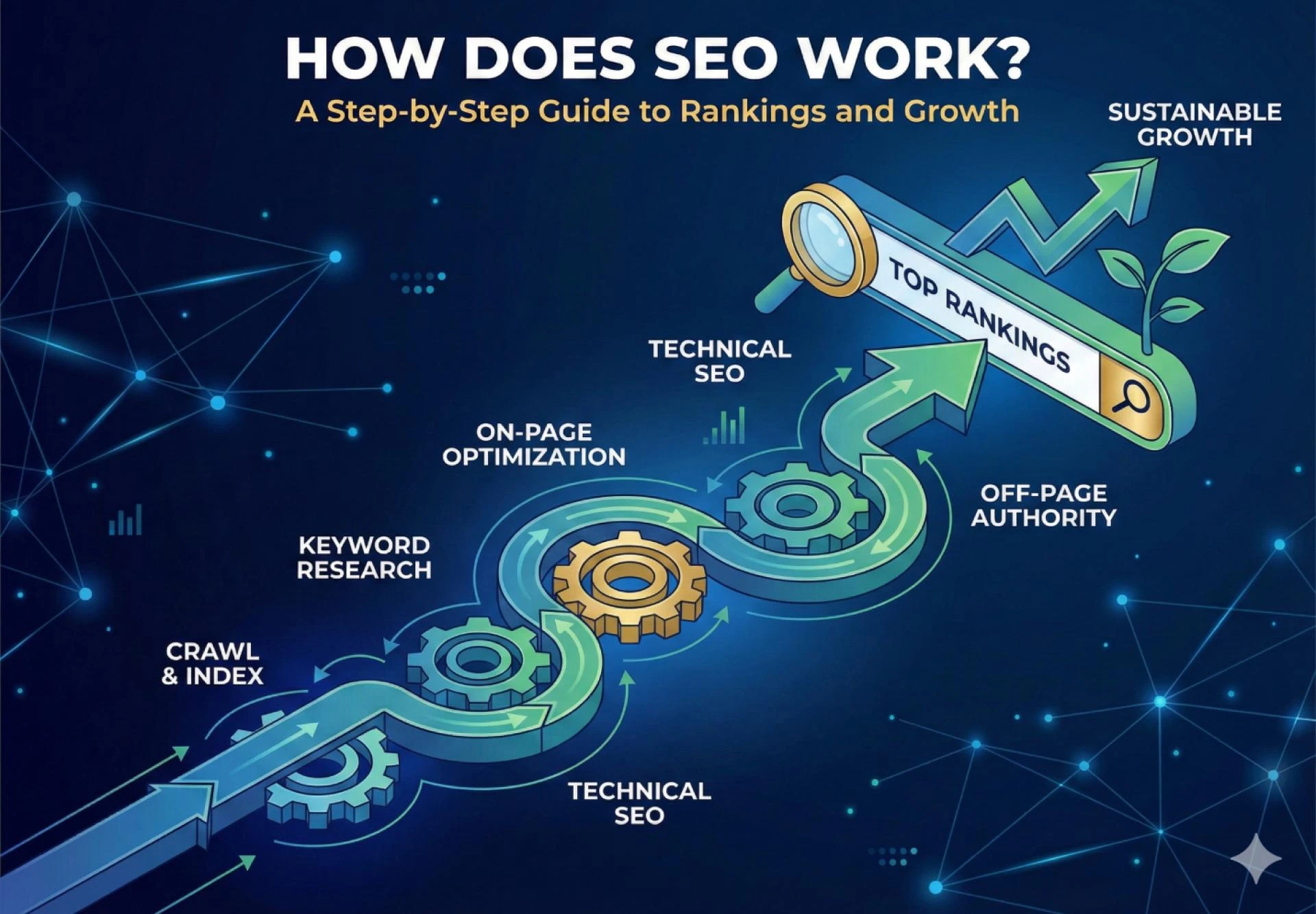

How Does SEO Work? A Step-by-Step Guide to Rankings and Growth
Search engine optimization often takes time, which can make its impact feel unclear in the beginning. Businesses may update their websites or publish new content and still wonder how SEO works when rankings don’t change immediately. This happens because SEO is a structured, long-term process where search engines gradually evaluate content quality, relevance, technical health, and trust signals.
At Verbsz Marketing, we see this consistently across client campaigns, reinforcing the importance of understanding SEO as a growth strategy rather than a quick fix. To explore the complete step-by-step breakdown, read our blog “How Does SEO Work? A Step-by-Step Guide to Rankings and Growth” on the Verbsz Marketing website.
1. Understanding Search Intent
The first step in SEO is understanding what your audience is searching for. Search engines aim to deliver the most relevant content for each query whether the user wants information, products, or services. Craft content that matches user intent, not just keywords.
2. Keyword Research
Keyword research helps you discover the exact words and phrases your target audience uses. Use tools like Google Keyword Planner, Ahrefs, or SEMrush to find terms with good search volume and achievable competition. These keywords form the foundation of your content strategy.
3. On-Page SEO
On-page optimization ensures your content is easily understood by search engines. Key elements include:
- Title tags and meta descriptions that describe your content
- Headers (H1, H2, H3) to structure information
- Relevant keywords naturally placed in your text
- Optimized images with alt text
- Fast loading speed and mobile-friendly design
4. High-Quality Content Creation
Content is the heart of SEO. Create helpful, engaging, and original content that answers users’ questions. Whether it’s blog posts, tutorials, or product descriptions, quality content builds authority and encourages user engagement both important ranking factors.
5. Technical SEO
Technical SEO focuses on backend improvements that make your website easier for search engines to crawl:
- XML sitemap
- Clean site structure
- HTTPS security
- Proper indexing
- No broken links
A technically sound site helps search engines discover and rank your content.
6. Link Building
Search engines view links from other reputable websites as votes of confidence. Link building involves earning high-quality backlinks through outreach, partnerships, guest posts, and shareable content. More quality links often lead to better rankings.
7. Monitoring & Analytics
SEO isn’t a one-time task, it's ongoing. Use tools like Google Analytics and Search Console to track:
- Organic traffic
- Keyword rankings
- Bounce rate
- Page performance
Analyze data regularly and refine your strategy based on what works.
Conclusion
SEO is a blend of research, content creation, technical optimization, and continuous improvement. By focusing on user intent, quality content, and strong technical foundations, you can improve your search rankings, attract more visitors, and grow your business sustainably.
SEO delivers results over time as search engines assess relevance, performance, and authority. At Verbsz Marketing, we focus on sustainable growth, not quick fixes. Explore the full blog on our website and start improving your search visibility today.































Sign in to leave a comment.