

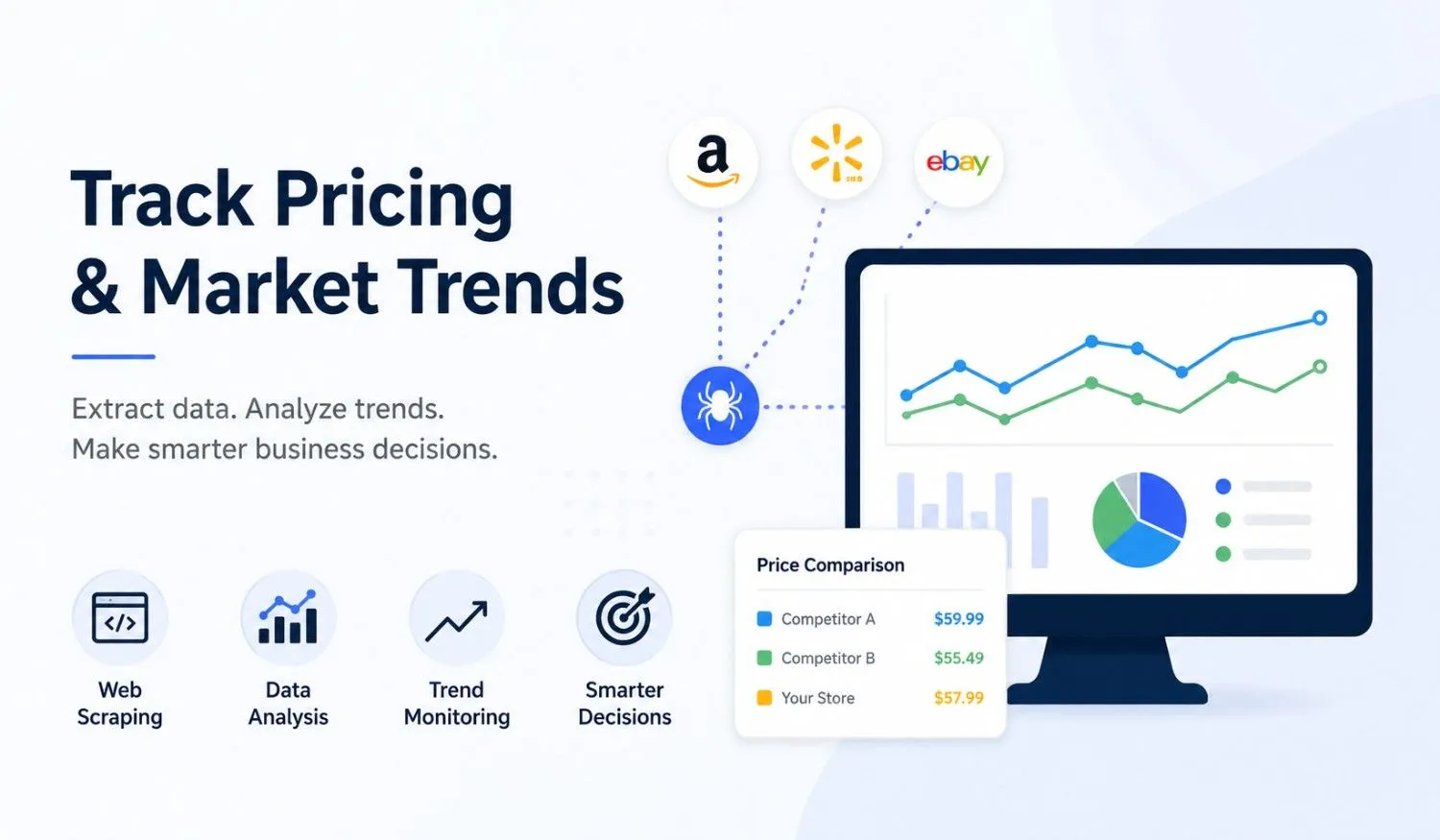
Modern markets move at an exhausting speed — prices change before morning coffee gets cold, competitors launch offers overnight, and customer demand shifts without sending polite warnings first. Businesses trying to monitor all this manually usually end up buried in spreadsheets and browser tabs (a tragic but common corporate survival story). That is where automated data extraction becomes valuable. By collecting real-time pricing and consumer insights from multiple online sources, companies gain faster visibility into changing conditions. Scraping market trends helps organizations respond intelligently instead of reacting days later when the opportunity has already wandered off to a competitor.
Why Businesses Struggle to Track Market Changes Manually
Manual market tracking sounds manageable until product catalogs expand into thousands of listings spread across dozens of websites. Teams spend hours copying prices, comparing offers, and updating reports that become outdated almost immediately. Meanwhile, competitors quietly adjust discounts three times before lunch. Traditional monitoring methods often create delays, inconsistent records, and avoidable mistakes. Even experienced analysts eventually discover that browser-refresh marathons are not a sustainable business strategy. Companies need automated systems capable of gathering and organizing data continuously so decision-makers can focus on strategy rather than repetitive data entry and spreadsheet archaeology.
What Is Web Scraping and Why Does It Matter?
Web scraping allows businesses to automatically collect publicly available online data from websites, marketplaces, directories, and digital platforms. Instead of manually gathering information, automated systems extract pricing details, customer reviews, stock availability, and market indicators in real time. The real advantage appears after the data is organized into actionable insights rather than scattered rows of numbers nobody wants to decode at midnight. Many growing organizations now rely on web scraping services to improve pricing intelligence, monitor competitors, and analyze shifting market behavior without overwhelming internal teams or slowing operational efficiency across departments.
How Web Scraping Helps Track Competitor Pricing
Competitor pricing rarely stays still for long. Retailers launch flash sales, marketplaces adjust product rates dynamically, and seasonal promotions appear with impressive unpredictability. Automated scraping systems continuously monitor these changes across multiple platforms and centralize the information into structured reports. Businesses can quickly compare product pricing, identify discount patterns, and respond strategically instead of guessing market direction. More importantly, pricing intelligence prevents companies from underpricing products unnecessarily — because reducing profits just to “win” a temporary pricing battle usually ages poorly in quarterly reports. Accurate monitoring creates balance between competitiveness, profitability, and smarter decision-making.
How Businesses Use Scraped Data to Analyze Market Trends
Pricing data alone tells only part of the story. Businesses also analyze customer reviews, buying behavior, product demand, and seasonal fluctuations to understand broader market movements. Automated data collection reveals which products gain popularity, which categories decline, and how customer expectations evolve over time. These insights help organizations forecast future demand and identify emerging opportunities earlier than competitors. There is also something strangely satisfying about spotting a trend months before it becomes an industry headline — especially after competitors begin calling it a “sudden market shift.” Predictive intelligence transforms raw data into practical business foresight.
Industries That Benefit Most from Pricing and Trend Tracking
Several industries rely heavily on real-time pricing intelligence and market analysis. E-commerce businesses monitor competitor product pricing and inventory availability daily. Travel companies track fluctuating airline fares and hotel rates to optimize offers. Real estate firms compare regional property trends and rental pricing. Manufacturers analyze supplier costs and procurement changes before budgets become unpleasant surprises during quarterly meetings. Financial organizations also study market sentiment and consumer behavior for investment insights. Any industry operating in competitive digital environments benefits from automated monitoring because markets rarely pause long enough for manual tracking methods to remain effective.
Key Advantages of Automated Market Monitoring
Automated market monitoring gives businesses faster access to accurate information, which naturally improves decision-making across departments. Instead of waiting days for reports, companies receive real-time insights into competitor pricing, customer demand, and industry movement. Faster reactions often lead to stronger revenue opportunities and better customer retention strategies. Automation also reduces repetitive workloads that consume employee time unnecessarily. Most teams prefer spending hours improving strategy instead of repeatedly copying numbers into spreadsheets like exhausted interns trapped inside a data-entry time loop. Better efficiency, improved accuracy, and scalable intelligence create measurable operational advantages over manual monitoring systems.
Common Challenges in Web Scraping Projects
Despite its advantages, web scraping comes with technical and operational challenges that require careful planning. Websites frequently implement anti-bot protections, CAPTCHA systems, and rate limits to prevent excessive automated requests. Data quality also becomes a concern when extracted information contains duplicates, formatting inconsistencies, or incomplete records. Scalability presents another challenge as businesses collect larger volumes of information across multiple sources simultaneously. Responsible implementation matters as well because ethical data usage and compliance remain essential for long-term sustainability. Successful scraping projects balance technical efficiency with accuracy, scalability, and proper operational practices from the beginning.
Best Practices for Successful Market Trend Tracking
Effective market tracking starts with clearly defined business objectives. Companies should identify which pricing metrics, competitors, and customer insights matter most before building automated systems. Focusing on reliable data sources improves accuracy and reduces unnecessary noise in reporting. Automated dashboards and visualization tools also help teams interpret collected information more efficiently. Businesses that attempt to monitor everything often end up understanding nothing particularly well — an impressive achievement, though rarely a profitable one. Working with experienced development teams ensures scalable infrastructure, cleaner data pipelines, and long-term monitoring systems capable of adapting alongside evolving business requirements.
The Future of Pricing Intelligence and Market Analytics
Pricing intelligence is rapidly evolving alongside artificial intelligence and predictive analytics technologies. Businesses increasingly use machine learning models to forecast market behavior, anticipate customer demand, and optimize pricing strategies automatically. Real-time competitive intelligence platforms now deliver instant alerts whenever pricing shifts occur across monitored platforms. Hyper-personalized pricing models are also becoming more common as companies tailor offers based on user behavior and purchasing patterns. Automation is no longer viewed as optional infrastructure reserved for large enterprises. Competitive industries increasingly depend on intelligent data systems because faster insights often determine which companies lead markets — and which quietly disappear from them.
Conclusion
Tracking pricing and market trends manually has become increasingly unrealistic in modern digital environments where information changes constantly. Automated data extraction gives businesses the ability to monitor competitors, analyze customer behavior, and identify opportunities before markets shift again. More importantly, it transforms overwhelming amounts of raw information into decisions grounded in actual evidence instead of optimistic guessing. Markets rarely reward hesitation for very long. Companies that adapt quickly gain visibility, efficiency, and strategic advantages, while slower competitors eventually discover that outdated spreadsheets are remarkably poor tools for surviving fast-moving digital economies.
FAQs
What is web scraping?
Web scraping is an automated method of collecting data from websites for analysis and business insights.
How does web scraping help track pricing?
It monitors competitor prices, discounts, and product changes in real time.
What are market trends in business?
Market trends are patterns in customer demand, pricing behavior, and industry movement over time.
Is web scraping legal?
Web scraping is legal when businesses follow ethical practices and comply with website policies.
Which industries use pricing intelligence most?
Retail, travel, finance, real estate, and manufacturing commonly use pricing intelligence tools.
Why is automated market tracking important?
It helps businesses make faster decisions using accurate and up-to-date market data.
Can small businesses use web scraping solutions?
Yes, scalable scraping solutions are available for businesses of all sizes.
How often should pricing data be updated?
Many businesses monitor pricing daily or in real time depending on market competition.

























Sign in to leave a comment.